
- Protocols

- About
-


Protocol for assessing decision-making in rats using a low-cost rodent Iowa Gambling Task

Last updated date: Oct 6, 2026 DOI: 10.21769/p3007 Views: 45 Forks: 0
 Download PDF
 Ask a
question
Ask a
question
 How to
cite
How to
cite
 Favorite


Protocol for assessing decision-making in rats using a low-cost rodent Iowa Gambling Task
Jyotsna Pandey1*, Sakshi Sharma1*, Varsha Singh2, Suman Jain3
* Shared First authorship
1 School of Interdisciplinary Research, Indian Institute of Technology, Delhi
2 Humanities and Social Sciences, Indian Institute of Technology, Delhi
3 Department of Physiology, All India Institute of Medical Sciences, New Delhi
Abstract
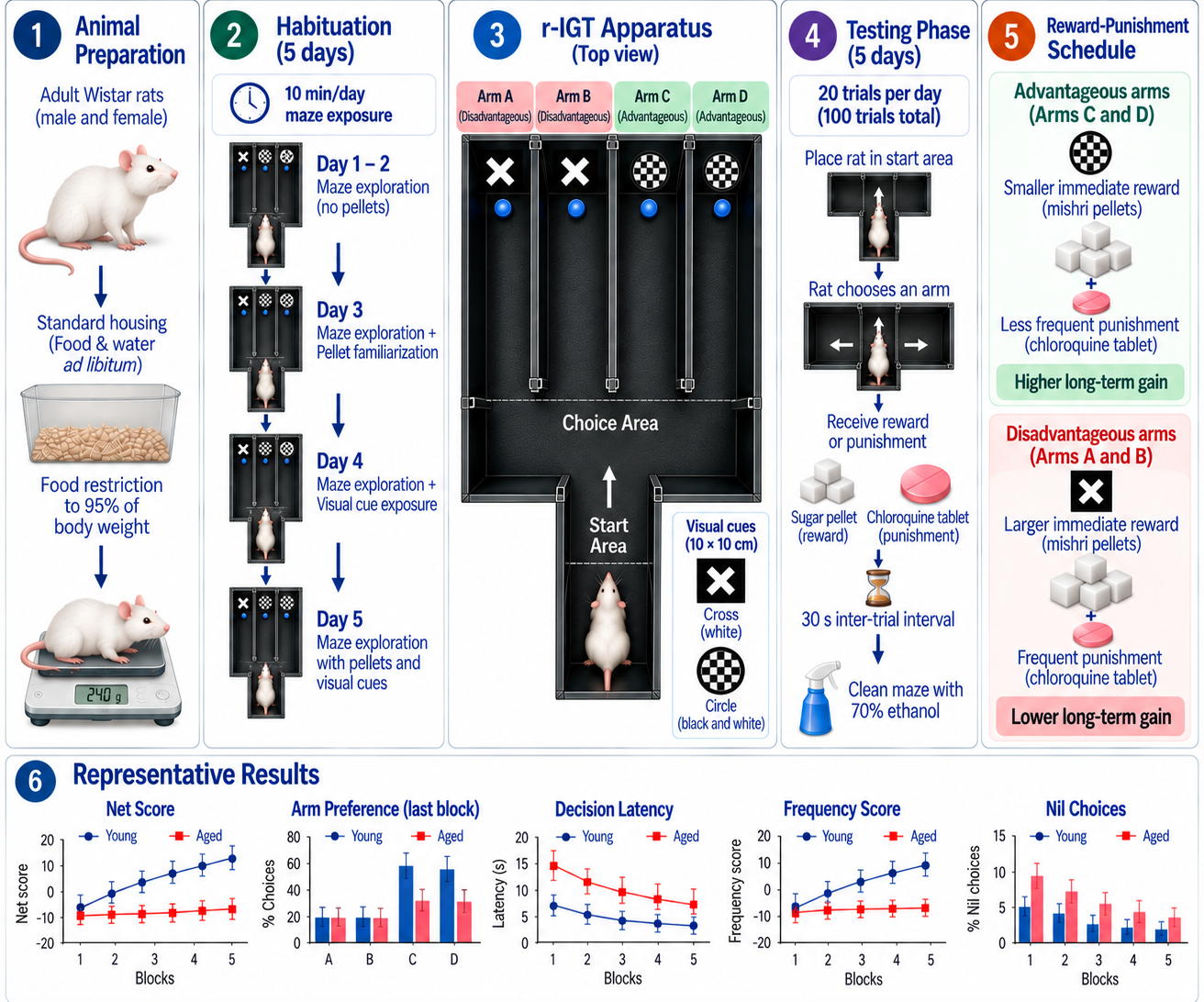
Decision-making is critical for survival, involving assessments of potential rewards and risks. The rodent-Iowa Gambling Task (r-IGT), adapted from the human Iowa Gambling Task (IGT), is a behavioral paradigm designed to assess decision-making under uncertainty and risk by presenting animals with choice options that differ in immediate reward magnitude and long-term outcomes. Here, we describe a low-cost r-IGT protocol that uses a custom-built four-arm maze to evaluate reward-based decision-making in rats. Animal models serve as invaluable tools for unraveling the physiological mechanisms of decision-making, offering insights into sex-based and age-based differences in decision patterns. The protocol incorporates advantageous and disadvantageous choice options based on predetermined reward-punishment contingencies. Animals undergo a five-day habituation period followed by five consecutive days of testing, with 20 trials conducted per day. Behavioral outcomes include intertemporal score, frequency score, decision latency, and reward consumption. This protocol provides an accessible and reproducible approach for investigating decision-making behavior in rodents and can be adapted for studies examining cognitive function, sex differences, aging, neurodegeneration, and neuropsychiatric disorders.
Keywords:
Decision-making, Rodent Iowa Gambling Task (r-IGT), Risk and uncertainty, Behavioral neuroscience, Wistar rats, Reward-punishment learning, Translational animal model
Graphical Abstract: A graphical overview of the rodent Iowa Gambling Task (r-IGT) protocol.
Introduction
Decision-making is a complex cognitive process that involves evaluating available choices based on their potential rewards, punishments, and associated probabilities. Such evaluations often require balancing immediate outcomes against long-term consequences, thereby introducing elements of uncertainty and risk. The Iowa Gambling Task (IGT) is one of the most widely used paradigms for assessing decision-making under these conditions. In the IGT, individuals choose among options that differ in their immediate rewards and long-term outcomes, allowing the assessment of preferences for short-term gains versus long-term benefits (Bechara et al., 1994; Bechara et al., 1997). A preference for immediate rewards despite unfavorable long-term consequences is generally interpreted as disadvantageous decision-making, whereas selecting options associated with long-term benefits reflects the ability to delay gratification and maximize future outcomes.
To investigate the behavioral and neurobiological mechanisms underlying decision-making, several rodent adaptations of the IGT have been developed over the past two decades (van den Bos et al., 2006; Pais-Vieira et al., 2007; Rivalan et al., 2009; Zeeb et al., 2009). These rodent gambling tasks preserve the essential features of the human IGT while allowing experimental control over environmental, pharmacological, and neurobiological variables. As a result, they have become valuable tools for examining reward processing, risk evaluation, learning, impulsivity, and individual differences in decision-making behavior (de Visser et al., 2011; van den Bos et al., 2014).
Rodent gambling paradigms have also contributed substantially to our understanding of the neural substrates of decision-making. These models permit direct investigation of the roles of specific brain regions, neural circuits, and neurotransmitter systems that influence choice behavior under conditions of uncertainty and risk (Rivalan et al., 2009; Winstanley & Floresco, 2016; Orsini et al., 2015). Furthermore, because rodents can be studied under highly controlled conditions, these models provide an opportunity to examine how biological and environmental factors contribute to individual differences in decision-making and vulnerability to maladaptive choice behavior (de Visser et al., 2011; Orsini et al., 2015).
Despite the availability of several rodent gambling paradigms, methodological differences in apparatus design, reward–punishment contingencies, training schedules, and data-analysis approaches can influence behavioral outcomes and limit direct comparisons across studies (de Visser et al., 2011; van den Bos et al., 2014). Therefore, detailed and reproducible protocols are essential for facilitating the implementation of gambling-task paradigms across laboratories and promoting methodological consistency.
The present rodent Iowa Gambling Task (r-IGT) protocol was developed based on the foundational rat gambling paradigm described by van den Bos et al. (2006) and subsequent adaptations of gambling tasks in rodents, including the Mouse Gambling Task protocol described by Pittaras et al. (2020). The protocol employs a custom-built low-cost four-arm maze incorporating advantageous and disadvantageous choice options, visual discrimination cues, and predefined reward–punishment contingencies. In addition to describing the apparatus's construction, this protocol provides detailed procedures for animal preparation, habituation, testing, and behavioral data analysis, offering an accessible and reproducible framework for assessing decision-making under uncertainty and risk in rats.
Materials and Reagents:
- Sugar/Mishri Pellets (reward stimulus)
- Chloroquine tablets (punishment stimulus)
- 50-mL Falcon tube caps (used as reward/punishment receptacles)
- 70% ethanol
- Adult male and female albino Wistar rats
- Reverse osmosis (RO) water
- Laboratory food pellets (Ashirwad Industries, Ropar, Haryana, India)
- Tissue paper
Equipment:
- Stopwatch
- Animal Weighing Scale
- Polypropylene cages (50cm x 20cm x 15cm)
- Custom-built four-arm rodent Iowa Gambling Task (r-IGT) apparatus
r-IGT Apparatus:
A custom-built four-arm maze was used for the rodent Iowa Gambling Task (r-IGT), based on the general design principles of previously described rodent gambling paradigms (van den Bos et al., 2006). The apparatus was developed in the Institute Workshop and consisted of a start area, a central choice area, and four goal arms designated Arms A–D (Figure 1).
Arms A and B represented disadvantageous choice options, analogous to Decks A and B of the human Iowa Gambling Task, whereas Arms C and D represented advantageous choice options, analogous to Decks C and D. The start area served as the entry point for each trial, while the choice area allowed the animal to select one of the four available arms.
The apparatus consisted of the following compartments:
- Start area: 60 cm (length) × 20 cm (width) × 59 cm (height)
- Choice area: 20.6 cm (length) × 61.9 cm (width) × 59 cm (height)
- Goal arms (A–D): 88.5 cm (length) × 15 cm (width) × 59 cm (height)
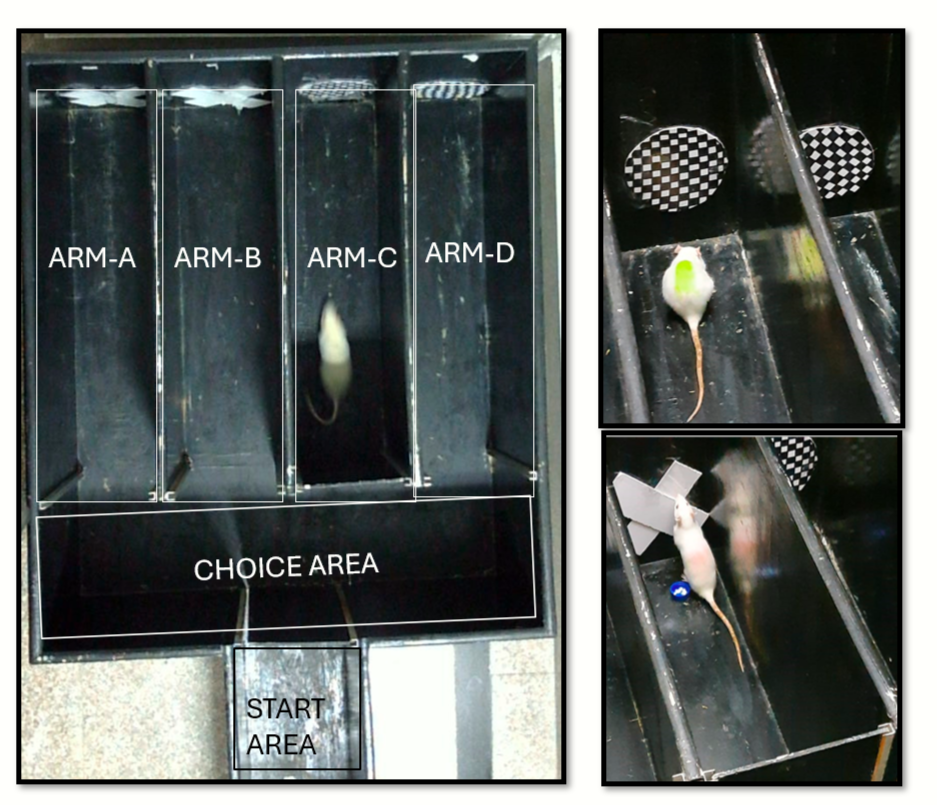
(Left Panel) Custom-built four-arm maze used for assessment of decision-making in rats. The apparatus consists of a start area, a central choice area, and four goal arms (A–D). Arms A and B represent disadvantageous choice options, whereas Arms C and D represent advantageous choice options. The start area is located at the lower end of the apparatus.
(Right panel) Visual cues used in the r-IGT. A white cross cue was associated with Arms A and B, whereas a black-and-white mosaic circular cue was associated with Arms C and D
.
Visual Cues
To facilitate arm discrimination, visual cues were affixed to the inner walls of the goal arms. Two cue types were used: a cross and a mosaic circular pattern, each measuring approximately 10 cm × 10 cm.
Arms A and B were associated with the cross cue, whereas Arms C and D were associated with the mosaic circular cue. These visual cues remained fixed throughout habituation and testing and served as spatial identifiers for the different reward-punishment contingencies assigned to each arm.
Procedure:
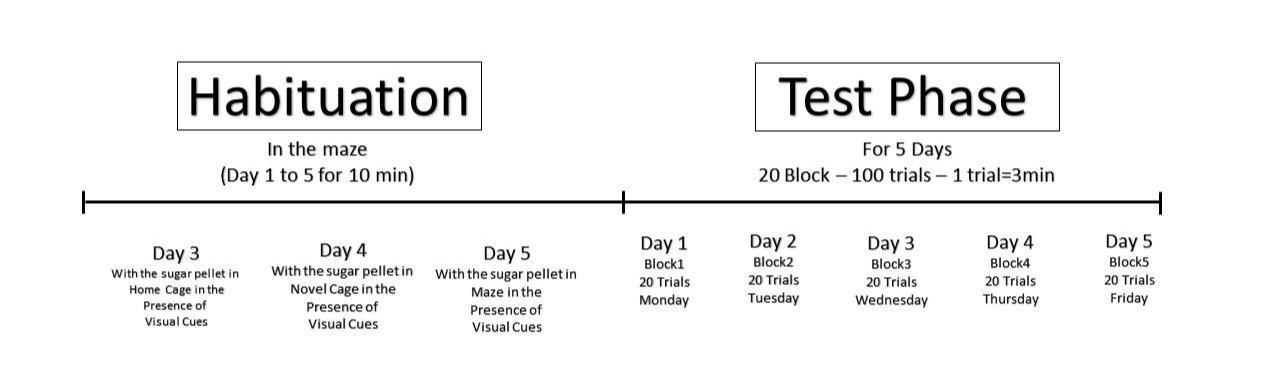
The protocol consists of a five-day habituation period followed by five consecutive days of testing using the rodent Iowa Gambling Task (r-IGT) apparatus (Figure 2).
A. Animal Preparation
- Use adult male and female albino Wistar rats weighing 240–280 g.
- House animals in polypropylene cages under standard laboratory conditions.
- Maintain room temperature at approximately 25°C with a 10:14 h light-dark cycle.
- Provide food pellets and water ad libitum during the acclimatization period.
- Conduct all procedures in accordance with institutional and national guidelines for animal experimentation and obtain prior approval from the Institutional Animal Ethics Committee.
B. Food Restriction
- Prior to behavioral testing, gradually restrict food availability to maintain animals at approximately 95% of their free-feeding body weight.
- Monitor body weight daily throughout the testing period.
- Do not provide laboratory food pellets in the home cage during the food-restriction period.
- Provide water ad libitum throughout the experiment.
Note: Food restriction is used to maintain motivation for obtaining the sugar-pellet rewards during the task.
C. Habituation Phase (5 days)
General Habituation Procedure
- Transfer rats to the behavioral testing room at least 30 min before each habituation session.
- Allow each animal to habituate to the r-IGT apparatus for 10 min per day for five consecutive days.
Day 1–2: Maze Exploration
- Place the animal in the start area of the maze.
- Allow free exploration of the apparatus for 10 min.
- No rewards, punishments, or visual cues are presented during these sessions.
Day 3: Maze Exploration and Pellet Familiarization
- Allow the animal to explore the maze for 10 min.
- Introduce the sugar pellets that will later serve as rewards during testing.
- Place a small number of pellets in accessible locations within the maze.
- Confirm that the animal readily consumes the pellets.
Critical: Animals that do not consume the sugar pellets should not proceed to the testing phase.
Day 4: Maze Exploration and Visual Cue Exposure
- Allow the animal to explore the maze for 10 min.
- Present the visual cues that will be used during testing.
- Maintain the cues in their designated locations throughout the session.
Day 5: Maze Exploration with Pellets and Visual Cues
- Allow the animal to explore the maze for 10 min.
- Place sugar pellets in the goal arms.
- Keep the visual cues attached to their designated arms.
- Allow the animal to explore and consume pellets freely.
At the end of habituation, animals should be familiar with the maze environment, reward pellets, and visual cues.
D. Testing Phase
Following habituation, perform r-IGT testing over five consecutive days.
Test Structure
- Divide testing into five blocks.
- Conduct one block per day.
- Each block consists of 20 trials.
- Complete a total of 100 trials per animal.
- Assign reward and punishment outcomes according to the predetermined probability schedule.
- Use sugar (Mishri) pellets as rewards and chloroquine tablets as punishment stimuli.
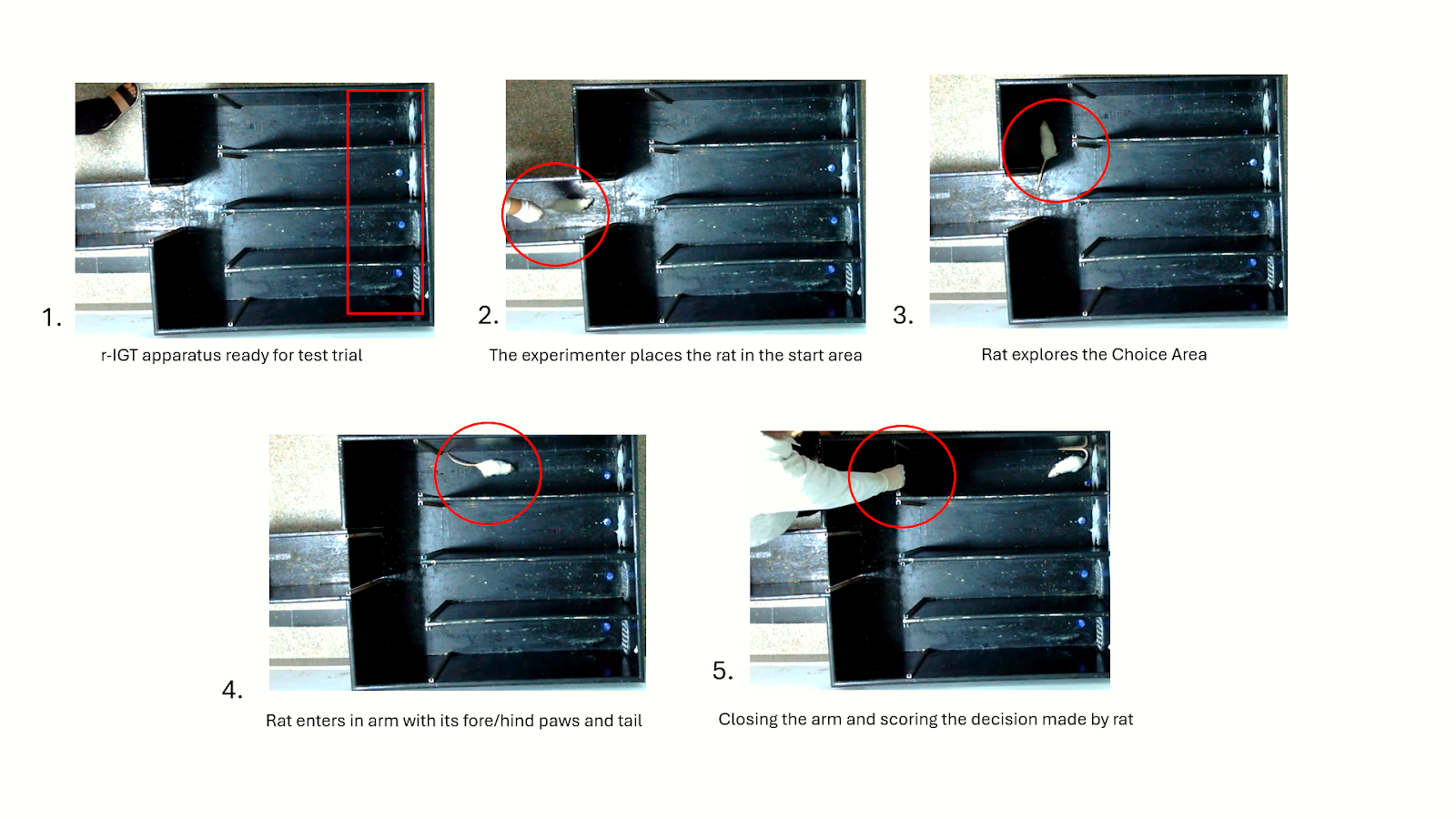
Single-Trial Procedure
- Place the animal in the start area.
- Begin the trial.
- Once the animal enters the choice area, close the start area using a wooden barrier.
- Allow the animal to choose among Arms A–D.
- Record an arm choice when the entire body of the animal, including the tail, enters a single arm.
- Close the selected arm using a wooden barrier.
- Allow the animal to consume the available reward or punishment stimulus.
- Terminate the trial after completion of the choice or at the end of the 3-min trial duration.
- Return the animal to its holding cage.
- Maintain a 30-s inter-trial interval before initiating the next trial.
Apparatus Cleaning
- Following each trial, remove any remaining reward or punishment material.
- Wipe the apparatus with tissue paper.
- Clean all accessible surfaces using 70% ethanol.
- Allow the apparatus to dry completely before the next trial.
Note: Cleaning minimizes residual olfactory cues that may influence subsequent choices.
Testing Schedule: Conduct testing between 10:00 AM and 5:00 PM and maintain a consistent testing schedule throughout the experiment.
Series of Events During One r-IGT Trial
- Transfer the rat to the behavioral testing room 30 minutes before testing.
- Prepare the apparatus according to the predetermined reward–punishment schedule.
- Place reward and punishment stimuli in the designated bottle caps within each arm.
- Position the rat in the start area.
- Start the trial.
- Record
-Arm selected
-Decision latency
-Reward consumption
- Return the rat to its holding cage for a 30-second inter-trial interval.
- Clean the apparatus with tissue paper and 70% ethanol.
- Refill reward and punishment receptacles according to the assigned contingencies.
- Begin the next trial.
Data Analysis:
The following behavioral parameters can be calculated from the r-IGT data to assess different aspects of decision-making performance.
1. Number of Choices
The total number of selections from each of the four arms (A, B, C, and D) can be calculated across the entire testing period. Arm-choice patterns can be examined across successive testing blocks to determine whether animals develop a preference for advantageous options over time. In successful task acquisition, animals are expected to progressively increase selections of advantageous arms (C and D) while reducing selections of disadvantageous arms (A and B).
2. Intertemporal Score
The Intertemporal Score (Net Score) provides a measure of preference for advantageous versus disadvantageous choices and is calculated as:
Intertemporal Score = (C + D) – (A + B)
where C and D represent advantageous choices and A and B represent disadvantageous choices.
Positive scores indicate a greater preference for advantageous options associated with favorable long-term outcomes, whereas negative scores indicate a greater preference for disadvantageous options. This approach is analogous to the net-score calculation used in the human Iowa Gambling Task (Bechara et al., 2000).
3. Frequency Score
The Frequency Score evaluates the extent to which choices are influenced by the frequency of rewards and punishments rather than by their long-term outcomes. This measure reflects sensitivity to the frequency of immediate reinforcement and may capture decision-making processes that differ from those assessed by the Intertemporal Score.
The Frequency Score can be calculated according to the reward–punishment structure implemented in the task. Higher frequency-based preferences may indicate greater reliance on immediate reinforcement history rather than long-term outcome evaluation (Singh, 2013).
Note: The exact calculation should be defined according to the reward–punishment contingencies assigned to each arm.
4. Decision-Making Under Uncertainty and Risk
Performance can be analyzed separately during the uncertainty and risk phases of the task. During the initial trials, animals have limited knowledge of the reward–punishment contingencies and therefore make decisions under conditions of uncertainty. As testing progresses and animals acquire information about the contingencies, decisions increasingly occur under conditions of risk.
For analysis, the first 50 trials may be designated as the Uncertainty Phase, and the final 50 as the Risk Phase. This distinction allows assessment of changes in decision-making as animals transition from exploration to exploitation of learned contingencies (Singh, 2013).
5. Reward Consumption
The total number of sugar pellets consumed during the testing period can be recorded. Reward consumption provides an index of task engagement and motivation to obtain rewards. Changes in pellet consumption may reflect alterations in reward sensitivity, motivational state, or task participation.
6. Decision Latency
Decision latency is defined as the time taken by an animal to select an arm after being released into the maze. Latency can be used as an indicator of response speed during decision-making and may reflect exploratory behavior, motivational state, deliberation, or impulsive responding.
7. Omissions (Nil Choices)
Trials in which the animal fails to enter any arm within the allotted trial duration are classified as omissions (Nil Choices). The number or percentage of omissions can be calculated across testing blocks. Elevated omission rates may indicate reduced motivation, anxiety-like behavior, inadequate habituation, or impaired task engagement.
Measure | Calculation | Interpretation |
|---|---|---|
Arm choice | Number of selections of A–D | Choice preference |
Intertemporal score | Advantageous − disadvantageous choices | Overall choice tendency |
Frequency score | Formula based on reward/punishment frequency | Sensitivity to outcome frequency |
Latency | Time to choose | Decision/response measure |
Nil choices | Trials with no arm selection | Omission/non-response |
Pellet consumption | Number consumed | Reward consumption/motivation |
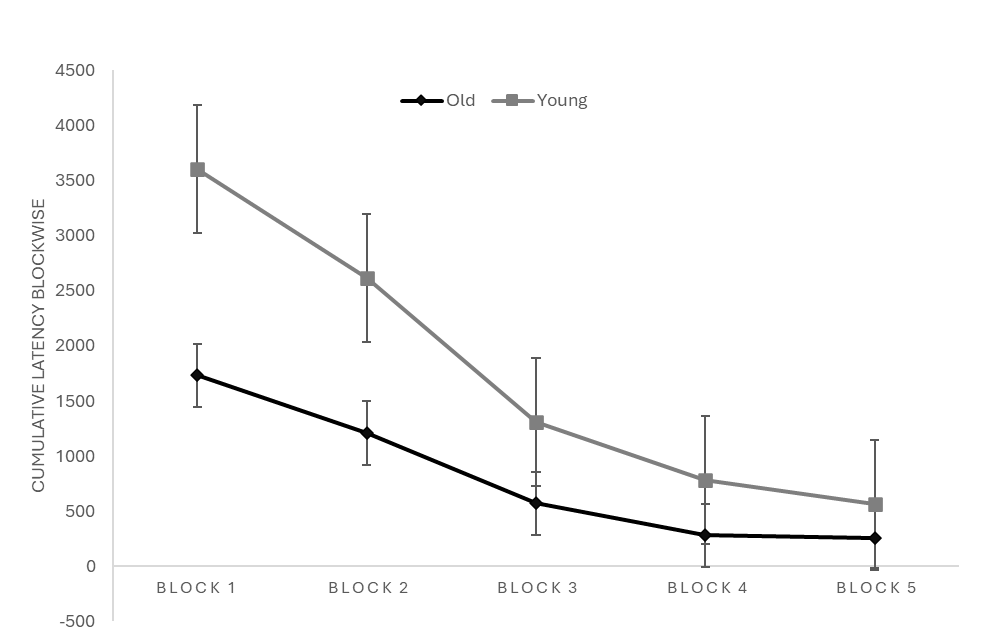
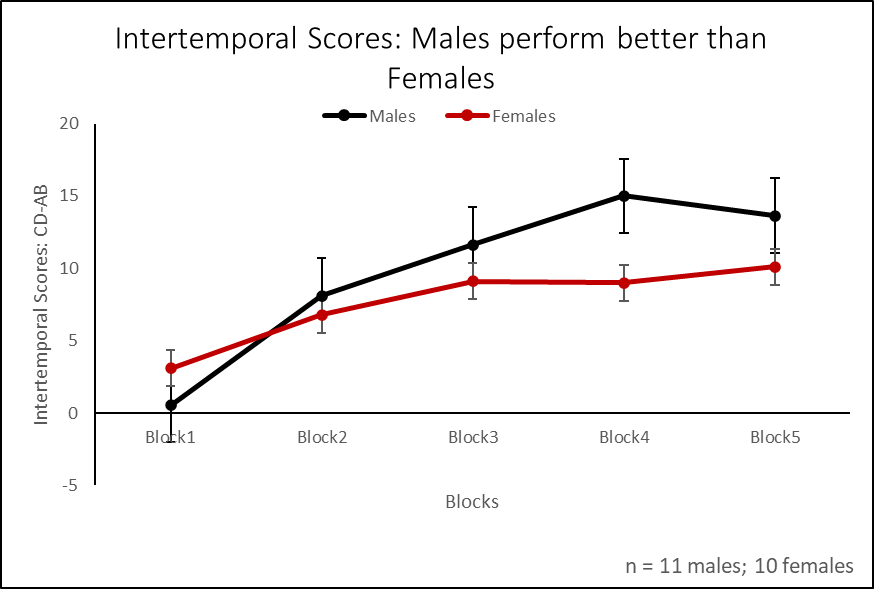
This rodent Iowa Gambling Task (r-IGT) has previously been used to evaluate decision-making behavior in rodents and to compare rodent performance with human performance on analogous gambling-task paradigms (Singh et al., 2025).
Troubleshooting
Problem | Possible Cause | Solution |
1. The animal does not explore the maze | Insufficient acclimatization, unfamiliar environment, or stress associated with handling | Increase acclimatization time before testing and ensure that animals are adequately habituated to the maze and handling procedures prior to testing. |
2. The animal does not consume the reward pellets | Inadequate reward familiarization or low motivation | Confirm pellet consumption during habituation. Animals that consistently fail to consume the reward pellets during habituation should not proceed to testing. |
3. High number of omissions (Nil Choices) | Reduced motivation, inadequate habituation, anxiety-like behavior, locomotor difficulties, or procedural inconsistencies | Verify food-restriction status, habituation procedures, and testing conditions. Assess locomotor activity if necessary. High omission rates should not automatically be interpreted as impaired decision-making. |
4. The animal enters an arm partially but does not commit to a choice | Ambiguous arm-entry criteria | Define arm entry before testing begins and apply the same criterion consistently throughout the experiment. In the present protocol, a choice is recorded when the animal's entire body, including the tail, enters a goal arm. |
5. Visual cues become displaced or damaged | Cue detachment, wear, or inconsistent placement | Inspect visual cues before each testing session and ensure that cue position, size, and orientation remain identical throughout the experiment. Replace damaged cues immediately. |
6. Incorrect reward–punishment placement | Human error during trial preparation | Verify the predetermined contingency schedule before each trial. Use a trial-preparation checklist to confirm the correct quantity and placement of rewards and punishments in each arm. |
7. Residual odor cues in the apparatus | Incomplete cleaning between trials | Clean the apparatus thoroughly using 70% ethanol after each trial and allow all surfaces to dry completely before the next trial begins. |
8. Excessive variability in decision latency | Inconsistent trial initiation or latency measurement | Standardize the definition of trial onset and arm-choice criteria across all animals. Use the same timing procedure throughout the experiment. |
9. Changes in motivation across testing days | Variations in body weight or feeding schedule | Monitor body weight regularly and maintain animals at the predefined food-restriction level throughout testing. Ensure that feeding schedules remain consistent across sessions. |
10. Inconsistent testing conditions | Variability in testing time, room conditions, handling procedures, or inter-trial intervals | Conduct testing under standardized environmental conditions and maintain consistent handling, acclimatization periods, and inter-trial intervals across all sessions. |
11. Data recording errors | Observer oversight or transcription mistakes | Record arm choices, latency, reward consumption, and omissions immediately during each trial using a standardized scoring sheet. Verify trial numbers and block assignments after each testing session. |
12. Lack of progressive increase in advantageous choices | Task-learning differences, motivational factors, procedural issues, or individual variability | Absence of a shift toward advantageous choices should not be interpreted solely as impaired decision-making. Examine reward consumption, latency, omissions, and trial-by-trial choice patterns to identify potential motivational or procedural influences. |
Acknowledgments
We thank the Institute Workshop for fabricating the r-IGT apparatus and the animal facility staff for assistance with animal care. The study was funded by the IRD Grand Challenge Scheme-2 grant from the Indian Institute of Technology Delhi.
Competing Interests
The authors declare no competing interests.
Ethics
All animal procedures were approved by the Institutional Animal Ethics Committee of [Institute Name] and were conducted in accordance with CPCSEA guidelines and institutional regulations.
References
Bechara, A., Damasio, A. R., Damasio, H., & Anderson, S. W. (1994). Insensitivity to future consequences following damage to human prefrontal cortex. Cognition, 50(1–3), 7–15. https://doi.org/10.1016/0010-0277(94)90018-3
Bechara, A., Damasio, H., Tranel, D., & Damasio, A. R. (1997). Deciding advantageously before knowing the advantageous strategy. Science, 275(5304), 1293–1295. https://doi.org/10.1126/science.275.5304.1293
Bechara, A., Tranel, D., & Damasio, H. (2000). Characterization of the decision-making deficit of patients with ventromedial prefrontal cortex lesions. Brain, 123(11), 2189–2202. https://doi.org/10.1093/brain/123.11.2189
de Visser, L., Homberg, J. R., Mitsogiannis, M., Zeeb, F. D., Rivalan, M., Fitoussi, A., Galhardo, V., van den Bos, R., Winstanley, C. A., & Dellu-Hagedorn, F. (2011). Rodent versions of the Iowa Gambling Task: Opportunities and challenges for the understanding of decision-making. Frontiers in Neuroscience, 5, 109. https://doi.org/10.3389/fnins.2011.00109
Orsini, C. A., Moorman, D. E., Young, J. W., Setlow, B., & Floresco, S. B. (2015). Neural mechanisms regulating different forms of risk-related decision-making: Insights from animal models. Neuroscience & Biobehavioral Reviews, 58, 147–167. https://doi.org/10.1016/j.neubiorev.2015.04.009
Pais-Vieira, M., Lima, D., & Galhardo, V. (2007). Orbitofrontal cortex lesions disrupt risk assessment in a novel serial decision-making task for rats. Neuroscience, 145(1), 225–231. https://doi.org/10.1016/j.neuroscience.2006.11.058
Pittaras, E., Rabat, A., & Granon, S. (2020). The Mouse Gambling Task: Assessing individual decision-making strategies in mice. Bio-protocol, 10(1), e3479. https://doi.org/10.21769/BioProtoc.3479
Rivalan, M., Ahmed, S. H., & Dellu-Hagedorn, F. (2009). Risk-prone individuals prefer the wrong options on a rat version of the Iowa Gambling Task. Biological Psychiatry, 66(8), 743–749. https://doi.org/10.1016/j.biopsych.2009.04.008
Singh, V. (2013). Dual conception of risk in the Iowa Gambling Task: Effects of sleep deprivation and test–retest gap. Frontiers in Psychology, 4, Article 628. https://doi.org/10.3389/fpsyg.2013.00628
Singh, V., Tripathi, M., Chandra, S. P., Verma, R., Jha, S. K., Chhabra, H. S., Chakravarty, M., Mitra, S., B, I., Jha, A., Sharma, S., Pandey, J., Pandey, D., Shamshad, I., Ahlawat, E., Saha, T., César, C., & Jain, S. (2025). Cross-species comparison of rodent and human decision-making in the Iowa Gambling Task in select neurological and psychiatric disorders: Translational approach to examine age- and sex-specific effects of stress and corticolimbic perturbations. Frontiers in Psychiatry, 16, Article 1551477. https://doi.org/10.3389/fpsyt.2025.1551477
van den Bos, R., Koot, S., & de Visser, L. (2014). A rodent version of the Iowa Gambling Task: 7 years of progress. Frontiers in Psychology, 5, Article 203. https://doi.org/10.3389/fpsyg.2014.00203
van den Bos, R., Lasthuis, W., den Heijer, E., van der Harst, J., & Spruijt, B. (2006). Toward a rodent model of the Iowa Gambling Task. Behavior Research Methods, 38(3), 470–478. https://doi.org/10.3758/BF03192801
Winstanley, C. A., & Floresco, S. B. (2016). Deciphering decision making: Variation in animal models of effort- and uncertainty-based choice reveals distinct neural circuitries underlying core cognitive processes. Journal of Neuroscience, 36(48), 12069–12079. https://doi.org/10.1523/JNEUROSCI.1713-16.2016
Zeeb, F. D., Robbins, T. W., & Winstanley, C. A. (2009). Serotonergic and dopaminergic modulation of gambling behavior as assessed using a novel rat gambling task. Neuropsychopharmacology, 34(10), 2329–2343. https://doi.org/10.1038/npp.2009.62
Related files
 Graphical Abstract-Final.png
- Pandey, J, Sharma, S, Singh, V and Jain, S(2026). Protocol for assessing decision-making in rats using a low-cost rodent Iowa Gambling Task . Bio-protocol Preprint. 10.21769/p3007.
Do you have any questions about this protocol?
Post your question to gather feedback from the community. We will also invite the authors of this article to respond.
 Post a Question


