
- Protocols

- About
-


An Efficient Parallel Single-Primer PCR Method for Site-Directed Mutagenesis

Last updated date: Aug 9, 2026 Views: 327 Forks: 0

 Download PDF
 Ask a
question
Ask a
question
 How to
cite
How to
cite
 Favorite


An Efficient Parallel Single-Primer PCR Method for Site-Directed Mutagenesis
Abstract
Regulation of gene expression by histone modifications is a fundamental process in cells. Dysregulation of epigenetic regulators, either by altered expression or activity, is a hallmark of many cancers and contributes to the initiation and progression of tumors. Notably, cellular metabolism is closely intertwined with epigenetic regulation, as several metabolites directly influence the epigenetic landscape. Here, we explored the functional link between the epigenetic reader YEATS2 and the metabolic enzyme glutaryl-CoA dehydrogenase (GCDH) in the regulation of epithelial-to-mesenchymal transition (EMT) in head and neck cancer. We show that the histone reader YEATS2 promotes the invasiveness of head and neck cancer cells via an SP1-dependent mechanism. To verify that SP1 transcriptionally regulated YEATS2, we performed site-directed mutagenesis to interfere with the SP1-binding sites in the plasmid with the full-length YEATS2 promoter. Specifically, three out of four predicted SP1 consensus binding sites were mutated. Here, we describe a detailed step-by-step protocol outlining the strategy and methodology used to efficiently generate these promoter mutants.
Background
We have recently reported that higher expression of YEATS2 in head and neck cancer leads to upregulation of EMT-specific SPARC in a histone crotonylation-dependent manner1. A 2-step PCR method for site-directed mutagenesis used in this study is a slight modification of the Single Primer Reactions In Parallel (SPRINP) method of PCR-based site-directed mutagenesis as described by Edelheit et al., 20092. The template used in this protocol (YEATS2 Luc-508) was created by cloning YEATS2-promoter fragment between KpnI and HindIII sites in a pGL3-Basic vector (Promega, E1751). A pair of completely overlapping (with 100% complementarity) mutagenic primers was designed for each respective mutation to be obtained. Because of the complete complementarity between forward and reverse primer, primer dimer formation is highly likely if both primers are added in one conventional reaction. To avoid primer-dimerization and to get maximum amplification of the desired mutant plasmid, the PCR was performed in two steps.
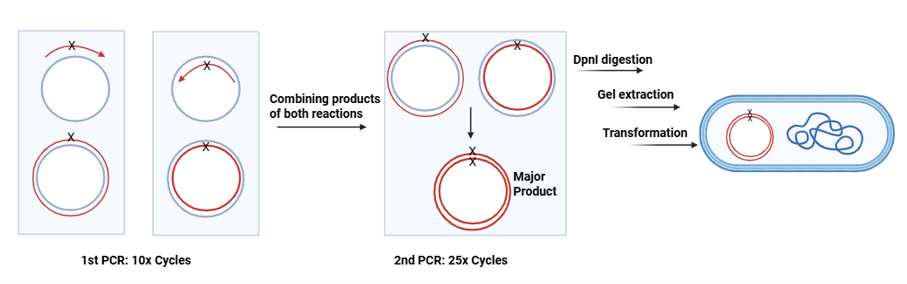
Figure 1. Illustration depicting the modified site-directed mutagenesis strategy (adapted from Edelheit et al., 20092).
Materials and Reagents
- Phusion DNA Polymerase (NEB, M0530)
- dNTP Set (Invitrogen, 10297018)
- Template plasmid (YEATS2-promoter fragment in pGL3-Basic backbone)
- Primer oligos (obtained via Sigma-Aldrich)
- DMSO (Sigma-Aldrich, D8418)
- Nuclease free water (Invitrogen, AM9932)
- DpnI (Takara, 1235A)
- QIAquick Gel Extraction Kit (Qiagen, 28706)
- KpnI (Takara, 1618)
- HindIII (Takara, 1615)
- Agarose (Invitrogen, 16500500)
- LB broth powder (Millipore, L3152)
- LB agar powder (Millipore, 05040)
- Ampicillin sodium (HiMedia, MB104)
- Competent cells Stbl3
- DNA loading dye
- 1 kb DNA Ladder (GeneDireX, DM010-R500)
Equipment
- PCR thermal cycler
- Gel Imaging System
- UV or Blue-light Transilluminator
Software
FinchTV (by Geospiza)
Protocol
A: Primer Designing
Two completely overlapping, divergent primers, both having the desired mutation were designed. The reverse primer was the reverse complement of the forward primer. Primer sequences were (mutated bases are highlighted):
Forward (Fwd) – 5’-AGCCCGGACCAGCCCCGCCCATACCATACCATACCTCATCCCTGGGAGCTCCG-3’
Reverse (Rev) – 5’-CGGAGCTCCCAGGGATGAGGTATGGTATGGTATGGGCGGGGCTGGTCCGGGCT-3’
- It was made sure that neither end of the primer was in a repetitive region of the original template sequence (YEATS2 Luc-508 WT plasmid) to avoid primer slippage.
- 20-30 nucleotides flanking the mutation were included on both sides (The primer length could be allowed to exceed 50 bases, if necessary, to satisfy the above conditions).
B: Polymerase Chain Reaction
- Because of the complete complementarity between forward and reverse primer, primer-dimer formation is highly likely if both primers are added in one conventional reaction. To avoid primer-dimerization and to get maximum amplification of the desired mutant plasmid, the PCR was performed in two steps.
- Separate PCRs with Fwd and Rev primers:
- Two separate reactions of 30 μl each were prepared for Fwd and Rev primer, with all the other components (buffer, dNTPs, template, Polymerase) but with only one of the two primers.
- Because primers were GC-rich and with high melting temperatures (promoter region), GC-Buffer and DMSO (3%) were used in the PCR reaction to bring down the annealing temperature. The composition of PCR mix and the temperature conditions are listed below.
Component | Final conc. |
| 5× GC Buffer | 1× |
| dNTPs | 0.2 mM |
| Forward OR reverse primer | 0.5 µM |
| Template (YEATS2 Luc-508 WT plasmid) | 4 ng/µl |
| DMSO | 3% |
| Phusion Polymerase | 0.02 Unit/µl |
| Nuclease-free water | Adjust to 30µl |
Step | Conditions | |
Initial denaturation | 98°C for 2 min 30 sec | |
Denaturation | 98°C for 30 sec |
|
Annealing | 68-72°C for 1 min | ×10 cycles |
Extension | 72°C for 5 min |
|
Final extension | 72°C for 10 min | |
3. The separate reactions were combined to amplify the desired product.
- The reactions with Fwd and Rev primer were mixed in a single tube.
- The next 25 cycles of PCR were continued with the same temperature settings used above.
- 5 μl aliquots from the final PCR products were visualized on 1% agarose gel to verify the successful amplification of the mutant plasmid.
C: DpnI Digestion
- The PCR product from the previous step was digested with DpnI (Takara, 1235A) to degrade the parental methylated plasmid (YEATS2-Luc508 WT plasmid used as template in the PCR). This minimized the chance of false-positive clones (i.e., clones without mutation).
Reaction for DpnI digestion was prepared as follows.
PCR product - 52 ul
10× QuickCut Buffer (Takara) - 6 ul
DpnI enzyme - 1.5 ul
- The reaction was mixed well by pipetting and incubated at 37°C for 1 hr and then at 65°C for 10 min (to heat-inactivate the enzyme).
D: Gel Extraction of Mutant Plasmid
- The DpnI digested product was visualized along with the undigested plasmid on an agarose gel (1%). Bands corresponding to the supercoiled, undigested plasmid were not present in the digested product. Whereas, the double-nicked mutant plasmid formed by PCR migrated similarly to a linear DNA of the same size.
- The PCR product’s band could be observed at the desired position, so the gel fragment was excised, and gel purification was performed using QIAquick Gel Extraction Kit.
- The gel-purified product was eluted in smaller volumes (20 μl) to avoid over-dilution.
E: Transformation and colony screening
- E. coli competent cells (Stbl3) were transformed with 50-100 ng of gel-purified product.
- Random colonies were picked and incubated overnight in LB broth. Plasmids were isolated from these cultures and RE double digestion using KpnI and HindIII was performed to check the fallout size in each plasmid.
- The plasmids showing the released insert at the exact same position as that of the double digested YEATS2 Luc-508 WT plasmid were sent for sequencing.
- Mutation was confirmed by analyzing the sequencing output using FinchTV software.
Acknowledgements
This work was funded by a grant from the Science and Engineering Research Board (SERB) (STR/2020/000093, CRG/2021/004949) and the Indian Council for Medical Research (ICMR) (2021–8984) awarded to Sanjeev Shukla.
References
1. Pant D, Kakani P, Joshi R, Sabu A, Agrawal S, Samaiya A, Shukla S. Interplay of YEATS2 and GCDH regulates histone crotonylation and drives EMT in head and neck cancer Kundu TK, VijayRaghavan K, editors. eLife. 2025;14:RP103321. https://doi.org/10.7554/eLife.103321. doi:10.7554/eLife.103321
2. Edelheit O, Hanukoglu A, Hanukoglu I. Simple and efficient site-directed mutagenesis using two single-primer reactions in parallel to generate mutants for protein structure-function studies. BMC Biotechnology. 2009;9(1):61. https://doi.org/10.1186/1472-6750-9-61. doi:10.1186/1472-6750-9-61
- Joshi, R, Pant, D and Shukla, S(2026). An Efficient Parallel Single-Primer PCR Method for Site-Directed Mutagenesis. Bio-protocol Preprint. bio-protocol.org/prep2972.
- Pant, D., Kakani, P., Joshi, R., Sabu, A., Agrawal, S., Samaiya, A. and Shukla, S.(2025). Interplay of YEATS2 and GCDH regulates histone crotonylation and drives EMT in head and neck cancer. eLife. DOI: 10.7554/eLife.103321
Do you have any questions about this protocol?
Post your question to gather feedback from the community. We will also invite the authors of this article to respond.
 Post a Question


