
- Home
- Protocols

-


A simple and efficient protocol for extraction of nematodes from the Irish peat soils

Last updated date: Jun 11, 2024 DOI: 10.21769/p2685 Views: 192 Forks: 0
 Download PDF
 Ask a
question
Ask a
question
 How to
cite
How to
cite
 Favorite


Title: A simple and efficient protocol for extraction of nematodes from the Irish peat soils
Anusha Pulavarty1, Tilman Klappauf1, Ankit Singh1, Douglas McMillan2,
Thomais Kakouli-Duarte1
Molecular Ecology and Nematode Research Group, enviroCORE,
Department of Applied Science, South East Technological University,
Kilkenny Road Campus, Carlow1
Green Restoration Ireland Cooperative Society Ltd (GRI), Ireland2
Corresponding author: Anusha.pulavarty@setu.ie
Abstract
Natural bogs and peatlands play a major role in tackling the climate crisis, as they are natural carbon sinks when intact, but are significant carbon sources when drained. Over 80% or 1.2 million hectares of the 21% of Ireland's land area, which is peatland, is in a degraded condition and so is emitting millions of tonnes of CO2 annually. This makes it a significant, if not the biggest, single source of carbon pollution in the country. This degradation also causes water pollution and disturbs the flora and fauna of these endangered ecosystems. Numerous rewetting and restoration programs have been implemented throughout Ireland and Europe with the goal of rehabilitating these valuable habitats. The enterprise partner in this project, Green Restoration Ireland (GRI) cooperative, is working directly to re-establish this key component of Ireland's natural heritage, with a particular focus on peat grasslands, in order to help fight climate change and restore peatland biodiversity, while diversifying incomes for landowners. The SETU’s Molecular Ecology and Nematode Research Group are assisting GRI in evaluating their peatland restoration programme by studying the nematode diversity in intact, restored and non-restored peatlands. Overall, 14 different peatland habitats including raised bogs and fens have been sampled to extract nematodes from the peat soils. For nematode identification, both morphological and molecular approaches have been used. For morphological identification of the nematodes, their efficient extraction from the peat soils is crucial. Existing protocols in the literature are time consuming and cumbersome. Therefore, a quick and easy extraction procedure has been developed and standardised to extract nematodes from different peatland habitats. The various peat habitats in this study have been classified as: healthy bog hummock (HBH), healthy bog lawn (HBL), degraded bog hummock (DBH), degraded bog lawn (DBL), wasted peat (WP), rough grazing (RG-I), cutover scrub- rewetted (C-RW), cutover scrub non-rewetted (C-NRW), woodlands rewetted (W-RW), woodlands non-rewetted (W-NRW), fen peat (FP), improved fen peat grasslands rewetted (IFPG-RW), improved fen peat grassland non-rewetted (IFPG-NRW) and rich fen peat (R-FP). This protocol could provide time efficiency by significantly reducing the effort of nematologists and soil ecologists working on morphological identification of nematodes from peatlands.
Keywords: nematodes, peatlands, bogs, extraction, carbon sinks
Graphical overview
Background:
According to the Irish Peatland Conservation Council (IPPC 2012), boglands in Ireland are special habitats occupying up to 21% of the Irish landscape (O’Connell, 2012) and support many rare plants and animals of national and international importance (Kearns, 2018). Raised bogs started forming 10,000 years ago when much of central Ireland was covered by shallow lakes left behind by the melting ice. The peat in bogs was formed by the accumulation of layer upon layer of partly decomposed dead plants over millenia in these waterlogged regions (Blackith and Speight, 1974). Peatlands play a significant role as global atmospheric carbon storage areas as they are natural carbon sinks but when drained are significant carbon sources. The global carbon cycle, and ultimately climate change, are therefore greatly influenced by the uptake of carbon dioxide (CO2) by these lands (Watson and O'Hare, 1973). Peatlands have been exploited for peat extraction and agriculture for centuries, therefore, over 80% of Irish peatlands are in a degraded state. Approximately 1.2 million of Ireland’s 1.5 million hectares of peatlands are damaged to different degrees. This disturbs the natural flora and fauna of these ecosystems and releases sequestered CO2 back into the atmosphere contributing to climate change. Numerous rewetting and restoration programs have been implemented throughout Ireland and Europe with the goal of rehabilitating degraded bogs.
The enterprise partner and co-funder of the project Green Restoration Ireland Coop (GRI) is actively working towards restoration of the degraded bogs. GRI are developing hands-on technology in the form of an app, to be provided to farmers with agricultural peatlands as a tool to enable better management that will reduce environmental impacts and greenhouse gas emissions, in particular. The European Innovation Partnerships (EIP) scheme supports projects that allow farmers, scientists and other experts to collaborate for the development of new practices that are environmentally friendly and economically sustainable. The ultimate aim of EIPs is to road-test new ideas and practices which can then be used more widely by farmers and others to improve productivity and enhance resource efficiency. The enterprise partner is working to optimise this scheme in Ireland, in relation to peat grasslands. The Molecular Ecology and Nematode Research Group (MENRG) in enviroCORE, SETU, has been invited to collaborate with GRI on this, bringing and applying nematode biomonitoring expertise to confirm that GRI’s approaches are successful in restoring these peatlands ecosystems.
Nematodes are excellent environmental bioindicators because they are (a) highly abundant and diverse, (b) easily sampled and sorted, (c) representative of their habitat, be it terrestrial or aquatic and (d) known to exhibit well-defined responses to environmental challenges (Wilson and Kakouli-Duarte, 2009). Therefore, this research analysis nematode biodiversity as a means for assessing the ecological status of the restored sites. Similar studies have previously been performed, where nematode communities have been used as indicators to assess the restoration of peat sites in China (Wang et al., 2021) and Slovakia (Bobu et al., 2020). Here, this particular study, investigates the nematode communities in the Irish peatland habitats.
Effective extraction of nematodes from the peat soil is crucial for their morphological identification. There are existing protocols (Hallman and Viaene, 2013; Van Bezooijen, 2006) detailing various methods of nematode extraction from different soils, plants and other matrices. However, no specialised and efficient protocols are available for nematode extraction from peat soils. The extraction protocol described in this article is very easy, efficient and quick compared to other reported techniques.
Materials and reagents:
Auger (124 cm)
Sealable plastic bags
Soil samples
Thermally insulated portable bags
Gloves
Beaker (600 ml)
Glass rod
- Rectangular shaped plastic trays (30 cm X 25 cm X 5 cm)
- Round plastic trays (25 cm diameter, 3.5 cm depth)
220 mm (mesh size) stainless steel sieve (21 cm diameter, 5.5 cm depth)
White milk filters (pore size 200mm)
Distilled water
Measuring cylinder (150 ml)
Nematode counting dish (6.3 cm)
Plastic container (11 cm diameter, 5.5 cm depth)
Micropipette (10 -100 µL)
Small Petri dish (3.0 cm diameter, 1 cm depth)
Fine nematode fishing tool (wooden skewers with a single brush hair glued to the end)
Glass cavity blocks (3 cm diameter, 0.5 cm depth)
Equipment:
Euromex Delphi-X Observer, trinocular microscope with SWF 10x/25 mm Ø 30 mm eyepieces, plan phase PLPHi 10/20/S40/S100x oil IOS objectives, EIS 60 mm parfocal, 190 x 152 mm stage with 78 x 32 mm mechanical stage and 100 W halogen illumination
Olympus stereo microscope (SZX7) Stereo-Microscope zoom body with ESD capability, magnification range 0.8x - 5.6x, zoom ratio 7:1, FN 22, build-in click stop function.
Procedure:
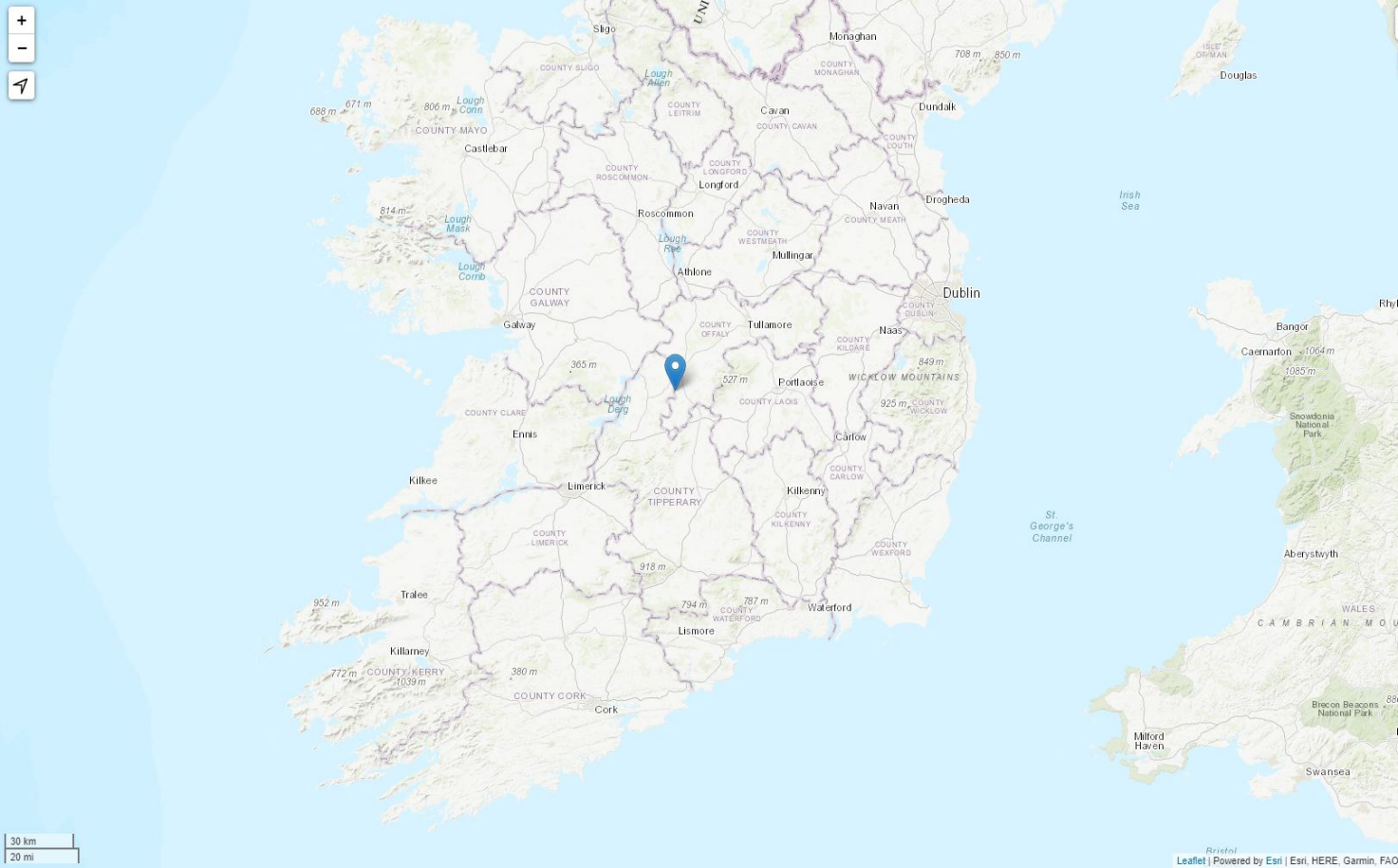
Description of the sampling site: Sampling took place in the months of July up to October 2023, while the average temperature was in the range of 15 to 20 °C. The bog sampling sites are located in the midlands of Ireland with Eircodes R42 H026 (site i), R42 F642 (site ii), R42 TW74 (site iii) in County Offaly (Figure 1a). The site co-ordinates were noted to be (i) 53°01'14.2 "N & 7°57'15.5 "W (ii) 53°05'14.01 "N & 7°87'69.96 "W (iii) 53°06’08.4 "N & 7°80’08.4 "W, according to Google maps. The different peat habitats in the sampled farms are clearly indicated in Figure 1b.
(a)
(b)
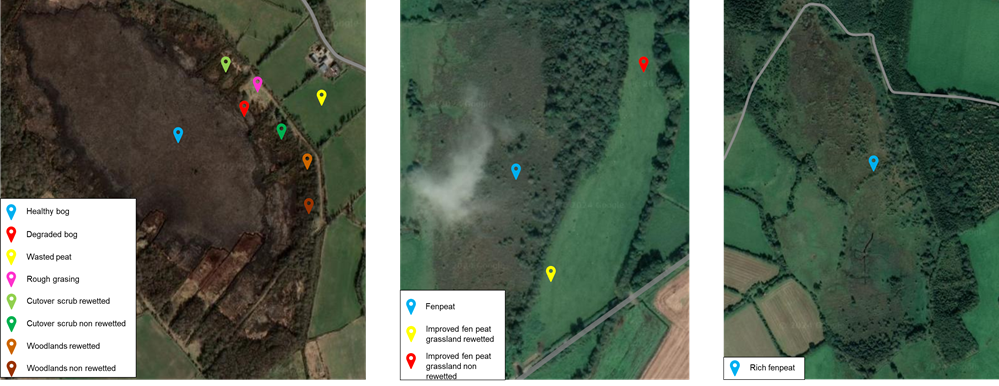
Figure 1: (a) Approximate site location in the Republic of Ireland; (b) Bog sampling location and bog habitats in each location, (i) 53°01'14.2 "N & 7°57'15.5 "W (ii) 53°05'14.01 "N & 7°87'69.96 "W (iii) 53°06’08.4 "N & 7°80’08.4 "W; source Google maps
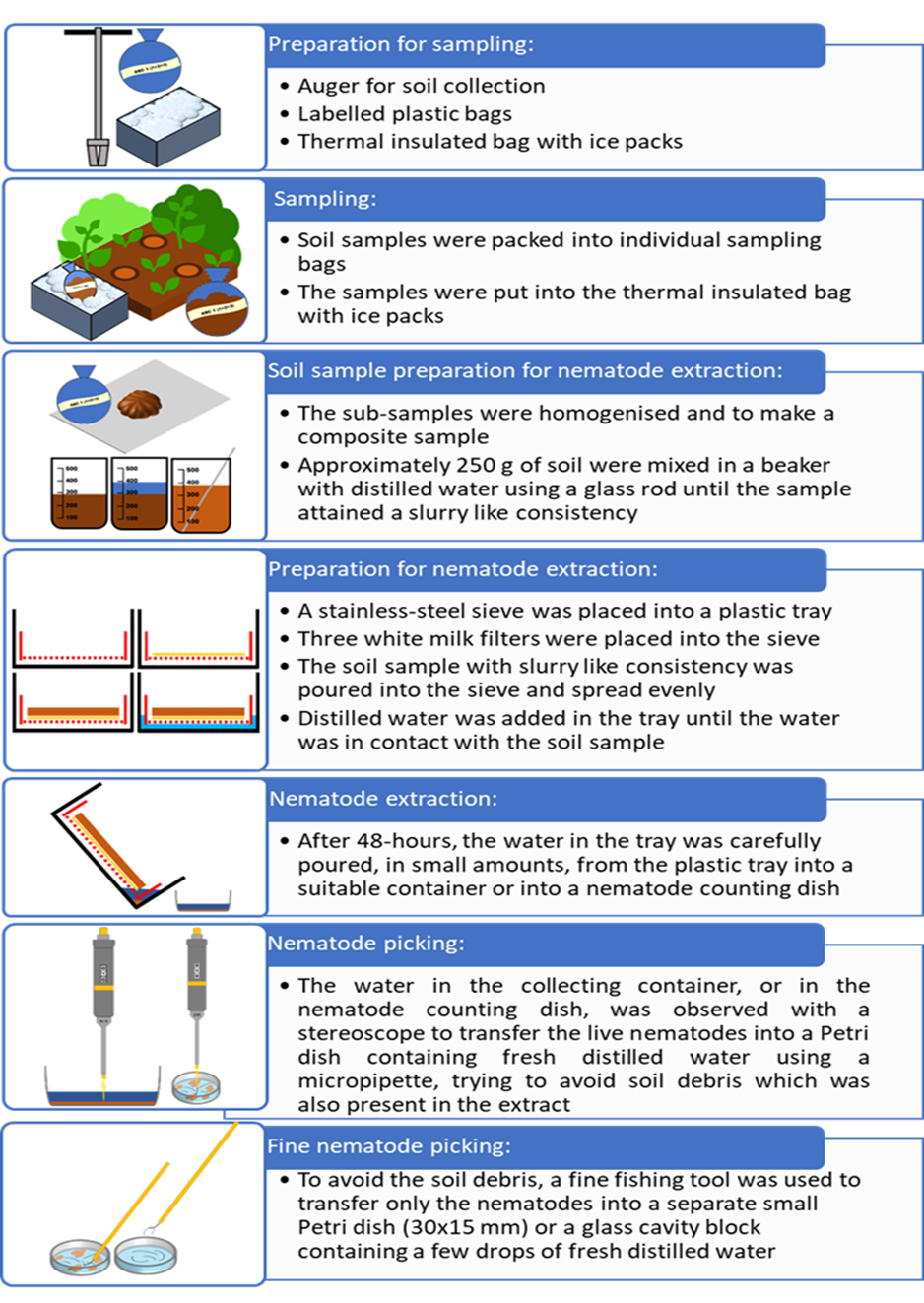
Samples were collected in a W manner (5 sub-samples per composite replicate), from the top 10-20 cm of the soil/benthos horizon with an auger, taking care to avoid roots, and stones. To make three composite replicates, the sampling was done two more times per site in the same ‘W’ manner as described above. Samples were placed in a sealable plastic bag each, with proper labelling of the site, peat habitat and date on each of them and were placed on ice packs within a thermally insulated portable bag. These bags were then transported to the enviroCORE laboratory at SETU, Kilkenny Road Campus, Carlow.
In the laboratory, the soil samples were sieved and homogenised to prepare three composite replicates (approximately 500 g), each containing 5 sub-samples. Three composite replicates were assembled in the same way for every peat habitat.
Approximately, 250 g of composite soil sample was added to a beaker (600 ml).
Distilled water was added in small amounts (approximately 30-50 ml) to the soil in the beaker with mixing until it gained a slurry like consistency (Figure 2a).
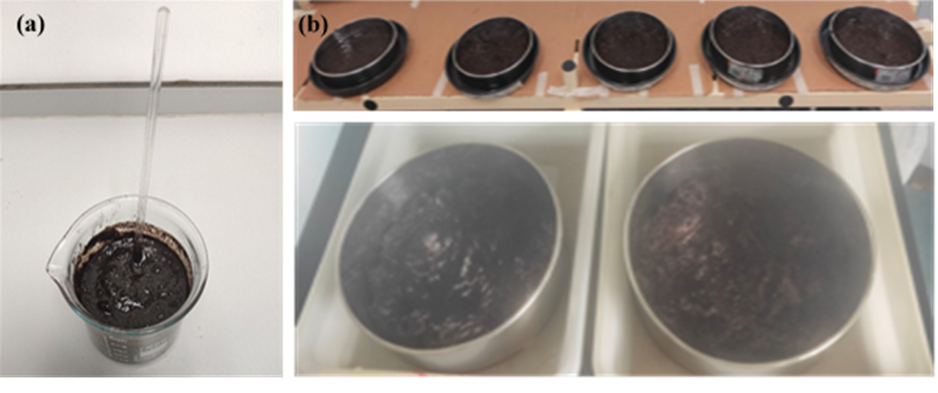 Figure 2: (a) Beaker containing the soil with the slurry like consistency; (b) Overall arrangement of the trays, milk filters and sieves
In parallel, a construct was made by layering three white milk filters (200 mm pore size) on a stainless-steel sieve (220 mm)
Then the sieve containing the milk filters was placed on to a small plastic tray (Figure 2b)
Approximately, 50-100 ml of distilled water was added in each tray, and it was confirmed that the soil and milk filters were in contact with the fresh distilled water in the tray.
Care was taken to refill the water and prevent the soil from getting dry.
All the soil slurry samples were placed on to individual sieves and trays as described in the above steps.
The trays were placed in a plant growth room maintained at a constant temperature of 20 ± 2 ◦C and 70 ± 10 % relative humidity (RH).
After 48 hours, the distilled water in the tray was slowly decanted to a 150 ml measuring cylinder and left undisturbed for the nematodes to settle down at the bottom.
The water from the measuring cylinder was poured in small amounts (approximately in 5-8 ml) on to a nematode counting dish or small Petri dish.
The dish containing live nematodes was observed under the stereo microscope to count nematode abundance.
The live nematodes were carefully removed using a tiny nematode fishing tool and/or a micropipette.
The extracted nematodes were collected and processed separately for morphological and molecular analyses.
For morphological analysis: nematodes were permanently fixed and mounted on to glass slides using a combination of 8.5 % formaldehyde, glycerine and ethanol based solutions (Seinhorst 1956).
The mounted nematodes were identified under a high power light microscope using the keys, nematode pictures and illustrations mentioned in the manuals, books and research articles reported by Gharahkhani et al., (2022), Mirbabaei Karani et al., (2015), Smythe, (2015), Schmidt Rhaesa, (2013), Mekete et al., (2012), Holovachov et al., (2009) and Bongers, (1988). Referred to Yeates et al., (1993) to assign feeders to the identified nematode families.
For molecular analysis: the extracted nematodes were collected in a 1.5 ml microfuge tubes and proceeded with DNA isolation using the Clear Detection- Nematode DNA Extraction and Purification Kit.
Data Analysis
The number of nematodes that were extracted from 250 g of soil using this protocol was 80±1, whereas it was 15±3 and 0±0 when using Cobb’s method and Baermann funnel method (Seinhorst 1956), respectively. This extraction protocol was carried out ten times over a span of 6-months to confirm the reproducibility of the results. The results recorded in terms of number of nematodes extracted via this protocol and the other two processes were subjected to analysis of variance (ANOVA), using IBM-SPSS, version 23.
Validation of protocol
The same protocol was used and validated for extracting nematodes from a range of peat habitats.
Acknowledgments
The authors acknowledge the support of the Irish Research Council (IRC) and Green Restoration Ireland Cooperative Society Ltd (GRI), for funding this work. Authors would also like to thank the EU Erasmus Programme for funding the stay and study of the Erasmus intern, Tilman Klappauf.
References
Blackith, R.M. and Speight, M.C.D., 1974. Food and feeding habits of the frog Rana temporaria in bogland habitats in the West of Ireland. Journal of Zoology, 172(1), pp.67- 79.
Bobu, L., Demková, L., Andrea, Č., Ren, M., 2020. Impact of Peatland Restoration on Soil Microbial Activity and Nematode Communities. Wetlands Restoratio, 40, 865–875.
Bongers, T., 1988. De Nematoden van Nederland. KNNV Bibliotheekuitgave 46, Pirola, Schoorl, Netherlands, 408 pp
Gharahkhani, A., Pourjam, E., Leduc, D., Pedram, M., 2022. The nematode genus Haliplectus Cobb, 1913 (Chromadorea: Haliplectidae): phylogenetic relationships, description of a new species from the Persian Gulf, southern Iran, and a tabular key to valid species. Nematology 19, 1–17. https://doi.org/10.1163/15685411-bja10153.
Holovachov, O., De Ley, I.T., Mundo-Ocampo, M., De Ley, P., 2009. Identification of Cephaloboidea (Nematoda). J. Penelit Pendidik. Guru Sekol. Dasar 6, 86.
Mekete, T., Dababat, A., Sekora, N., Akyazi, F., Abebe, E., 2012. Identification key for agriculturally important plant-parasitic nematodes Prepared for the International Nematode Diagnosis and Identification Course 2012-A manual for nematology. Mexico, DF: CIMMYT.
Mirbabaei Karani, S.H., Kashi, L., Ghaderi, R., Karegar, A., 2015. Five species of tylenchidae and dolichodoridae (nematoda: Tylenchoidea) from Iran. Journal of Agricultural Science and Technology, 17, 227–240.
O’Connell, C., 2012. International peat congress, in: 14th International Peat Congress. p. 724. https://doi.org/10.1016/s0016- 0032(28)91004-2
Seinhorst, J.W.,1956. The quantitative extraction of nematodes from soil. Nematologica, 1(3), 249-267.
Schmidt Rhaesa, A., 2013. Outline on nematode phylogeny. Nematoda 2, 171–172. https://doi.org/10.1515/9783110274257.171
Smythe, A.B., 2015. Evolution of Feeding Structures in the Marine Nematode Order Enoplida. Integr. Comp. Biol. 55, 228–240. https://doi.org/10.1093/icb/icv043
Van Bezooijen, J., 2006. Methods and Techniques for Nematology. (p. 20). Wageningen, The Netherlands: Wageningen University.
Hallman, J., and Viaene, N., 2013. PM 7/119 (1) Nematode extraction. EPPO Bulletin, 43(3), 471-495. https://doi.org/10.1111/epp.12077
Wang, Y.M., Guan, P.T., Chen, J.W., Li, Z.X., Yang, Y.R. and Wang, P., 2021. A comparison of soil nematode community structure and environmental factors along fen-bush-forest succession in a peatland, north eastern China. Global Ecology and Conservation, 28, p.e01679.
Wilson MJ and Kakouli-Duarte T, 2009. Nematodes as Environmental indicators, CABI.
Yeates, G.W., Bongers, T., De Goede, R.G.M., Freckman, D.W., Georgieva, S.S., 1993. Feeding Habits in Soil Nematode Families and Genera-An Outline for Soil Ecologists. J. Nematol. 25, 315–331.
- Pulavarty, A, Klappauf, T, Singh, A, McMillan, D and Kakouli-Duarte, T(2024). A simple and efficient protocol for extraction of nematodes from the Irish peat soils. Bio-protocol Preprint. 10.21769/p2685.
Do you have any questions about this protocol?
Post your question to gather feedback from the community. We will also invite the authors of this article to respond.
 Post a Question


