
- Home
- Protocols

-


Social defeat and social avoidance test
Last updated date: Mar 2, 2023 Views: 381 Forks: 0

 Download PDF
 Ask a
question
Ask a
question
 How to
cite
How to
cite
 Favorite


Social Defeat Stress Protocol
- The protocol describes the defeat of 8 C57BL/6J mice (defeated mice) and requires a cohort of 20 CD1 mice (aggressors; that demonstrate an attack latency of 1 min on two consecutive days)
- The protocol can be scaled to meet the needs of the study.
- Before defeats, assign 4 aggressors to each of the first 5 days of the study.
1. 30-45 minutes before lights off, move all mice into the behavior area.
2. Defeated animals are placed in two rows. see below for diagram.
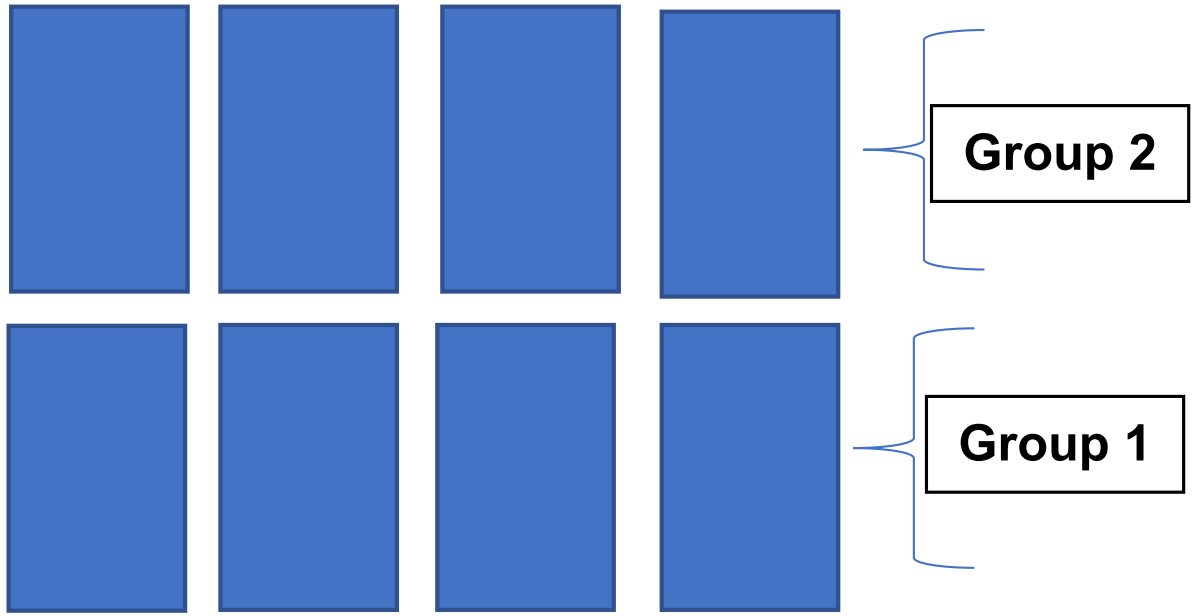
- Rows determine the first and second defeat session.
- Label cages to ensure proper identification of the animals
3. The four aggressor cages are emptied and placed in a row next to the defeated mice.
- Hopper with food and water, enrichment and block all removed from cage.
4. Dim red lights should be placed now.
5. At the exact time turn off white lights in the room- only the red lights are on.
6. Set a timer for 5 minutes.
7. Place each mouse in group one in one of the 4 aggressor cages, cover cages
with lids and start 5-minute timer.
8. While watching defeats acts of aggression include:
- Pushing
- Hitting
- Biting
- Tail rattle
- Mounting
- Parrying
- Kicking of bedding onto subject animal.
9. Be sure to take a tally of # of attacks using pen and paper or a “clicker”.
10.When to intervene in the defeats:
- The “dust ball” – when mice are engaging each other for longer than 5 seconds causing a mess of bedding and neither mouse can be distinguished from each other.
- Aims for the stomach – the aggressor appears as if it is going to bite the subject in the stomach.
- Consistent biting – the aggressor is biting in one area repetitively (the subject mouse will usually jump).
11.How to intervene
- Shift cage back and forth while still on the table to separate mice.
- Physically separate mice with hand or with lid of cages.
- If extreme, remove aggressor from cage for 10- 20 seconds.
12.When timer goes off, remove defeated mice from the cage inspect them for bites, and place them back into their home cage.
- If moderately or severely bitten, clean wound with betadine immediately and place them back in their home cage.
13.Repeat these steps with group 2, while group 1 receives a 5-minute break.
14.After completing group 2, shift the aggressors’ cages once to the right. See example below:

15.Repeat steps 6-14 3 times for each of 10 days .
16. Return mice to the animal room in total darkness
- Ehlen, J and Bush, B J(2023). Social defeat and social avoidance test. Bio-protocol Preprint. bio-protocol.org/prep2158.
- Bush, B. J., Donnay, C., Andrews, E. A., Lewis-Sanders, D., Gray, C. L., Qiao, Z., Brager, A. J., Johnson, H., Brewer, H. C., Sood, S., Saafir, T., Benveniste, M., Paul, K. N. and Ehlen, J. C.(2022). Non-rapid eye movement sleep determines resilience to social stress. eLife. DOI: 10.7554/eLife.80206
Do you have any questions about this protocol?
Post your question to gather feedback from the community. We will also invite the authors of this article to respond.
 Post a Question


