- Protocols

- Articles and Issues
- For Authors
- About
- Become a Reviewer


Most Read Protocols
Most Read
Most viewed in the last three months
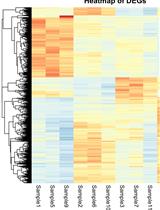
A Guide to Basic RNA Sequencing Data Processing and Transcriptomic Analysis


RNA sequencing (RNA-Seq) has transformed transcriptomic research, enabling researchers to perform large-scale inspection of mRNA levels in living cells. With the growing applicability of this technique to many scientific investigations, the analysis of next-generation sequencing (NGS) data becomes an important yet challenging task, especially for researchers without a bioinformatics background. This protocol offers a beginner-friendly step-by-step guide to analyze NGS data (starting from raw .fastq files), providing the required codes with an explanation of the different steps and software used. We outline a computational workflow that includes quality control, trimming of reads, read alignment to the genome, and gene quantification, ultimately enabling researchers to identify differentially expressed genes and gain insights on mRNA levels. Multiple approaches to visualize this data using statistical and graphical tools in R are also described, allowing the generation of heatmaps and volcano plots to represent genes and gene sets of interest.
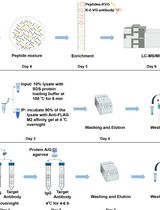
A Practical Experimental Protocol for Identification and Validation of UFMylation Substrate in Human Cells
UFMylation is an evolutionarily conserved ubiquitin-like modification that covalently conjugates UFM1 to lysine residues of substrates via a sequential E1-E2-E3 enzymatic cascade. UFMylation plays a pivotal role in maintaining cellular homeostasis, and its dysregulation is closely linked to multiple major diseases, including malignant tumors, hematopoietic defects, neurodegenerative disorders, and congenital developmental defects, highlighting its important biological significance. However, few substrates of UFMylation have been reported to date, limiting our deep understanding of the mechanistic functions of this modification. This major bottleneck stems from two major technical limitations: the overwhelming abundance of ribosomal protein L26 (RPL26)-UFM1 conjugates masks signals from low-abundance substrates, and conventional methods rely on cumbersome cotransfection of multiple pathway components with poor efficiency and specificity in UFMylated peptides enrichment. To address these challenges, we have developed an effective and specific experimental protocol for UFMylation detection and large-scale substrate identification. This protocol employs CRISPR-Cas9-mediated gene editing to generate UFSP1/UFSP2 double-knockout (UFSP1KO/UFSP2KO, DKO) HEK293T cells, which completely abrogate de-UFMylation and thus significantly elevate global protein UFMylation levels upon exogenous introduction of mature UFM1-ΔC2. In addition, exogenous co-expression of the E3 ligase core components UFL1 and DDRGK1 can further improve the sensitivity of substrate detection. This protocol enables large-scale identification of UFMylation substrates with modification sites via high-efficiency enrichment with the K-ε-VG antibody and LC-MS/MS analysis.
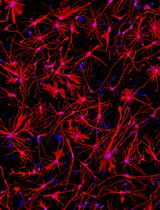
Generation of Human Induced Pluripotent Stem Cell (hiPSC)-Derived Astrocytes for Amyotrophic Lateral Sclerosis and Other Neurodegenerative Disease Studies
Astrocytes are increasingly recognized for their important role in neurodegenerative diseases like amyotrophic lateral sclerosis (ALS). In ALS, astrocytes shift from their primary function of providing neuronal homeostatic support towards a reactive and toxic role, which overall contributes to neuronal toxicity and cell death. Currently, our knowledge on these processes is incomplete, and time-efficient and reproducible model systems in a human context are therefore required to understand and therapeutically modulate the toxic astrocytic response for future treatment options. Here, we present an efficient and straightforward protocol to generate human induced pluripotent stem cell (hiPSC)-derived astrocytes implementing a differentiation scheme based on small molecules. Through an initial 25 days, hiPSCs are differentiated into astrocytes, which are matured for 4+ weeks. The hiPSC-derived astrocytes can be cryopreserved at every passage during differentiation and maturation. This provides convenient pauses in the protocol as well as cell banking opportunities, thereby limiting the need to continuously start from hiPSCs. The protocol has already proven valuable in ALS research but can be adapted to any desired research field where astrocytes are of interest.Key features• This protocol requires preexisting experience in hiPSC culturing for a successful outcome.• The protocol relies on a small molecule differentiation scheme and an easy-to-follow methodology, which can be paused at several time points.• The protocol generates >50 × 106 astrocytes per differentiation, which can be cryopreserved at every passage, ensuring a large-scale experimental output.Graphical overview
A Universal Resazurin-Based Viability Assay for Prokaryotic and Eukaryotic Cells in 2D and 3D Cultures



In vitro cytotoxicity assessments frequently rely on staining-based methods that indirectly estimate viable cell numbers. A major limitation of many such techniques is their endpoint nature, requiring cell lysis or irreversible processing that precludes longitudinal monitoring of cellular responses following treatment. An ideal assay for evaluating cell viability and proliferation should be simple, rapid, cost-effective, reproducible, and highly sensitive, while also enabling accurate quantification with minimal interference from test compounds. The resazurin reduction assay satisfies these criteria, offering a sensitive and economical alternative to conventional tetrazolium-based methods. Although both assay types depend on the metabolic reduction of a dye by viable cells, they differ mechanistically. Tetrazolium salts (e.g., MTT) are reduced by cellular dehydrogenases to insoluble formazan crystals that require solubilization before detection. In contrast, resazurin-a cell-permeable, non-fluorescent blue dye-is reduced to resorufin, a highly fluorescent compound detectable without additional processing steps. This property renders the resazurin assay broadly applicable to viability testing in eukaryotic cells cultured in both 2D and 3D formats, as well as in bacterial systems. Here, we present a resazurin-based reduction assay across diverse experimental models, emphasizing its practicality, reproducibility, and adaptability for real-time viability monitoring.
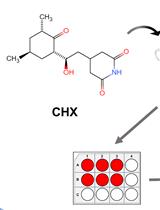
Cycloheximide (CHX) Chase Assay to Examine Protein Half-life
Cycloheximide (CHX) is a small molecule derived from Streptomyces griseus that acts as fungicide. As a ribosome inhibitor, CHX can restrict the translation elongation of eukaryotic protein synthesis. Once protein synthesis is inhibited by CHX, the level of intracellular proteins decreases by degradation through the proteasome or lysosome system. Thus, the CHX chase assay is widely recognized and used to observe intracellular protein degradation and to determine the half-life of a given protein in eukaryotes. Here, we present a complete experimental procedure of the CHX chase assay.Graphical overview
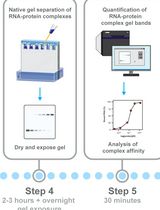
Electrophoretic Mobility Shift Assay (EMSA) for Assessing RNA–Protein Binding and Complex Formation Using Recombinant RNA-Binding Proteins and In Vitro–Transcribed RNA

Evaluating RNA–protein interactions is key to understanding post-transcriptional gene regulation. Electrophoretic mobility shift assays (EMSAs) remain a widely used technique to study these interactions, revealing information about binding affinities and binding modalities, including cooperativity and complex formation. Here, we detail, in a step-by-step protocol, how to perform EMSAs. We describe how to generate, purify, and quantitate 32P-radiolabeled RNA by in vitro transcription, as well as the expression and purification of recombinant RNA-binding proteins in E. coli using ELAV as an example. We then describe how to set up binding reactions using serial dilutions in a microtiter plate format of recombinant ELAV and in vitro–transcribed RNA and how to perform EMSAs using native low-crosslinked acrylamide gels, with detailed graphically supported instructions and troubleshooting guides.
Optical Tissue Clearing and Small-Molecule Labeling of Paraffin-Embedded Breast Cancer and Axillary Lymph Node Human Tissue Samples
Breast cancer is the most frequently diagnosed cancer in women, representing approximately 25% of all cancers in women worldwide. Both breast cancer research and histopathological diagnostics mainly show a two-dimensional planar view of the three-dimensional breast cancerous architecture. Recently, the application of optical tissue clearing, together with 3D microscopy, has been applied to visualize the complexity of whole tumor samples. Preliminary studies on whole-organ mouse mammary glands and tissues from human breast cancer patients subjected to optical tissue clearing and volumetric imaging have enabled the detection of previously unrecognized spatial cellular interactions and structural features within intact breast tissue. There is currently no standardized clearing workflow for breast and lymph node tissues. In this protocol, we optimized and validated the MASH (multiscale architectonic staining of human cortex) immunolabeling-enabled three-dimensional imaging of solvent-cleared organs (iDISCO)-like clearing and labeling pipeline for the investigation of formalin-fixed and paraffin-embedded (FFPE) breast tissue and lymph nodes obtained from breast cancer patients. This illustrates the application of the protocol in a new biological and clinical context, as human breast and lymph node tissues differ substantially from brain tissues in their composition, architecture, and optical properties. Whole FFPE tissue blocks are deparaffinized in liquid paraffin and xylene, bleached through methanol dehydration and a subsequent hydrogen peroxide incubation, and stained with a diverse set of small molecule dyes. As a next step, the tissues are delipidated and subjected to refractive index matching with ethyl cinnamate to reach optimal tissue transparency. Importantly, the applied dehydration and delipidation nicely preserve the morphology of the tissue, and the shrinkage is minimal. This allows reliable 3D imaging of large tissue samples within a timeframe of 10 days, providing clinicians and biomedical researchers with a more holistic view of the FFPE tissue sample and its spatial organization.
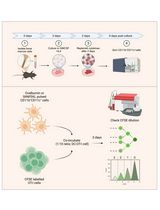
In Vitro Bone Marrow–Derived Dendritic Cells (BMDC) Generation for Antigen Presentation Assay

Dendritic cells (DC) are sentinel cells of the immune system that process and present antigens to activate T cells, thus serving to bridge the innate and adaptive immune systems. DCs are particularly efficient at cross-presentation whereby exogenously acquired antigens are processed and presented in context with MHCI molecules to activate CD8+ T cells. Assaying antigen presentation by DCs is a critical parameter in assessing immune functionality. However, the low abundance of bona fide DCs within the lymphoid compartments limits the utility of such assays. An alternative approach employing the culturing of bone marrow cells in the presence of factors needed for DC lineage commitment can result in the differentiation of bone marrow dendritic cells (BMDCs). This protocol details the process of in vitro generation of BMDCs and demonstrates their subsequent utility in antigen presentation assays. The protocol described can be adapted to various conditions and antigens.
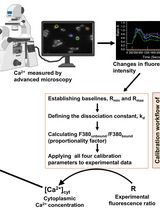
Calcium Imaging in H4IIE Liver Cells and Primary Rodent Hepatocytes: A Cost-Effective Protocol for Use With Fura-2 AM Ca2+ Indicator
Calcium signaling is a universal, versatile process in which ionized or free calcium (Ca2+) acts as a second messenger to regulate various cellular activities, including hormone secretion, contraction, proliferation, gene expression, and apoptosis. Changes in the cytoplasmic free Ca2+ concentration ([Ca2+]cyt) in hepatocytes play a central role in mediating the actions of insulin, glucagon, catecholamines, and other hormones on carbohydrate, lipid, and protein metabolism in the liver. Ratiometric chemical Ca2+ indicators are fluorescent dyes that change their emission or excitation spectrum upon binding to calcium, allowing for precise, quantitative measurements of changes in the intracellular Ca2+ concentration. They enable calibration by calculating the ratio of two fluorescence intensities, correcting for artifacts such as uneven dye loading, photobleaching, and cell volume variations. Fura-2 acetoxymethyl ester (AM) (hereinafter referred to as Fura-2), a ratiometric and sensitive indicator dye, is a popular fluorescent Ca2+ reporter for measuring intracellular calcium. Here, we describe a comprehensive and detailed protocol for Ca2+ imaging of the H4IIE cell line and primary rodent hepatocytes in vitro via the chemical reporter Fura-2, which can also be employed on a wide variety of cell types. Unlike previously published protocols, this protocol addresses the challenge of facilitating the attachment of liver cell lines and primary hepatocytes to glass coverslips for imaging using an inverted fluorescence microscope. Our protocol describes two different loading/labeling strategies for Fura-2 dye: one is cost-effective but requires skillful pipettor handling, and the second one is easy but expensive as it needs a large volume of Krebs-Ringer HEPES (KRH)-Fura-2 solution. If the coverslips are handled properly, the cost-effective coverslip-only loading approach produces similar quality results as the large volume method. Finally, we describe a simple and user-friendly procedure to analyze Ca2+ signals over time using Microsoft Excel’s functional equations.
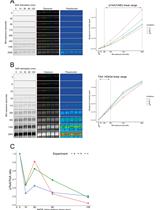
A Simple, Reproducible Procedure for Chemiluminescent Western Blot Quantification
Western blotting is a universally used technique to identify specific proteins from a heterogeneous and complex mixture. However, there is no clear and common procedure to quantify the results obtained, resulting in variations due to the different software and protocols used in each laboratory. Here, we have developed a procedure based on the increase in chemiluminescent signal to obtain a representative value for each band to be quantified. Images were processed with ImageJ and subsequently compared using R software. The result is a linear regression model in which we use the slope of the signal increase within the combined linear range of detection to compare between samples. This approach allows to quantify and compare protein levels from different conditions in a simple and reproducible way. Graphical overview
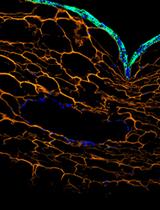
Stepwise Generation of Vascularized Multilayered 3D Organotypic Skin Models
Skin models play critical roles in understanding disease mechanisms and advancing therapeutic development. However, conventional systems based on 2D cell cultures, in vivo animal models, and ex vivo tissue explants are limited by insufficient physiological complexity, interspecies differences, and restricted accessibility, respectively. Advances in biofabrication technologies have enabled the engineering of 3D skin equivalents that better balance biological complexity and experimental scalability. Here, we present a biofabrication protocol inspired by the regenerative processes of wound healing to construct vascularized 3D organotypic skin models in a stepwise manner. The approach integrates bioprinting for precise spatial organization of cellular compartments with guided cell self-organization to achieve native-like tissue complexity and heterogeneity. Through a programmable culture strategy, tissue maturation proceeds sequentially through keratinocyte proliferation and collective migration, microchannel endothelialization, basal-to-suprabasal differentiation, and progressive extracellular matrix remodeling within a fibrin-based scaffold. The resulting tissue constructs comprise stratified epidermal layers positioned atop a vascularized, fibroblast-remodeled dermal matrix. Beyond reproducing key structural features of human skin, this protocol recapitulates cellular processes associated with tissue regeneration, providing a dynamic platform for investigating disease pathogenesis, progression, and therapeutic responses.
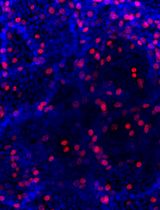
An Optimized Protocol for Simultaneous Propagation of Patient-derived Organoids and Matching CAFs
Recurrent hormone receptor-positive (HR+) breast cancer is a leading cause of cancer mortality in women. Recurrence and resistance to targeted therapies have been difficult to study due to the long clinical course of the disease, the complex nature of resistance, and the lack of clinically relevant model systems. Existing models are limited to a few HR+ cell lines, organoid models, and patient-derived xenograft models, all lacking components of the human tumor microenvironment. Furthermore, the low take rate and loss of estrogen receptor (ER) expression in patient-derived organoids (PDOs) has been challenging. Our protocol allows simultaneous isolation of PDOs and matching cancer-associated fibroblasts (CAFs) from primary and metastatic HR+ breast cancers. Importantly, our protocol has a higher take rate and enables long-term culturing of PDOs that retain ER expression. Our matching PDOs and CAFs will provide researchers with a new resource to study the influence of the tumor microenvironment on various aspects of cancer biology such as cell growth and drug resistance in HR+ breast cancer.
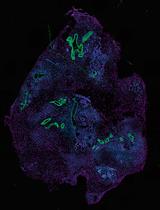
Histological Processing of Organoids for Immunostaining
Organoids are three-dimensional cell structures derived from stem cells that recapitulate the architecture and function of native tissues. Histological analysis of organoids is essential for assessing their structure, cellular composition, and responses to experimental conditions. However, their small size and fragility make standard paraffin embedding workflows difficult. Here, we describe a robust and reproducible protocol for the fixation, paraffin embedding, and sectioning of human organoids, enabling high-quality histological and immunostaining analysis. The method involves direct fixation within the culture matrix and inclusion in HistoGel to prevent organoid loss during processing. The protocol is compatible with hematoxylin–eosin (H&E) staining and multiplex immunofluorescence. Critical steps, troubleshooting, and adaptations for intestinal and cardiac organoids are discussed. This cost-effective and accessible method supports long-term preservation and detailed structural analysis of organoid models.
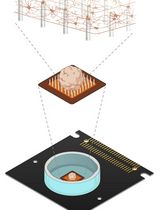
Measuring Electrophysiological Activity in Acute Brain Slices, Spheroids, and Organoids Using 3D High-Density Multielectrode Arrays
Animal and human stem cell–derived three-dimensional models to study physio-pathological brain functioning are becoming a gold standard for in vitro electrophysiology, as they enable the recapitulation of complex network properties by accounting for spatial architectural features that better reflect in vivo conditions than simpler 2D models. Standard planar multielectrode arrays (MEAs), typically providing tens of recording electrodes, are commonly used to record activity from 2D neuronal cultures. However, when adapted for use with 3D models, planar 2D MEAs showed limited effectiveness. The main issues are limited specimen adhesion to the chip, a low number of sensing elements, inability to retrieve signals from within the tissue, and reduced perfusion and vitality of the tissue in contact with sensors. To overcome these limitations, a new generation of microchip-based 3D high-density MEAs (3D HD-MEA) has been developed and validated in recent years. This technological advancement has improved the sensing capabilities and the vitality of 3D models, providing a tool tailored to maximize their potential. Here, we present an optimized protocol for neural network activity recordings in 3D models (including acute slices, brain spheroids, and organoids) from various brain regions using 3D HD-MEAs. First, we summarize the critical steps for 1) obtaining viable acute slices from the mouse cerebellum, cortico-hippocampal circuit, and prefrontal cortex, 2) establishing efficient coupling of the slices with the chip, and 3) performing recordings and analyses. We then describe the main procedures required to obtain human and animal brain spheroids and neural organoids, as well as standardized routines to perform effective recordings and analyses. For each section, we highlight the crucial steps, identify tips for specific applications, and propose troubleshooting procedures. For example, the same type of preparation (e.g., acute slices) requires different adjustments when working with different brain areas. The specific information provided here is intended to assist researchers in their daily efforts to obtain efficient and reproducible functional recordings from 3D models by using the cutting-edge technique of 3D HD-MEA.
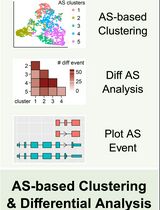
Stepwise Protocol for Alternative Splicing Analysis in Single-Cell SMART-Seq2 RNA-Seq Data
RNA alternative splicing (AS) is an essential process that expands transcriptomic and proteomic diversity in eukaryotic cells and contributes to cellular heterogeneity across physiological and pathological conditions in humans. With the advent of single-cell RNA sequencing (scRNA-seq), it has become possible to study AS at cellular resolution, although robust and standardized analytical workflows remain to be developed. Here, we present a stepwise protocol for analyzing AS in single cells from pediatric high-grade gliomas (pHGGs) harboring the histone H3.3 lysine 27-to-methionine (H3.3K27M) mutation using SMART-Seq2 scRNA-seq data. Starting from raw sequencing reads, the workflow includes read alignment, gene-level quantification, splice junction and intron quantification, and single-nucleotide variant-based mutation detection. Gene expression–based clustering and cell-type annotation are performed by using the Seurat R package. AS analysis in tumor cells is then conducted using the MARVEL R package in combination with customized scripts to calculate percent spliced-in (PSI) values, identify variable AS events, perform dimensionality reduction, cluster cells, conduct differential AS analysis, and visualize splicing patterns. This protocol provides a reproducible and comprehensive framework for dissecting AS dynamics at single-cell resolution. It is readily adaptable to other SMART-Seq2 datasets and facilitates systematic investigation of splicing heterogeneity in diverse biological contexts.
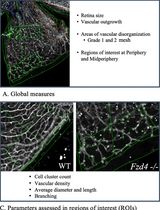
Computational Quantification of Mouse Retinal Vasculature Using ImageJ
Postnatal mouse retinal vascular development is a widely used model for studying retinal vascular diseases and evaluating candidate therapies. This is particularly relevant for inherited disorders such as familial exudative vitreoretinopathy (FEVR), in which impaired vascular growth and organization are central to disease pathogenesis. Numerous approaches have been used to assess retinal vasculature in mouse flat mounts, ranging from qualitative descriptions to limited quantitative measurements of vascular growth. However, phenotypic variability across genetic models, including different models of FEVR, complicates comparisons and underscores the need for standardized, comprehensive multi-parameter analyses that are suitable for rapid and cost-effective screening studies. We describe a standardized morphometric protocol using ImageJ software to quantitatively analyze mouse retinal vasculature in a reproducible manner. The protocol begins with measurement of areas of vascular disorganization (meshes) as well as total vascular and retinal area. Two defined regions in the peripheral and midperipheral retina are then selected to quantify cell clusters, followed by image processing, binarization, and skeletonization. From these processed images, vascular density, branch number, branch length and thickness, junction number, triple points, and box-counting fractal dimension and lacunarity are quantified. Overall, this protocol provides a rapid, cost-effective, and standardized framework for quantifying retinal vascular phenotypes across diverse mouse models. By capturing multiple structural features and accommodating phenotypic variability, it is well-suited for comparative studies and therapeutic screening in retinal vascular disease.
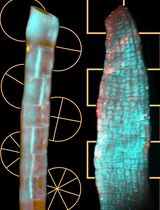
4D Imaging of Brown Algal Cells
In vivo imaging of brown algal cells in 3D is extremely challenging because of the presence of pigments, such as fucoxanthin and chlorophyll, that diffract light. Moreover, brown algae live in seawater, a high ionic environment that can change the fluorochrome behavior or cause aggregates. Despite the importance of in vivo monitoring the developmental process of brown algal tissues, 4D imaging (x, y, z, t) on a conventional fluorescence microscope is limited. Here, we propose a detailed protocol using a new orange-emitting fluorochrome, styryl benzoindoleninium sulfonate (SBIS), suitable for labeling the plasma membrane of brown algal cells and multicolor in vivo imaging in 3D using confocal and light sheet microscopy. Unlike calcofluor white (CFW), SBIS enables the observation of brown algal cells at thicknesses up to 25 μm and over periods up to 7 days on brown algae such as Ectocarpus sp., Sphacelaria rigidula, and Saccharina latissima. This step-by-step protocol includes labeling of brown algal tissues, mounting for 3D confocal time-lapse microscopy, and mounting for 3D time-lapse light sheet microscopy. The imaging setup and parameters have been optimized for minimizing toxicity for brown algal tissues, improving signal-to-noise ratio, and enabling detailed visualization of cell shape. Therefore, this protocol provides robust and multiplexed imaging with 4D visualization of brown algal cell shape throughout the brown algae growth, offering broad applications to brown algae study at the cellular level.
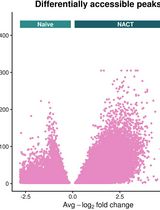
Identification of DNA-Binding Factor Enrichment in Chromatin Accessibility Data to Define a Persister Cell Signature
Chemotherapy-resistant persister cells are a major driver of cancer recurrence, yet their epigenetic basis remains poorly characterized. This protocol describes a computational pipeline for identifying DNA-binding factors (DBFs) that are enriched in accessible chromatin that collectively define a persister cell signature (PCS). Starting from single-nucleus ATAC-seq (snATAC-seq) data processed through the 10x Genomics CellRanger ARC pipeline, this protocol covers (1) the creation of a Seurat/Signac object with ATAC peaks, (2) the optional integration of DNA-binding data from the ReMap2022 database as a per-cell chromatin module assay, (3) differential accessibility analysis across clinically defined comparison groups, and (4) identifying and defining the top enriched DBFs as the PCS. This approach is applicable to any snATAC-seq dataset in which cells can be grouped by clinical response, treatment status, or resistance phenotype.
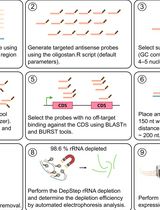
DepStep: An Efficient One-Step rRNA Depletion Workflow for RNA Sequencing in Non-model Organisms
RNA sequencing (RNA-seq) has revolutionized transcriptomics, ribosome footprinting, and polysome profiling, providing a wealth of data. Many RNA-based omics typically remove ribosomal RNA (rRNA) or select for messenger RNA (mRNA) prior to sequencing, thereby enriching reads that map to the translationally active part of the transcriptome. Prokaryotic mRNA lacks the 3′ polyadenylated tail, which excludes the use of poly(A)-based selection methods. While commercial rRNA depletion products exist for prokaryotes, their proprietary nature and potential inefficiency with non-model organisms are factors that may limit broad-scale application. To mitigate this issue, we designed DepStep, a consolidated workflow for one-step rRNA depletion using species-specific biotinylated antisense probes for selective hybridization and removal of the target rRNA molecules. As a proof-of-concept, RNA-seq libraries of the psychrophilic gram-negative bacterium Shewanella glacialimarina TZS-4T were prepared using both DepStep and a commercial rRNA depletion kit for gram-negative bacteria, to which DepStep was benchmarked. DepStep compares favorably to the commercial depletion kit; it removes >98.6% of the rRNA content in the sample, resulting in sequencing libraries where the coding DNA sequence (CDS) reads account for >80% of the total read count. Importantly, DepStep’s cost-per-sample is three times lower than the commercial kit, establishing DepStep as a simple yet cost-effective alternative to commercial solutions.
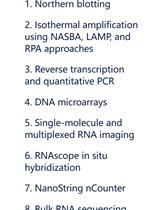
RNA Detection Technologies: A Method‑Centric Guide to Principles and Reproducibility

RNA detection techniques have expanded into a diverse methodological landscape spanning hybridization, amplification, imaging, and sequencing. In this review, we provide a method‑centric synthesis of the major technologies that define this landscape, emphasizing how each method’s core principle, practical strengths, and sources of variability shape its reproducibility. Beginning with foundational approaches, we trace the development of isothermal amplification, quantitative and digital PCR, microarrays, single‑molecule imaging, multiplexed spatial methods, and amplification‑free digital quantification. We then examine the transformative impact of bulk, single‑cell, long‑read, direct‑RNA, and spatial transcriptomics, as well as CRISPR‑based detection and metabolic labeling for RNA dynamics. Across these technologies, we focus on reproducibility as a defining dimension of evaluation: mature methods benefit from established standards, whereas newer approaches remain pre‑standardization and require careful, experiment‑specific controls. Rigorous method selection must be guided by the biological question, required resolution, sample constraints, and the maturity of each method’s reproducibility framework. We conclude that RNA detection methods form interconnected methodological paths of problem‑solving rather than simple replacements.

Protocol Collections
Comprehensive collections of detailed, peer-reviewed protocols focusing on specific topics