


- Protocols

- Articles and Issues
- For Authors
- About
- Become a Reviewer


Detection of Hydroxyproline O-galactoside by LC/MS

Published: Vol 6, Iss 2, Jan 20, 2016 DOI: 10.21769/BioProtoc.1710 Views: 7091
Reviewed by: Renate WeizbauerHarrie van ErpAnonymous reviewer(s)
 PDF
PDF  Ask a question
Original research article
The authors used this protocol in:
Mar 2015
Advertisement



Protocol Collections
Comprehensive collections of detailed, peer-reviewed protocols focusing on specific topics



Abstract
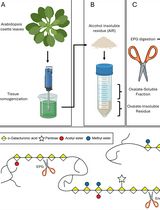
Hydroxyproline (Hyp) O-galactosylation is a plant-specific post-translational modification found in extracellular glycoproteins such as arabinogalactan proteins (AGPs). Hyp O-galactosylation is mediated by Hyp O-galactosyltransferase (HPGT) that catalyzes the transfer of a D-galactopyranosyl residue to the hydroxyl group of Hyp residues of peptides from the sugar donor UDP-α-D-Gal. Here we describe an LC/MS-based method for the detection of Hyp O-galactoside.
Materials and Reagents
- Cotton
- 1 ml Micropipette tip
- Hyp O-galactosylated peptides or proteins
- 0.22 M Ba(OH)2
- 0.32 M sulfuric acid
- 1 M NaOH
- 1 M HCl
- 10% aqueous ammonia
- 80% acetonitrile containing 0.1% formic acid
- 99.9% acetonitrile (HPLC grade) containing 0.1% formic acid
- Water (HPLC grade) containing 0.1% formic acid
Equipment
- Heat block
- Centrifugal evaporator
- BT AG 50W-X8 Resin (100-200 mg resin, H+ form) (Bio-Rad Laboratories, catalog number: 143-5441 )
- Micro centrifuge
- Micro HPLC system (JASCO International Co., model: micro21 LC-01 )
- LCQ Deca XP-plus ESI ion-trap mass spectrometer (Thermo Fisher Scientific)
- TSK-gel Amide-80 (3 μm) column (2.0 x 150 mm) (Tosoh Bioscience LLC, catalog number: 21865 )
Procedure
- Ba(OH)2 hydrolysis
- Dissolve galactosylated peptide in 500 μl 0.22 M Ba(OH)2 in a glass vial with cap.
- Incubate at 105 °C, 6 h.
- Incubate on ice for 5 min.
- Add 500 μl of 0.32 M sulfuric acid on ice.
- Centrifuge at 20,000 x g for 5 min.
- Dissolve galactosylated peptide in 500 μl 0.22 M Ba(OH)2 in a glass vial with cap.
- Partial purification of Ba(OH)2 hydrolysate (Figure 1)
- Plug a 1 ml micropipette tip with a small amount of cotton.
- Pack 200 mg AG 50W-X8 resin into the tip column.
- Wash the column with 1 ml of 1 M NaOH by gravity flow.
- Wash the column with 1 ml of 1 M HCl by gravity flow.
- Wash the column with 1 ml of water by gravity flow.
- Apply supernatant of the Ba(OH)2 hydrolysate of the galactosylated peptide to the tip column.
- Wash the column with 1 ml of water by gravity flow.
- Elute with 1 ml of 10% aqueous ammonia by gravity flow.
- Evaporate the sample to dryness.
- Dissolve in 100 μl 80% acetonitrile containing 0.1% formic acid.
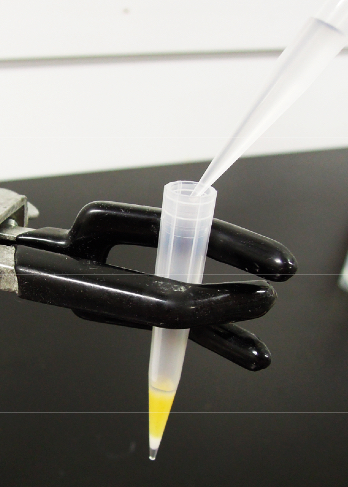
Figure 1. Partial purification of Ba(OH)2 hydrolysate. Supernatant of the Ba(OH)2 hydrolysate of the galactosylated peptide was applied to the tip column.
- Plug a 1 ml micropipette tip with a small amount of cotton.
- LC/MS analysis
10 μl aliquots of the assay solution will be analyzed by LC-MS using a micro HPLC (high pressure liquid chromatography) system connected to an LCQ Deca XP-plus ESI ion-trap mass spectrometer. Chromatographic separation is performed by normal-phase HPLC on a TSK-gel Amide-80 (3 μm) column (2 x 150 mm).
- The mobile phase is composed of HPLC grade water containing 0.1% formic acid (eluent A) and HPLC grade acetonitrile containing 0.1% formic acid (eluent B). The column temperature is maintained at 25 °C.
- The HPLC flow rate is 100 μl/min, and the elution gradient was 60 to 40% B over 10 min.
- Subject the HPLC eluate to coupled electrospray ionization (ESI) in the positive ionization mode.
- MS source parameters are as follows:
- Capillary temperature: 200 V
- Capillary voltage: 42 V
- Source voltage: 5 kV
- Source current: 8.5 μA
- Sheath gas flow: 50
- Aux gas flow: 0
- Sweep gas flow: 0
- The mass range: m/z 500-2000
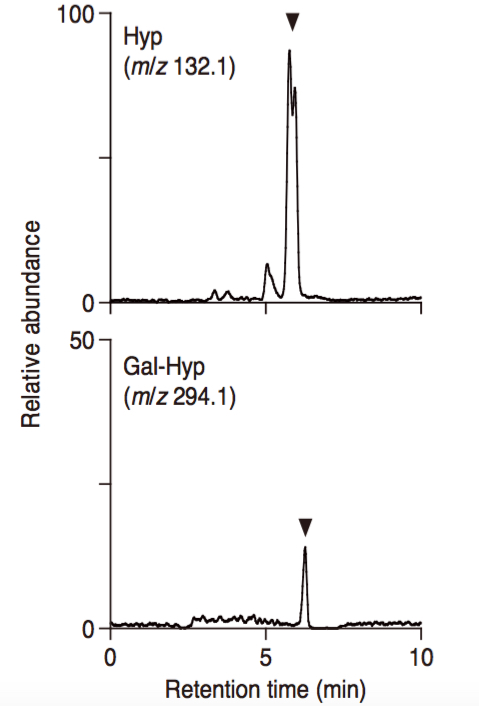
Figure 2. Detection of Hyp O-galactoside in Ba(OH)2 hydrolysates of in vitro galactosylated AGP14 by LC-MS. The sample was analyzed by selected ion monitoring of Hyp (m/z 132.1) and Gal-Hyp (m/z 294.1). Ba(OH)2 hydrolysis yields a diastereomeric pair of amino acids.
- Capillary temperature: 200 V
- The mass spectra are obtained by selected ion monitoring in zoom scan mode (Hyp: m/z 132.1, Gal-Hyp: m/z 294.1).
- The mobile phase is composed of HPLC grade water containing 0.1% formic acid (eluent A) and HPLC grade acetonitrile containing 0.1% formic acid (eluent B). The column temperature is maintained at 25 °C.
Acknowledgments
This is the detailed protocol for the detection of HPGT activity described by Ogawa-Ohnishi and Matsubayashi (2015). This research was supported by a Grant-in-Aid for Scientific Research (S) from the Ministry of Education, Culture, Sports, Science, and Technology (No. 25221105).
References
- Ogawa-Ohnishi, M. and Matsubayashi, Y. (2015). Identification of three potent hydroxyproline O-galactosyltransferases in Arabidopsis. Plant J 81(5): 736-746.
- Ogawa-Ohnishi, M., Matsushita, W. and Matsubayashi, Y. (2013). Identification of three hydroxyproline O-arabinosyltransferases in Arabidopsis thaliana. Nat Chem Biol 9(11): 726-730.
Article Information
Copyright
© 2016 The Authors; exclusive licensee Bio-protocol LLC.
How to cite
Ogawa-Ohnishi, M. and Matsubayashi, Y. (2016). Detection of Hydroxyproline O-galactoside by LC/MS. Bio-protocol 6(2): e1710. DOI: 10.21769/BioProtoc.1710.

 Download Citation in RIS Format
Category
Plant Science > Plant biochemistry > Carbohydrate
Biochemistry > Carbohydrate > Polysaccharide
Do you have any questions about this protocol?
Post your question to gather feedback from the community. We will also invite the authors of this article to respond.
 Post a Question


