
- Protocols

- About
-


A Protocol for Assessing Intergenerational Effects of Maternal Microbial Exposure on Lifespan in C. elegans

Last updated date: Nov 10, 2026 DOI: 10.21769/p3028 Views: 93 Forks: 0
 Download PDF
 Ask a
question

 How to
cite

 Favorite


A Protocol for Assessing Intergenerational Effects of Maternal Microbial Exposure on Lifespan in C. elegans
Nandini P. Anantha1, Nicole B. Wicker1, *, Snehal N. Chaudhari1, *
1Department of Biochemistry, University of Wisconsin-Madison, Madison, WI 53706, USA
*For correspondence: NBW: nbwicker@wisc.edu; SNC: snchaudhari@wisc.edu
Abstract
A growing focus in aging and host-microbiome research is understanding how parental dietary and microbial exposures shape offspring longevity. Conventional Caenorhabditis elegans (C. elegans) approaches often rely on Escherichia coli OP50, with alternative diet studies limited to aerobic or probiotic strains fed continuously from hatching. Here, we describe a method to culture both aerobic and anaerobic microbes and measure their intergenerational impacts on progeny lifespan with an option for a germ-free model. Synchronized larval 4 (L4) stage hermaphrodites are exposed to an alternative bacterial diet until gravid, followed by egg laying on Escherichia coli OP50 plates to generate an unexposed F1 progeny cohort for subsequent longevity assays. This protocol provides a controlled framework to distinguish intergenerational parental microbial effects from direct microbial colonization of the offspring.
Key features
Restricts microbial exposure to adult worms, separating aging effects from early growth and development
Evaluates non-genetic inherited lifespan changes in (F1) progeny
Keywords: Caenorhabditis elegans, intergenerational inheritance, gut microbiome, host-microbe interactions
This protocol is used in: Wicker et al., manuscript in preparation (no DOI available at time of submission)
Graphical overview
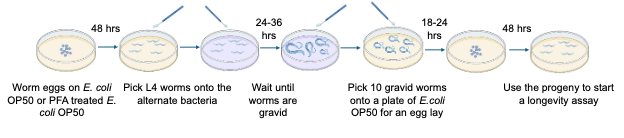
Experimental workflow to collect C. elegans progeny from singly exposed parents.
Background
Host-microbe interactions play a crucial role in regulating host physiology and lifespan. [1,2] Beyond directly modulating parental health and aging, gut microbes act as key environmental drivers that can influence progeny. A growing body of evidence indicates that environmental conditions experienced by parents such as dietary restriction can induce non-genetic physiological changes that are transmitted across generations [3,4]. Investigating these intergenerational phenotypes requires using a protocol that can culture fastidious anaerobic gut bacteria while separating parental exposure from the development of the offspring being scored.
The vast majority of C. elegans research uses E. coli OP50 as the standard laboratory diet. [1,2] When alternate bacterial strains are tested in C. elegans, most existing protocols provide them continuously from hatching. [2] This continuous exposure cannot distinguish whether changes in lifespan arise from effects on larval development, direct adult feeding, or inherited parental signals [3,4].
This protocol addresses this problem by restricting exposure to the alternate diet to the L4-to-adult transition and adulthood. Nematodes are age-synchronized and grown to the L4 stage on standard E. coli OP50, or on paraformaldehyde (PFA)-killed E. coli OP50 to provide a metabolically inert bacterial background that approximates a germ-free state. L4 animals are then transferred to nematode growth media (NGM) plates seeded with the alternate bacterial strain, which is cultured in Cullen-Haiser Gut (CHG) medium. Once gravid, the parents (P0) are transferred back to live E. coli OP50 to lay eggs. Since the F1 (intergenerational) offspring develop exclusively on the control diet, E. coli OP50, without directly encountering the alternate bacterial strain, any observed difference in lifespan can be attributed to parental exposure rather than to direct exposure of the animals being scored. This protocol offers a framework for testing how parental exposure to specific gut commensal species alters offspring lifespan.
Materials and reagents
Biological materials
Caenorhabditis elegans wild-type (N2) nematodes purchased from the Caenorhabditis Genetics Center (CGC)
Reagents
Agar (Millipore Sigma, catalog number: A7002)
Sodium chloride (DOT Scientific, catalog number: DSS23020-1000)
BactoTM Peptone powder (DOT Scientific, catalog number: DSP20250-500)
Potassium dihydrogen phosphate (VWR, catalog number: 0781-1KG)
Sodium phosphate dibasic (VWR, catalog number: S23100-500.0)
Brain Heart Infusion media (DOT Scientific, catalog number: DSB11000-1000)
Nutrient agar (DOT Scientific, catalog number: DSN14100-500)
Vitamin K1-Hemin solution (VWR, catalog number: 90000-618 (PK))
Trace mineral supplement (ATCC) (VWR, catalog number: MSPP-MDTMS)
Vitamin Supplement (ATCC) (VWR ,catalog number: MSPP-MDVS)
GenClone™ fetal bovine serum (Genesee Scientific, catalog number: 25-541)
D-(+)-cellobiose (SCBT, catalog number: sc-280654A)
D-(+)-maltose monohydrate (DOT Scientific, catalog number: DSM22000-250)
D-(-)-fructose (SCBT, catalog number: sc-221456)
L-cysteine monohydrate (DOT Scientific, catalog number: DSC81020-100)
Luria broth (DOT Scientific, catalog number: DSL24400-500)
16% Paraformaldehyde (formaldehyde) aqueous solution(Fisher Scientific Electron Microscopy Sciences, catalog number: 50-980-486)
Sodium hydroxide (SCBT, catalog number: sc-203387A)
Clorox disinfecting bleach(Staples, catalog number: 951358)
Nystatin (DOT Scientific, catalog number: DSN82020-5)
Solutions
Cholesterol in ethanol, 5 mg/mL
1 M CaCl2
1 M MgSO4
1 M KPO4
Recipes
1. Nematode Growth Media
In a 2 L flask, agar, NaCl, and peptone are mixed with 975 mL ultrapure water and magnetic stir bar. Autoclave media to sterilize. Once the media has cooled to 65°C, add cholesterol in ethanol and mix, then add MgSO4, CaCl2, and KPO4. Pour ~10 mL of NGM into 60 mm petri dishes. Allow to cool and dry at room temperature for at least 48 hours before seeding. Excess plates can be stored at 4°C for up to 12 weeks. Allow stored plates to warm up at room temperature for at least 12 hours before seeding.
Reagent | Final concentration | Quantity or Volume |
Agar | 1.7% (w/v) | 17 g |
NaCl powder | 50 mM | 3 g |
BactoTM Peptone powder | 0.25% (w/v) | 2.5 g |
Cholesterol in 100% ethanol, 5 mg/mL | 0.005 mg/mL | 1 mL |
CaCl2 1 M | 1 mM | 1 mL |
MgSO4 1 M | 1 mM | 1 mL |
KPO4 1 M | 25 mM | 25 mL |
Total | n/a | 1000 mL |
2. M9 Buffer
In a 2 L bottle, combine reagents and add ultrapure water to 1 L. Autoclave media to sterilize. Once the media has cooled to 65ºC, add MgSO4. The media can be stored at room temperature for up to 3 months.
Reagent | Final concentration | Quantity or Volume |
KH2PO4 | 22.05 mM | 3 g |
Na2HPO4 | 47.27 mM | 6 g |
NaCl | 86.55 mM | 5 g |
MgSO4 1 M | 1 mM | 1 mL |
Total: | n/a | 1000 mL |
3. Cullen-Haiser Gut (CHG) Liquid Media
In a 1 L bottle, combine BHI and 452.5 mL of ultrapure water, mixing until fully dissolved. Autoclave the media to sterilize. While the media is being autoclaved, thaw the heat inactivated fetal bovine serum (FBS) in 37°C water bath. Remove media from autoclave and allow it to cool to 65ºC. While the media is cooling, thaw vitamin supplement on the bench. Once the media is cooled, add the vitamin K-hemin supplement, trace mineral supplement, vitamin supplement, heat-inactivated FBS, and the carbohydrate/cysteine solution. The media can be stored at room temperature for 3 months.
Reagent | Final concentration | Quantity or Volume |
Brain Heart Infusion (BHI) | 3.7% (w/v) | 18.5 g |
BBL Vitamin K-Hemin Solution | 1% (v/v) | 5 mL |
Trace Mineral Supplement (ATCC) | 1% (v/v) | 5 mL |
Vitamin Supplement (ATCC) | 1% (v/v) | 5 mL |
Heat Inactivated FBS | 5% (v/v) | 25 mL |
Carbohydrate/Cysteine Solution | 1.5% (v/v) | 7.5 mL |
Total: | n/a | 500 mL |
4. Cullen-Haiser Gut (CHG) Agar Media
In a 1 L bottle, combine BHI, BactoTM agar and 452.5 mL of ultrapure water and mix until the powders have fully dissolved. Autoclave the media. While the media is being autoclaved, thaw the heat inactivated FBS in 37°C water bath. Remove media from autoclave and allow it to cool to 65ºC. While the media is cooling, thaw vitamin supplement on the bench. Once the media is cooled, add the vitamin K-hemin supplement, trace mineral supplement, vitamin supplement, heat-inactivated FBS, and the carbohydrate/cysteine solution. Pour the media into 90-100 mm petri dishes. Allow the plates to dry overnight and store at 4ºC for up to 3 months.
Reagent | Final concentration | Quantity or Volume |
Brain Heart Infusion (BHI) | 3.7% (w/v) | 18.5 g |
BactoTM Agar | 1.5 % (w/v) | 7.5 g |
BBL Vitamin K-Hemin Solution | 1% (v/v) | 5 mL |
Trace Mineral Supplement (ATCC) | 1% (v/v) | 5 mL |
Vitamin Supplement (ATCC) | 1% (v/v) | 5 mL |
Heat-inactivated FBS | 5% (v/v) | 25 mL |
Carbohydrate/Cysteine Solution | 1.5% (v/v) | 7.5 mL |
Total: | n/a | 500 mL |
5. Heat Inactivated FBS
Thaw one 500 mL bottle of FBS at 37°C. Aliquot 45 mL into 50 mL conical tubes. Heat-inactivate the solution in a 55°C water bath for 30 minutes. Store at -20°C.
6. Carbohydrate/Cysteine Solution
In a 200 mL flask, combine all of the reagents and add 100 mL ultrapure water. Stir with heat to dissolve and add ultrapure water to 150 mL. Filter sterilize the solution using a 0.22 micron vacuum filter sterilization unit and store at 4ºC for up to 3 months.
Reagent | Final concentration | Quantity or Volume |
D-(+)-cellobiose | 194.8 mM | 10 g |
D-(+)-maltose monohydrate | 185 mM | 10 g |
D-(-)-fructose | 370 mM | 10 g |
L-cysteine monohydrate | 239.5 mM | 5 g |
Total: | n/a | 150 mL |
7. LB Agar Media
In a 1 L bottle, combine Luria broth, agar, and add ultrapure water to 500 mL. Autoclave on a liquid cycle (121°C, 15 psi) for 15 minutes. Once it has cooled to 65°C, pour into 90-100 mm petri dishes. Allow the plates to dry overnight and store at 4ºC for up to 3 months.
Reagent | Final concentration | Quantity or Volume |
Luria Broth | 2.5% (w/v) | 12.5 g |
Nutrient Agar | 1.5% (w/v) | 7.5 g |
Total: | n/a | 500 mL |
8. E. coli OP50 Culture
Streak out E. coli OP50 on an LB agar plate and incubate at 37°C overnight. Pick a single bacterial colony and inoculate it in 50 mL of liquid CHG media and incubate at 37°C with agitation at 180 rpm overnight. Store in 4°C and use the culture for up to 2 months.
9. 5X concentrated paraformaldehyde (PFA)-fixed E. coli OP50
To 50 mL of OP50 culture, add 781 µL of 16% PFA stock solution to achieve a final concentration of 0.25% and incubate at 37°C with agitation at 180 rpm for 2 hours. Centrifuge the culture at 3000 x g for 15 minutes and remove supernatant. Add 50 mL M9 buffer. Repeat wash 4 more times for a total of 5 washes. Remove supernatant and resuspend in 10 mL of CHG media. To confirm complete fixation, plate 100 µL of the final PFA-fixed OP50 on LB or CHG agar, incubate 48 h at 37°C, and confirm no colonies grow. Concentrated bacterial stocks can be stored at 4°C and used for up to two weeks.
Reagent | Final concentration | Quantity or Volume |
Liquid OP50 Culture | 1x | 50 mL |
Paraformaldehyde (PFA) 16% | 0.25% | 781 µL |
Total: | n/a | 50 mL |
Laboratory supplies
Inoculating loop and needle (Fisherbrand, catalog number: 22363603)
60 mm petri dishes (DOT Scientific, catalog number: 66-1560)
100x15 mm petri dishes (DOT Scientific, catalog number: 667695)
5 mL Serological pipet, (DOT Scientific BioDot, catalog number: 457205)
10 mL Serological pipet (DOT Scientific BioDot, catalog number: 457210)
50 mL Serological pipet (DOT Scientific BioDot, catalog number: 457250)
0.22 µm filter unit (Fisher Scientific, catalog number: SCGP00525)
- 15 mL conical tubes (Genesee Scientific, catalog number: 21-103)
1.5 mL Fisherbrand™ microcentrifuge tubes (Fisher Scientific, catalog number: 14666319)
50 ml conical tubes(Fisher Scientific, catalog number: 1443222)
Equipment
Dissecting Microscope (Wild Heerbrugg, catalog number 250722)
Anaerobic chamber with static temperature incubator (Coy Labs)
Bench-top centrifuge (Thermo Scientific, catalog number 75009240)
Shaking temperature incubator (Thermo Scientific, catalog number SK4002CPKG)
Static temperature incubator (Thermo Scientific, catalog number 50125590)
Autoclave
Water Bath (37°C to 55°C)
1000 µL pipet
200 µL pipet
20°C Incubator
Benchmark Scientific Roto-Mini, Rotator with Tube Holders, 115V (Pipette.com, catalog number: R2020)
Stir Bars (VWR, catalog number: 3 0620-414 (CS))
Hot plate/stirrer (NETA, catalog number: LN-D0320)
Vortex (Thermo Scientific, catalog number 88882010)
Worm pick
Flame source (for sterilization) (Humboldt, catalog number H-6225)
-20°C freezer
4°C refrigerator
Software and datasets
1. GraphPad Prism 11 (version 11.0.2 (92))
Procedure
A. Age Synchronization of Nematodes
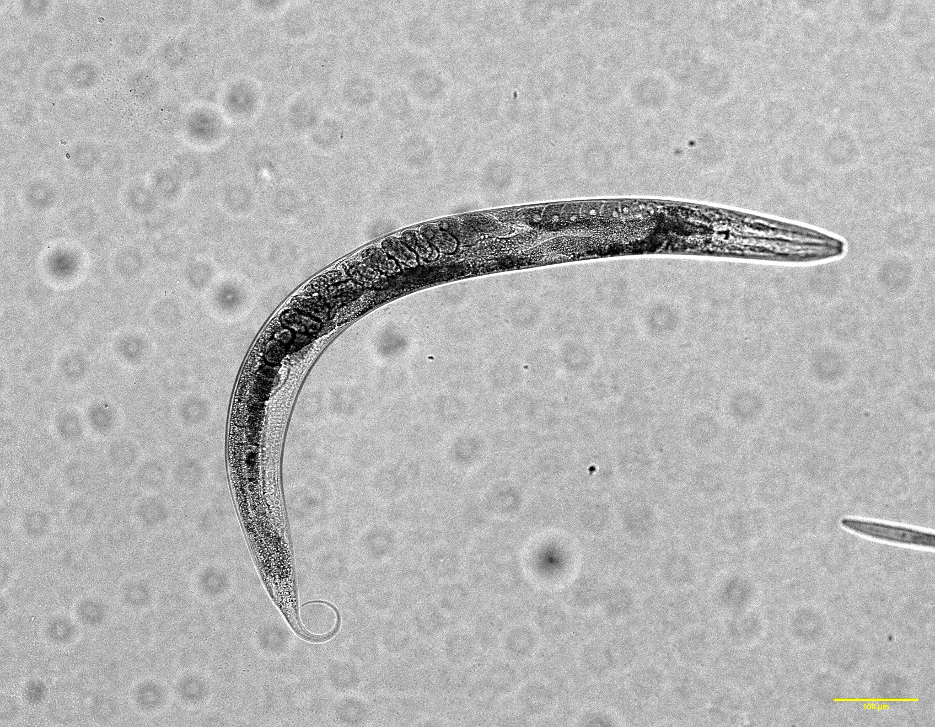
1. Pick 10-15 gravid (ready to lay eggs) nematodes (See Figure S1) onto a 60 mm NGM plate (see Recipes) seeded with E. coli OP50 (see Recipes).
2. Propagate the nematodes for 2-3 days at 20°C or until a dense population of gravid adult nematodes is obtained.
3. Wash the plate with 3.5 mL of deionized H2O (diH2O) and transfer the worms to a 15 mL conical tube.
4. Prepare the bleaching solution (fresh every time) in a 1.5 mL microcentrifuge tube by combining:
a. 330 µL diH2O
b. 500 µL 5 M NaOH
c. 670 µL 8.25% NaOCl
5. Add the bleaching solution to the 15 mL conical tube containing the worms for a total volume of 5 mL. Vortex the tube and then rotate the tube for 2 minutes at room temperature using a rotator until the worm bodies have dissolved and there are eggs visible.
6. Centrifuge the tube at 1300 x g for 1 minute to pellet the eggs.
7. Remove as much supernatant as possible using a serological pipette without disturbing the egg pellet.
8. Add 10 mL of M9 buffer immediately (see Recipes).
9. Centrifuge the tube at 1300 x g for 1 minute.
10. Repeat steps 7-9 twice more to wash the eggs and remove bleach solution.
11. Remove approximately 9 mL of supernatant and tap or flick the tube to resuspend the pellet.
12. Add 1-2 drops (50 µL) of the resuspended egg suspension to an NGM plate seeded with E. coli OP50 or paraformaldehyde (PFA) fixed E. coli OP50 (see Recipes) (see Notes).
13. Keep age synchronized worms at 20°C until they are at the L4 stage (See Figure S2).
B. Bacterial Preparation
1. Streak out the bacterial strain of interest on Cullen-Haiser Gut (CHG) agar plates (see Recipes) and incubate at 37°C overnight in aerobic or anaerobic conditions as appropriate for the strain.
2. Pick a single bacterial colony and inoculate in 3 mL of liquid CHG media.
3. Incubate at 37°C overnight to generate the starter culture in aerobic or anaerobic conditions as appropriate for the strain. For aerobic strains, continuously shake the culture at 180rpm.
4. Add 50 µL of the starter culture to 5 mL of liquid CHG media and incubate at 37°C for 48 hours in aerobic or anaerobic conditions as appropriate for the strain.
5. Centrifuge the bacterial culture at 3000 x g for 15 minutes.
6. Remove all but 1 mL of the supernatant from the tube and vortex for 20 seconds or until the bacterial pellet is completely resuspended.
7. Seed 60 mm NGM plates with approximately 200 µL of the resuspended bacterial culture.
8. Allow the culture to dry overnight at room temperature before use.
C. Exposure to Alternative Bacterial Diet
1. Transfer 10 L4 stage nematodes onto NGM plates seeded with the alternate bacterial diet for 24 hours, or until the nematodes become gravid at 20°C.
2. Transfer the 10 gravid nematodes to an NGM plate seeded with E. coli OP50 and allow them to lay eggs at 20°C.
3. After 24 hours, remove the 10 parental nematodes (P0). Allow their progeny (F1) to develop to the L4 stage at 20°C.
4. Transfer at least 30 (maximum 50) L4 stage progeny onto a 60 mm NGM plate seeded with E. coli OP50 to start the lifespan assay.
D. Lifespan Assay
1. Transfer at least 30 (maximum 50) nematodes at the L4 stage onto one 60 mm NGM plate seeded with E. coli OP50 – this is Day 0 of the lifespan assay.
2. Transfer the worms to a fresh OP50 seeded 60 mm NGM plate every other day. At each transfer, record the number of dead and missing worms. Continue monitoring and transferring the worms until all remaining nematodes have died.
Note: A dead worm typically has a rigid morphology and does not respond to light prodding by a worm pick. A missing worm is a worm that is no longer on the plate, has been lost during transfer, has burrowed into the agar, or has bagged.
Data analysis
Lifespan data was processed and analyzed using GraphPad Prism 11. The day the 35 nematodes at the L4 stage are transferred onto one 60 mm NGM plate is defined as Day 0. Animals were scored every other day and counted as dead when they failed to respond to gentle prodding with a worm pick. Animals that crawled off the plate, had a ruptured vulva, displayed internal hatching (bagging), or dried out on the plate wall were classified as missing and censored. For data entry, a dead worm was coded as 1 and a missing (censored) worm was coded as 0. Censored animals were included in the survival analysis up to the point of censoring. Survival curves were generated using the Kaplan-Meier method, and statistical significance between control and experimental groups was determined using the log-rank (Mantel-Cox) test. Differences were considered statistically significant at p<0.05. Median lifespan, mean lifespan, and maximum lifespan were calculated for each condition. Each replicate of the experiment had at least 30 worms per plate, with no more than 50 to avoid overcrowding and food depletion. Plates showing fungal or bacterial contamination, or plates where food (E. coli OP50) was completely depleted before scheduled transfers were excluded from the analysis.
Validation of protocol
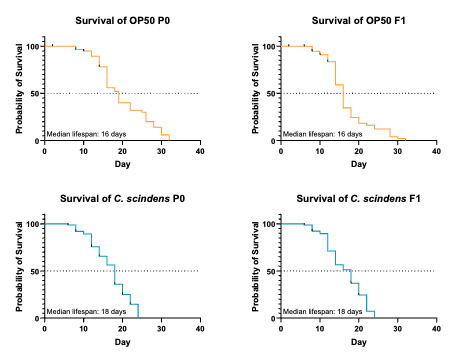
Figure 1. Kaplan-Meier survival curves of parental (P0) and F1 progeny at 20 °C grown on E. coli OP50 (top) and the anaerobic gut commensal Clostridium scindens (bottom). P0 animals were maintained on live E. coli OP50 throughout and exposed to indicated bacterial strains from the L4 stage for 24 h, until gravid, then returned to live E. coli OP50 to lay eggs; control P0 animals remained on live E. coli OP50 for the equivalent period. F1 progeny developed and were scored exclusively on live E. coli OP50. Curves are pooled from 2 independent experiments with 30 animals each (n = 60 per condition). Survival analysis was performed in GraphPad Prism 11 as described in Data analysis.
In the research article below, the germ-free model was used.
This protocol has been used in the following research article:
Wicker et al., Figure 5, Manuscript in preparation, DOI: [Pending]
General notes and troubleshooting
General notes
PFA fixed E. coli OP50 can be used during the larval stage to simulate a germ-free environment, ensuring no live OP50 colonizes the gut prior to alternate bacterial exposure. If a germ-free model is not required, standard live E. coli OP50 can be used instead. A germ-free model could produce different results.
All the bacteria should be grown with the same media type.
The alternate bacterial strain can be inoculated in a different media anaerobically if needed, and the NGM plates can be seeded anaerobically if needed.
To grow bacteria in anaerobic conditions, all reagents must off-gas in the anaerobic chamber overnight before use.
Nystatin or other antifungals can be added to NGM media in cases of persistent fungal contamination but are otherwise not required.
Troubleshooting
Problem 1: Fungal contamination on NGM plates.
Possible cause: Presence of fungal spores.
Solution: Add 1.25 mL of nystatin in 70% ethanol per 1 L of NGM.
Supplementary information
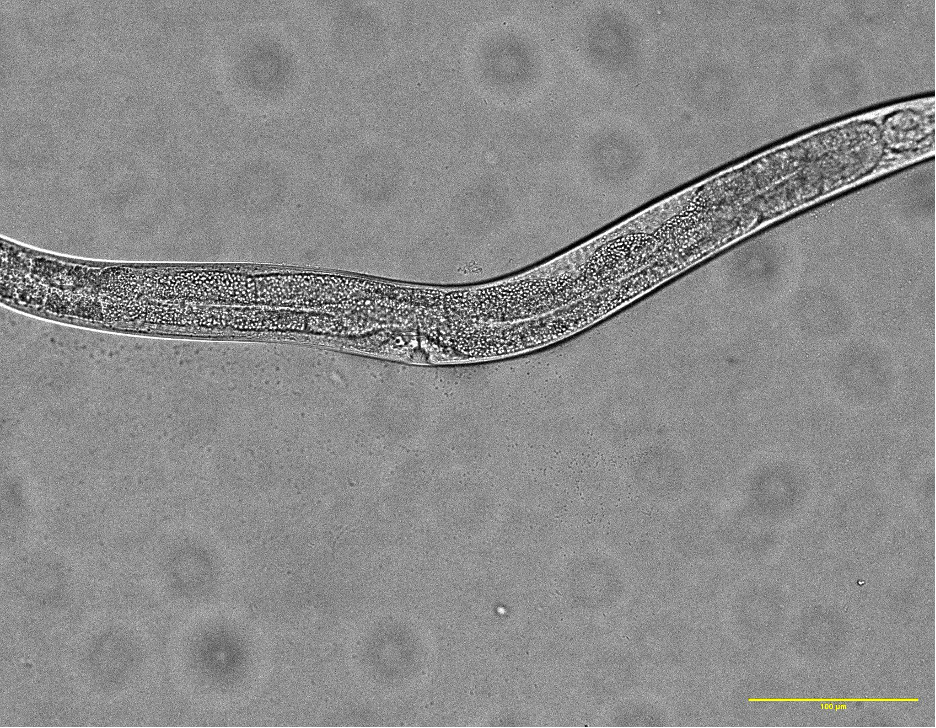
- Figure S1. Image of a gravid worm. A gravid worm can be identified by the presence of eggs. Image taken on a confocal microscope at 10X.
- Figure S2. Image of an L4 worm. An L4 worm can be identified by the white crescent, half-moon shape in the middle of its body, with a “Christmas tree”-like structure inside (See Figure S3). Image taken on a confocal microscope at 10X.
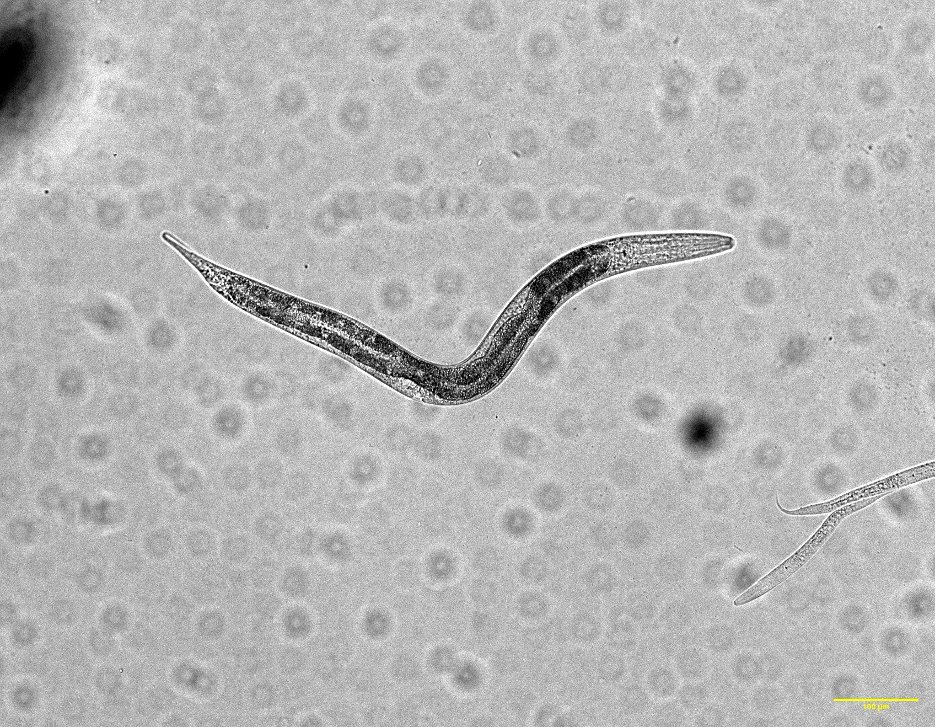
Figure S3. Identifying markers for L4 animals. The “Christmas tree” morphology used to identify an L4 worm. Image taken on a confocal microscope at 20X.
Acknowledgments
Research reported in this publication was supported by the National Institute On Aging of the National Institutes of Health under Award Number T32AG000213. The content is solely the responsibility of the authors and does not necessarily represent the official views of the National Institutes of Health. This research was additionally supported by the Department of Biochemistry at UW-Madison. Some components of the graphical overview were created using BioRender.com.
Author contributions
Conceptualization, N.P.A., N.B.W., S.N.C.; Writing – Original Draft, N.P.A.; Writing – Review and Editing, N.P.A., N.B.W., S.N.C.; Investigation – N.P.A. and N.B.W.; Funding acquisition, S.N.C., N.B.W.; Supervision, S.N.C.
Competing interests
The authors declare they have no competing interests.
Ethical considerations
No ethics approval or welfare guidelines are required since C. elegans is a non-protected species.
References
1. Yen, C. A. and Curran, S. P. (2016). Gene-diet interactions and aging in C. elegans. Exp Gerontol, 86, 106–112. https://doi.org/10.1016/j.exger.2016.02.012
2. Sánchez-Blanco, A., Rodríguez-Matellán, A., González-Paramás, A., González-Manzano, S., Kim, S. K. and Mollinedo, F. (2016). Dietary and microbiome factors determine longevity in Caenorhabditis elegans. Aging (Albany NY), 8(7), 1513–1530. https://doi.org/10.18632/aging.101008
3. Rechavi, O. and Lev, I. (2017). Principles of Transgenerational Small RNA Inheritance in Caenorhabditis elegans. Current Biology, 27(14), R720–R730. https://doi.org/10.1016/j.cub.2017.05.043
4. Hibshman, J. D., Hung, A. and Baugh, L. R. (2016). Maternal Diet and Insulin-Like Signaling Control Intergenerational Plasticity of Progeny Size and Starvation Resistance. PLoS Genet, 12(10), e1006396. https://doi.org/10.1371/journal.pgen.1006396
- Anantha, N P, Wicker, N B and Chaudhari, S N(2026). A Protocol for Assessing Intergenerational Effects of Maternal Microbial Exposure on Lifespan in C. elegans. Bio-protocol Preprint. 10.21769/p3028.
Do you have any questions about this protocol?
Post your question to gather feedback from the community. We will also invite the authors of this article to respond.
 Post a Question


