
- Home
- Protocols

-


Tissue-specific Expression of Target Genes in Rice (GUS Staining, RNA In Situ Hybridization)

Last updated date: Nov 16, 2024 DOI: 10.21769/p2758 Views: 233 Forks: 0
 Download PDF
 Ask a
question
Ask a
question
 How to
cite
How to
cite
 Favorite


Background
With the rapid development of high-throughput sequencing technology, whole genome sequencing and the cloning of target genes have become increasingly accessible, making the revelation of gene functions a research goal in the field of plant breeding. This is also an important research focus in the era of functional genomics (post-genomics). Genes are selectively expressed during the growth and development of plants, leading to the differentiation of various organs, with their expression levels varying in different tissues and developmental stages of the individual. Therefore, when studying the function of a gene, we typically need to understand in which organs, tissues, and cells it is expressed, when it is expressed, and how much it is expressed. For analysis based on expression patterns, a variety of semi-quantitative, quantitative, and even visualization techniques have been developed.
Organ and Tissue-Specific Expression: In which organs and tissues is the gene expressed? This can be determined through tissue sectioning and in situ hybridization techniques.
Spatiotemporal Expression Patterns: At which stages of the plant life cycle is the gene expressed? This can be studied by analyzing samples from different developmental stages.
Expression Level Variations: How do the expression levels of the gene change under different conditions? This can be measured using quantitative PCR (qPCR), Northern blotting, and other techniques.
Expression Pattern Analysis Techniques: To analyze gene expression patterns, scientists have developed a variety of techniques, including:
Semi-quantitative Techniques: Such as Northern blotting, which provides relative levels of gene expression.
Quantitative Techniques: Such as qPCR and microarrays, which can precisely measure changes in gene expression levels.
Visualization Techniques: Such as in situ hybridization and histochemical staining of gene expression, which can visually observe gene expression at the cellular or tissue level.
These techniques not only help us understand the role of genes in plant development but also reveal how genes respond to environmental changes and changes in plant physiological status. Through these studies, we can better understand the genetic characteristics of plants, providing a scientific basis for crop improvement and the development of new varieties.
Materials and Reagents
Blotting paper
Filter paper
Sterile large petri dishes
Sterile small petri dishes
Japonica rice seeds
Agrobacterium tumefaciens strain EHA105 (carrying the vector with the target gene)
95% Ethanol
Glucose
Antibiotics (Hygromicin, G418, or herbicide Basta)
Sealing tape
KT (Kinetin) (Sigma, catalog number: K-0753)
6-BA (6-BenzylaminoPurine) (Sigma, catalog number: B-5898)
IAA (Indole-3-acetic acid) (Sigma, catalog number: I-5148)
NAA (Napthalene acetic acid) (Sigma, catalog number: N-0640)
2,4-D (2,4-Dichlorophenoxyacetic acid) (Sigma, catalog number: D-8407)
CH (Casein Enzymatic Hydrolysate) (Sigma, catalog number: C-7290)
Kanamycin (USB, catalog number: 17924)
Cn (Carbenicillin) (GiBco BRL, catalog number: 10177-012)
Hn (hygromycin B) (GiBco BRL, catalog number: 10687-010)
AS (Acetosringone) (Aldrich chem., CO 01531 EG)
Pyridoxine HCl (Sigma, catalog number: P-8666)
Nicotinic acid (Sigma, catalog number: N-0765)
Inositol (Sigma, catalog number: I-3011)
Thiamine HCl (VB1) (Sigma, catalog number: T-3902)
Phytagel HCl (VB6) (Sigma, catalog number: P-8169)
Dimethyl Sulfoxide-DMSO (Sigma, catalog number: D-5879)
X-gluc (5-bromo-4-chloro-3-indolyl-D-galactoside) (Sigma, catalog number: B-3783)
NH4NO3
KH2PO4
KNO3
MgSO4·7H2O
CaCl2
CaCl2·2H2O
MnSO4·4H2O
ZnSO4·7H2O
KI
H3BO3
Na2MoO4·2H2O
CoCl2·6H2O
CuSO4·5H2O
(NH4)SO4
MnSO4·H2O
FeSO4·7H2O
Na2·EDTA·2H2O
KCl
NaH2PO4
NaMoO4·2H2O
KOH
HgCl2
Proline
Sucrose
MSmax Stock Solution (10x) (see solution recipe)
MSmin Stock Solution (100x) (see solution recipe)
N6max Stock Solution (10x) (see solution recipe)
N6min Stock Solution (100x) (see solution recipe)
Fe2+-EDTA Stock Solution (100x) (see solution recipe)
Vitamin Stock Solution (100x) (see solution recipe)
AAmax Stock Solution (10x) (see solution recipe)
AAmin Stock Solution (100x) (see solution recipe)
6-BA Stock Solution (1 mg/ml) (see solution recipe)
KT Stock Solution (1 mg/ml) (see solution recipe)
2,4-D Stock Solution (1 mg/ml) (see solution recipe)
100 mM AS Stock Solution (see solution recipe)
IAA Stock Solution (1 mg/ml) (see solution recipe)
NAA Stock Solution (1 mg/ml) (see solution recipe)
1 N KOH Stock Solution (see solution recipe)
0.15% HgCl2 (see solution recipe)
Induction Medium (see solution recipe)
Subculture Medium (see solution recipe)
Pre-culture Medium (see solution recipe)
Co-culture Medium (see solution recipe)
Suspension Culture Medium (see solution recipe)
Selection Medium (see solution recipe)
Differentiation Medium (see solution recipe)
Rooting Medium (see solution recipe)
Imported centrifuge tubes (RNase-free)
A4 paper
Slide boxes
Glass slides
Handkerchiefs (ordinary dust-free handkerchiefs for wiping dust off the surface of glass slides)
Glass bottles
Paper boxes
Facial tissues
Parafilm
Anhydrous ethanol
Xylene
Paraffin wax
Alkaline water
DEPC-H2O
0.1% poly-L-lysine solution (Sigma or Shenggong, RNase-free)
Tris-saturated phenol
Chloroform (CHCl3)
Sodium acetate (NaAc)
DIG RNA Labeling Kit (SP6/T7) (Roche, catalog number: 1 175 025)
DIG Wash and Block Buffer Set (Roche, catalog number: 1 585 762)
DNase I (Invitrogen, catalog number: 18068-015)
Ethylenediaminetetraacetic acid (EDTA)
Lithium chloride (LiCl)
Glacial acetic acid
NcoI enzyme (other restriction enzymes can be chosen as needed)
SP6 transcriptase
SalI enzyme (other restriction enzymes can be chosen as needed)
T7 transcriptase
Glycine
Formaldehyde
Tris base
Concentrated hydrochloric acid
EDTA-2Na
Sodium hydroxide (NaOH)
Magnesium chloride hexahydrate (MgCl2·6H2O)
Sodium chloride (NaCl)
Sodium dihydrogen phosphate (NaH2PO4)
Disodium hydrogen phosphate (Na2HPO4)
Yeast tRNA (Invitrogen, catalog number: 15401029)
Proteinase K buffer
Proteinase K (Invitrogen, catalog number: 25530049)
Phosphate-buffered saline (PBS)
Deionized formamide
Bovine serum albumin (BSA)
Triton X-100
50% FAA fixative (see solution formula)
70% FAA fixative (see solution formula)
1 M Tris-HCl (pH 7.5) (see solution formula)
1 M Tris-HCl (pH 9.5) (see solution formula)
0.5 M EDTA-2Na pH 8.0 (see solution formula)
1 M MgCl2 (see solution formula)
5 M NaCl (see solution formula)
20x SSPE pH 7.4 (see solution formula)
10x PBS pH 7.4 (see solution formula)
50% Dextran sulfate (see solution formula)
10 mg/ml yeast t-RNA (see solution formula)
Proteinase K buffer (see solution formula)
10x Hybridization salts (see solution formula)
Prehybridization solution (see solution formula)
1x Blocking buffer (see solution formula)
BSA washing buffer (see solution formula)
TNM-50 buffer (see solution formula)
Equipment
Decloaking tank
Forceps
Scissors
Forceps
Microtome
Slide spreading table
Oven
Laminar flow hood
UV-Vis spectrophotometer
-20°C refrigerator
Cold centrifuge
In Situ Hybridization - Gene Expression Studies
Experimental Procedure:
1.Sampling, fixation, dehydration, embedding, sectioning
Note: All glassware used must be washed and baked at 180°C for 6 hours. Slides should first be soaked in 95% ethanol, wiped clean, and then baked at 180°C for 6 hours; all reagent bottles must be pre-filled with DEPC-H2O and sterilized; all fixatives, ethanol solutions, etc., must be prepared with DEPC-H2O.
1.1 Prepare FAA fixative (see solution formula)
1.2 Sampling: Cut the required material as small as possible and add it to the pre-cooled FAA fixative. The volume of the fixative should not be less than 10 times the volume of the material. Place the fixative on ice, vacuum for 15 minutes, slowly release the pressure, and repeat twice more until the material settles to the bottom.
1.3 Fixation: After vacuuming, discard the fixative, and replace it with fresh fixative. Fix at 4°C for 24 hours.
1.4 Dehydration: If fixed with 50% FAA, first wash off the fixative with 50% ethanol, change three times, each for 30 minutes; if fixed with 70% FAA, first wash off the fixative with 70% ethanol, change three times, each for 30 minutes. Then proceed with gradient ethanol dehydration at 4°C:
Ethanol Solution | Duration |
70% Ethanol | At least 1 hour, can be left overnight, and can also be stored for a long time. |
85% Ethanol | 1 hour |
95% Ethanol (with Eosin) | At least 1 hour, overnight is recommended. |
1.5 Continue dehydration and clarification (at room temperature)
| Solution | Duration |
| Anhydrous ethanol | 1 hour |
| Anhydrous ethanol | 1 hour |
| 3/4 volume anhydrous ethanol + 1/4 volume xylene | 1.5 hours |
| 1/2 volume anhydrous ethanol + 1/2 volume xylene | 1.5 hours |
| 1/4 volume anhydrous ethanol + 3/4 volume xylene | 1.5 hours |
| Xylene | 1 hour |
| Xylene | 1 hour |
1.6 Impregnation with Paraffin
| Solution | Temperature | Duration |
| Xylene + as much broken paraffin as possible | 42 °C | Overnight |
| Every 8-12 hours, continue to add broken paraffin | 42 °C | 2-3 days |
| 1/2 volume xylene + 1/2 volume paraffin | 48 °C | 2 hours |
| 1/4 volume xylene + 3/4 volume paraffin | 50 °C | 2 hours |
| Pure paraffin | 60 °C | 1 hour |
| Pure paraffin | 60 °C | 1 hour |
| Pure paraffin | 60 °C | 1 hour |
| Pure paraffin | 60 °C | 1 hour |
1.7 Embedding
Fold the paper box in advance and melt new paraffin on an induction cooker, then place it in a 60 °C incubator for standby use. Be careful not to overheat the embedding wax to avoid damaging the tissue. When embedding, first lay a layer of embedding wax, then pour the material from the glass bottle into the paper box, slightly heat the forceps, and arrange the material evenly (try to be as quick as possible, especially after the embedding wax, further operations should be carried out promptly). Allow the material to cool naturally, and it can be collected the next day. Paraffin blocks can be stored for a long time at 4 °C. Note that the embedding wax should not be poured too much, with a thickness of 1-2 cm for the paraffin block being appropriate; too thick is not conducive to sectioning. The temperature of pure wax can be increased to 63 °C to prevent the block from cooling and solidifying too quickly during the operation.
1.8 Preparation Before Sectioning
Soak the slide box in alkaline water overnight, then wash with DEPC·H2O, and dry at 42 °C.
Slides used for in situ hybridization must be RNase-free. We need to first soak them in 95% ethanol, then dry with a clean handkerchief, wrap with tin foil, and bake at 180 °C for 6 hours. If the slides themselves are very clean and dust-free, they can also be baked directly at 180 °C for 6 hours. However, if the slides are not clean, it will affect the adhesion and sealing of the sections.
After baking, the slides should be coated with a 0.1% poly-L-lysine solution (Sigma or Shenggong, RNase-free). Method for spreading the solution: On a laminar flow hood, first lay a clean sheet of A4 paper, and arrange the slides face up in two columns on the paper (the frosted side is convenient for writing with a pencil, which is the front side). Add 20 μl of poly-L-lysine to the center of one column of slides, then successively spread the slides with and without poly-L-lysine face to face evenly, being careful not to introduce bubbles. After spreading, place them in a clean slide box. Dry at 37 °C for at least 1 hour.
1.9 Sectioning
Before sectioning, clean the sectioning stage, microtome, and slide spreading table with 70% ethanol and DEPC·H2O in sequence. The section thickness is generally 8-10 μm (if a continuous paraffin ribbon cannot be obtained or if there are many voids in the ribbon, the material should be further trimmed after sampling and the processing times for dehydration, clarification, and impregnation with paraffin should be appropriately extended to ensure full penetration of the wax). For spreading the sections, first drop 1 ml of DEPC-H2O onto the slide, select the required sections (with the smooth side down) to float on the DEPC-H2O drop. Carefully transfer the slide to a slide spreading table at about 40°C, wait for the sections to spread, then use a pipette to remove the DEPC-H2O, place it on the spreading table for a while, flick off the remaining DEPC-H2O, and put it into the slide box. Note that the temperature of the spreading table should not be too high, otherwise bubbles will form, damaging the sections.
Note: The spreading time should not be too long; exceeding 5 minutes can lead to RNA degradation. The cut sections should be dried at 37-42°C for 1-2 days before hybridization. The cut sections should not be left for too long; it is best to cut them just before the other steps are ready.
2.Probe Design and Synthesis
2.1 Principles for probe design:
1)The probe should have good specificity, with no more than 50 bp matching other genes;
2)The length of the probe for hybridization should be 150-200 bp; probes longer than this need to be hydrolyzed (see later), and the template for transcription should not exceed 1.5 Kb;
3)The GC content of the probe should ideally be between 40-60%, without any consecutive repeated bases.
2.2 Cloning and linearization of probe templates:
Amplify the selected cDNA fragment and clone it into a vector containing the T7 or SP6 promoter, such as the p-GEM-T or p-GEM-T Easy vector. Linearization requires the use of restriction enzymes with 5' overhangs, such as Sal I and Nco I. The amount of plasmid for digestion is 20-50 μg, the digestion system is 200 μl, and the digestion time is 2 hours to overnight.
Before purification, take 1 μl of the digestion product to run a gel to check and ensure complete digestion.
After digestion is complete, purification is necessary to ensure that the template is free from RNase and other contaminants. Purification is carried out in imported centrifuge tubes using RNA-specific reagents. The purification steps are as follows:
1)Add water to the digestion system to make it up to 500 μl, then add 250 μl of Tris-saturated phenol and 250 μl of CHCl3, vortex for 5 minutes, and centrifuge at 12,000 rpm for 5 minutes.
2)Transfer the upper aqueous phase supernatant to a new tube, add 500 μl CHCl3, vortex for 5 min, centrifuge at 12,000 rpm for 5 min.
3)Transfer the supernatant to a new tube, add 1/10 volume of 3 M NaAc (pH 5.2, prepared with DEPC-H2O), 2 volumes of anhydrous ethanol, and freeze at -20°C for 3 hours to overnight.
4)Centrifuge at 4°C, 12,000 rpm for 15 min.
5)Wash the precipitate with 70% ethanol, remove the supernatant, and air dry.
6)Dissolve the precipitate in 20 μl DEPC-H2O and measure the concentration.
2.3 Probe transcription: The probe transcription uses Roche's DIG RNA Labeling Kit (SP6/T7), catalog number 1 175 025. All reagents used for transcription are prepared with DEPC-H2O, and the transcription steps are as follows:
1)Transcription system:
1 μg of linearized template
2 μl of 10x Transcription Buffer
2 μl of 10x DIG RNA Labeling Mix
1 μl of Ribonuclease Inhibitor (TaKaRa)
2 μl of T7/SP6 RNA Polymerase Supplement with DEPC·H2O to a total volume of 20 μl, and transcribe at 37°C for 2-2.5 hours.
2)Treat with 2.5 μl of DNase I (Invitrogen) at 37°C for 15 min to remove DNA template.
3)Terminate the reaction with 1 μl of 0.5 M EDTA (pH 8.0).
4)Add 2.5 μl of 4 M LiCl and 75 μl of anhydrous ethanol, and freeze at -20°C for 3 hours to overnight.
5)Centrifuge at 0°C, 12,000 rpm for 20 min.
6)Remove the supernatant, wash with 150 μl of 80% ethanol, centrifuge at 0°C, 12,000 rpm for 20 min.
7)Carefully remove the supernatant, air dry on a laminar flow hood, and dissolve in 20-40 μl of DEPC·H2O. Measure the concentration, run a gel to check, and store at -70°C. If the length of the transcribed probe is appropriate, the process is complete; if the length is too long and the probe does not easily enter the cells, alkaline hydrolysis is required, and proceed further. a. The formula for calculating the time of alkaline hydrolysis is as follows: T = (L0 - Lf) / (K × L0 × Lf)
L0: Initial probe length (Kb)
Lf: Final probe length (Kb)
K: 0.11 Kb/min.
The hydrolysis solution consists of 20 μl of 100 mM NaHCO3 and 30 μl of 100 mM Na2CO3, added to a total volume of 100 μl. The hydrolysis temperature is 60 °C, and the hydrolysis time is calculated according to the formula mentioned above.
b. After hydrolysis, add 5 μl of 10% ice acetic acid, 10 μl of 3 M NaAc, and 2 volumes of anhydrous ethanol, then freeze at -20 °C for 3 hours to overnight.
c. Centrifuge at 0 °C, 12,000 rpm for 20 min.
d. Remove the supernatant, add 150 μl of 80% ethanol to wash, and centrifuge at 0 °C, 12,000 rpm for 20 min.
e. Repeat step d.
f. Carefully remove the supernatant, air dry on a laminar flow hood. Dissolve in 20 μl of DEPC·H2O, measure the concentration, and run a gel to check. Store at -70 °C.
2.4 Determination of Probe Orientation:
The probe used for in situ hybridization detection is an RNA that is complementary to the mRNA in the body, called antisense RNA; the probe used for negative control is an RNA that is the same direction as the mRNA in the body, called sense RNA. The orientation of the cDNA ligated into the p-GEM-T or p-GEM-T Easy vector determines the direction of the probe.
If the cDNA is ligated into the vector in the direction shown in Figure 1, the probe transcribed with Nco I digestion and SP6 RNA polymerase is antisense RNA, and the probe transcribed with Sal I digestion and T7 RNA polymerase is sense RNA. If the direction of cDNA ligation is opposite, then the probe orientation is also reversed.
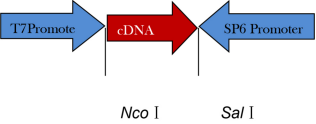
3.Hybridization
3.1 Reagent preparation (see solution recipes)
3.2 Preparation before hybridization: Decloaking tanks, forceps, scissors, etc., should be baked at 180°C for 6 hours, and sections should be baked at 37-42°C for 1-2 days. Thaw the 10x Blocking solution (3) from the -20°C refrigerator (DIG Wash and Block Buffer Set, Roche).
Hybridization Day 1 (Steps 3.3-3.7)
3.3 Deparaffinization and rehydration, carried out in a fume hood:
| Solution | Time |
| Xylene | 20 min |
| Xylene | 20 min |
| Xylene + Anhydrous ethanol | 2 min |
| Anhydrous ethanol | 2 min |
| Anhydrous ethanol | 2 min |
| 95% Ethanol | 2 min |
| 85% Ethanol | 2 min |
| 70% Ethanol | 2 min |
| 50% Ethanol | 2 min |
| 30% Ethanol | 2 min |
| 15% Ethanol | 2 min |
| DEPC·H2O | 2 min |
| DEPC·H2O | 2 min |
While deparaffinizing, prepare and preheat Proteinase K buffer (see solution recipes), preheat in a 37°C incubator.
3.4 Proteinase K treatment
Dilute Proteinase K to 1 μg/ml, treat at 37°C for 40 min. Wash once with PBS, soak in 2 mg/ml Glycine for 2 min, and wash again with PBS.
3.5 Dehydration, using the solutions from (3.3 Deparaffinization and rehydration):
| Solution | Time |
| DEPC·H2O | 2 min |
| DEPC·H2O | 2 min |
| 15% Ethanol | 1 min |
| 30% Ethanol | 1 min |
| 50% Ethanol | 1 min |
| 70% Ethanol | 1 min |
| 85% Ethanol | 1 min |
| 95% Ethanol | 1 min |
Air dry on a laminar flow hood, approximately 30-50 min.
3.6 Pre-hybridization:
Prepare 10x Hybridization salts first, which can be stored at 4°C (see solution recipes).
When pipetting 50% dextran sulfate, cut off the pipette tip, avoid bubble formation during preparation, and centrifuge to remove bubbles if necessary. Pre-hybridization solution can be stored at -20°C.
For pre-hybridization, take 150 μl of pre-hybridization solution and drop it onto the dried slides, cover with appropriately sized clean Parafilm, avoiding bubble formation. Transfer the slides into a centrifuge tube box, add DEPC·H2O to the box, seal tightly to keep moist. Pre-hybridize at 42°C for 1-3 hours.
3.7 Hybridization:
Add the probe to the pre-hybridization solution to a concentration of 400-1000 ng/ml. Remove the Parafilm from the slides, and blot dry on a tissue. Drop 150 μl of the diluted probe onto the slides, cover with Parafilm, and place in a humid box. Hybridize at 42°C for 16-20 hours.
Hybridization Day 2 (Steps 3.8-3.14), no need to use DEPC-H2O for reagent preparation
3.8 Wash three times with 2x SSPE (see solution recipes)
First time, remove Parafilm and immerse the slides in 2x SSPE. Second and third times, 42°C for 15 min each.
3.9 Wash twice with 0.2x SSPE (see solution recipes)
57°C hybridization oven, minimum speed, 30 min, twice.
3.10 Wash with 1x Blocking buffer, room temperature shaker, minimum speed, 30 min. (see solution recipes)
3.11 Immune reaction:
Prepare BSA washing buffer (200 ml, prepare fresh, method see solution recipes).
First, centrifuge Anti-Digoxigenin-AP at 12000 rpm for 5 min, take the supernatant, and dilute in BSA washing buffer (see solution recipes), with a dilution ratio of 1:2500-1:5000, hybridize at room temperature for 2 hrs, shake at minimum speed.
3.12 Antibody washing:
Wash three times with BSA washing buffer, 15 min each, shake at minimum speed. During this time, prepare TNM-50 buffer (120ml) (see solution recipes)
3.13 Wash three times with TNM-50 buffer, 5 min each.
3.14 Color development:
Prepare the color development solution in the dark, add 0.3-0.8 ml NBT/BCIP stock solution (Roche, Cat. No. 1 681 451) to 30 ml TNM-50 buffer, and develop in the dark according to the specific color development situation, overnight.
Hybridization Day 3 (Steps 3.15-3.18)
3.15 When the experimental group shows clear color development and the negative control does not show color, transfer the slides to double-distilled water, wash three times, 2 min each.
3.16 Dehydration, using the solutions from the first day:
| Solution | Time |
| DEPC·H2O | 2 min |
| DEPC·H2O | 2 min |
| 15% Ethanol | 1 min |
| 30% Ethanol | 1 min |
| 50% Ethanol | 1 min |
| 70% Ethanol | 1 min |
| 85% Ethanol | 1 min |
| 95% Ethanol | 1 min |
| Anhydrous Ethanol | 1 min |
| Anhydrous Ethanol | 1 min |
| Anhydrous Ethanol + Xylene | 1 min |
| Xylene | 5 min |
Since the color developed is soluble in ethanol, the dehydration process should be relatively fast, especially when the color developed is light, do not exceed 10 sec at each step.
3.17 Mounting, dry at 37°C.
3.18 Photography and observation.
Solution Recipes
50% FAA Fixative (100 ml)
| Ingredient | Quantity |
| Anhydrous ethanol | 50 ml |
| 37% Formaldehyde | 10 ml |
| Glacial acetic acid | 5 ml |
| DEPC-H2O | Add to 100 ml |
70% FAA Fixative (100 ml)
| Ingredient | Quantity |
| Anhydrous ethanol | 50 ml |
| 37% Formaldehyde | 10 ml |
| Glacial acetic acid | 5 ml |
| DEPC-H2O | Add to 100 ml |
1 M Tris-HCl (pH 7.5) (500 ml)
| Ingredient | Quantity |
| Anhydrous ethanol | 70 ml |
| 37% Formaldehyde | 10 ml |
| Glacial acetic acid | 5 ml |
| DEPC-H2O | Add to 100 ml |
1 M Tris-HCl (pH 9.5) (300 ml)
| Ingredient | Quantity |
| Tris base | 60.55 g |
| Concentrated HCl | Approximately 32 ml |
| DEPC-H2O | Add to 500 ml |
0.5 M EDTA-2Na, pH 8.0 (500 ml)
| Ingredient | Quantity |
| EDTA-2Na | 93.06 g |
| NaOH | Approximately 10 g |
| DEPC-H2O | Add to 500 ml |
1 M MgCl2 (100 ml)
| Ingredient | Quantity |
| MgCl2·6H2O | 20.331 g |
| DEPC-H2O | Add to 100 ml |
5 M NaCl (500 ml)
| Ingredient | Quantity |
| NaCl | 146.1 g |
| DEPC-H2O | Add to 500 ml |
20x SSPE, pH 7.4 (1 L)
| Ingredient | Quantity |
| NaCl | 175.3 g |
| NaH2PO4 | 24 g |
| 0.5 M EDTA (pH 8.0) | 40 ml |
| DEPC-H2O | Add to 1 L |
10x PBS, pH 7.4 (500 ml)
| Ingredient | Quantity |
| NaCl | 38 g |
| NaH2PO4 | 1.8 g |
| Na2HPO4 | 4.95 g |
| DEPC-H2O | Add to 500 ml |
50% Detran sulfate (10 ml)
| Ingredient | Quantity |
| Detran sulfate | 5 g |
| DEPC-H2O | Add to 10 ml |
10 mg/ml yeast t-RNA
| Ingredient | Quantity |
| Yeast t-RNA (Invitrogen) | 25 mg |
| DEPC-H2O | 2.5 ml |
Proteinase K buffer (100 ml)
| Ingredient | Quantity |
| 1 M Tris-HCl (pH 7.5) | 10 ml |
| 0.5 M EDTA-2Na (pH 8.0) | 10 ml |
| DEPC-H2O | 80 ml |
10x Hybridization salts (10 ml)
| Ingredient | Quantity |
| 1 M Tris-HCl (pH 7.5) | 1 ml |
| 0.5 M EDTA-2Na (pH 8.0) | 200 μl |
| 5 M NaCl | 6 ml |
| DEPC-H2O | 2.8 ml |
Prehybridization solution (10 ml)
| Ingredient | Quantity |
| DEPC-H2O | 1.85 ml |
| Deionized formamide | 5 ml |
| 10x Hybridization salts | 1 ml |
| 50% Detran sulfate | 1 ml |
| 10x Blocking solution (3) | 1 ml |
| 10 mg/ml yeast t-RNA | 150 μl |
1x Blocking buffer (40 ml, prepare fresh)
| Ingredient | Quantity |
| 10x Blocking buffer (3) | 4 ml |
| 10x Blocking buffer (2) | 3.6 ml |
| ddH2O | Add to 40 ml |
BSA washing buffer (200 ml, prepare fresh)
| Ingredient | Quantity |
| BSA | 2 g |
| Triton X-100 | 600 ul |
| 1 M Tris-HCl (pH 7.5) | 20 ml |
| 5 M NaCl | 6 ml |
| ddH2O | Add to 200 ml |
TNM-50 buffer (120 ml)
| Ingredient | Quantity |
| 1 M Tris-HCl (pH 9.5) | 12 ml |
| 5 M NaCl | 2.4 ml |
| 1 M MgCl2 | 6 ml |
GUS Staining Method - Tissue-specific Expression of Target Genes
Experimental Procedure
1.Construct pCAMBIA1304-X Vector
1.1 PCR Amplification of X Linker Sequence X Sequence Synthesis Rules:
X-F: agctcggtacccggggatcc + first 20 bp of X CDS
X-R: cgacggccagtgccaagctt + last 20 bp of X CDS (reverse complement)
1.2 Configuration of PCR Amplification System with Linker Gene X (Using KOD FX, TOYOBO KFX-101)
Before preparing the reaction mixture, please thoroughly mix all reagents except for KOD FX (enzyme solution). Frozen reagents should be completely thawed on ice before use.
2x PCR buffer 25 μl
2mM dNTPs 10 μl
X-F Primer 1.5 μl
X-R Primer 1.5 μl
Plant cDNA 0.2 μg
KOD FX (1.0U/μl) 1 μl
ddH2O up to 50 μl Please add KOD FX (enzyme solution) last, and mix the reaction mixture thoroughly with a Vortex or similar device, then spin down before proceeding with PCR.
1.3 PCR Amplification of Gene X with Linkers
Subsequently, use a temperature-controlled PCR machine with the following program:
Predenature 94℃, 2 min.
Denature 98℃, 10 sec
Annealing (Tm-5)℃, 30 sec
Extension 68℃, 1kb/min Set Denature to Extension for 33 cycles.
Final extension 68℃, 7 min. After the reaction is complete, transfer to a 4℃ refrigerator for storage.
1.4 Take the pGBKT7 plasmid out of the -20℃ freezer, place 10x rCutSmart buffer on ice, and after complete dissolution, configure the following system:
10x rCutSmart buffer 5 μl
BamH I-HF 1 μl
Hind Ⅲ-HF 1 μl
pCAMBIA1304 Plasmid DNA 1 μg
ddH2O up to 50 μl Subsequently, use a temperature-controlled PCR machine with the following program:
37℃ 45 min
65℃ 45 sec After the reaction is complete, transfer to a 4℃ refrigerator for storage.
1.5 Agarose Gel Electrophoresis and Gel Recovery (EasyPure Quick Gel Extraction Kit, TransGen Biotech, EG101)
(The method can refer to Wang, S, Huang, Z, Liu, Y, Shao, S, Li, L and Ma, M(2024). Application of the Nicotiana Allergic Necrosis Assay for the Validation of Protein-Protein Interactions between Fungal Effectors and Plant Receptor Kinases. Bio-protocol Preprint. bio-protocol.org/prep2729.)
1.6 Construct pCAMBIA1304-X Vector by Homologous Recombination (ClonExpress® Ultra One Step Cloning Kit, Vazyme, C115)
Calculate the dosage of linearized vector and insert fragment:
Optimal cloning vector dosage = [0.02 × cloning vector base pairs] ng (0.03 pmol)
Optimal insert fragment dosage = [0.04 × insert fragment base pairs] ng (0.06 pmol) Note: Calculate the required DNA amount for the recombination reaction according to the formula. To ensure the accuracy of pipetting, dilute the linearized vector and insert fragment appropriately before preparing the recombination reaction system, with each component's volume not less than 1μl. Prepare the following reaction system on ice:
Linearized vector pCAMBIA1304 X μl
Insert fragment X μl
2 × ClonExpress Mix 5 μl
ddH2O to 10 μl Gently pipette to mix (do not vortex), briefly centrifuge to collect the reaction liquid at the bottom of the tube. Subsequently, use a temperature-controlled PCR machine with the following program:
50℃ 30 min After the reaction is complete, transfer to a 4℃ refrigerator for storage.
1.7 After sequencing of pCAMBIA1304-X, scale up the E. coli culture and extract the plasmid. (The method can refer to Wang, S, Huang, Z, Liu, Y, Shao, S, Li, L and Ma, M(2024). Application of the Nicotiana Allergic Necrosis Assay for the Validation of Protein-Protein Interactions between Fungal Effectors and Plant Receptor Kinases. Bio-protocol Preprint. bio-protocol.org/prep2729.)
2. Agrobacterium Transformation of pCAMBIA1304-X Recombinant Plasmid
2.1 Take 5μl of the final pCAMBIA1304-X plasmid DNA (approximately 1-2μg) and add it to 100μl of Agrobacterium tumefaciens competent GV3101 cells, then mix well.
2.2 Incubate on ice for 30 minutes, then quickly freeze in liquid nitrogen for 5 minutes, followed by a 37°C water bath for 5 minutes, and immediately place on ice for 2 minutes.
2.3 Add 800μl of liquid LB medium, and culture at 28°C with shaking at 200 rpm for 4 hours.
2.4 Take 200μl of the bacterial culture and spread it on solid LB agar plates containing 50μg/ml Kanamycin and 50 μg/ml Rifampicin, then incubate at 28°C for 48 hours.
3. Genetic Transformation of Japonica Rice Mediated by Agrobacterium tumefaciens
Note: All procedures in this experiment must be performed under sterile conditions.
3.1. Seed Sterilization and Induction of Callus Tissue
Prepare the induction medium (see solution recipe), dispense it into 100 ml triangular flasks (40-50 ml of medium per flask), seal with parafilm, and sterilize at 121°C under high pressure for 15 minutes, then cool and set aside. Japonica rice seeds (Nipponbare) are dehulled and first washed with 75% ethanol for 1 minute (do not exceed this time), then sterilized with 0.15% HgCl2 for 15-20 minutes, and finally rinsed with sterile dH2O 4-5 times. Inoculate 8-12 sterilized Nipponbare seeds into each bottle of induction medium and culture in the dark at 30°C for 40-45 days to induce callus formation.
3.2. Subculturing of Callus Tissue
3.2.1 Prepare the subculture medium (see solution recipe) three days in advance, dispense 25-30 ml of medium into each 50 ml triangular flask, seal with parafilm, and sterilize at 121°C under high pressure for 15 minutes, then cool and set aside. Preparing the medium three days in advance allows the surface of the medium to be relatively dry when used, as too wet a medium is not conducive to callus growth.
3.2.2 Select pale yellow, granular, dry, and vigorous callus tissue from the induced callus and transfer it into the subculture medium for dark culture for 20 days; during the first subculture, ensure to remove any attached tissues such as endosperm and buds thoroughly. Callus tissue that has been subcultured once can be used for Agrobacterium infection for transformation; the maximum number of subcultures for callus used for transformation should not exceed two. Multiple subcultures can lead to somatic mutations in the callus tissue and reduce transformation efficiency.
3.3. Pre-culture
3.3.1 Prepare an appropriate amount of sterile pre-culture medium in a 500 ml triangular flask in advance (see solution recipe), seal with parafilm, and sterilize at high temperature and pressure for 12 minutes; before use, melt with a microwave, wait until it cools to around 55°C, add 300 μl AS and 5 ml of 50% glucose to every 250 ml of medium, mix well, and pour into 8-10 dishes.
3.3.2 Select pale yellow, granular, dry, and vigorous callus tissue from the subcultured callus and transfer it into the pre-culture medium, inoculating 60-80 pieces the size of green pea seeds per dish. If the callus pieces are too large, they can be crushed with tweezers. Pre-culture in the dark at 28°C for 3-4 days.
3.4. Infection and Co-cultivation
3.4.1 Two days before the experiment, streak the Agrobacterium strain with pCAMBIA1304-X on LA plates containing the appropriate antibiotics and incubate at 28°C for 2 days. Prepare suspension medium (100 ml per segment) (see solution recipe) and co-cultivation medium (250 ml per segment) (see solution recipe), seal with parafilm, and sterilize at 121°C under high temperature and pressure for 12 minutes. Prepare several 250 ml triangular flasks, lined with several sheets of blotting paper and filter paper, large and small petri dishes, sterilize at 121°C under high temperature and pressure for 30 minutes, and dry at 80°C before use.
3.4.2 Take the Agrobacterium plate streaked with pCAMBIA1304-X, use an inoculation loop to transfer about one loop of Agrobacterium into 100 ml of suspension medium (see solution recipe), add 100 μl AS and 2 ml of 50% glucose, place at a constant temperature shaker at 28°C, and culture with shaking at 200 rpm for 30 minutes. The Agrobacterium suspension concentration should be approximately OD600 = 0.3 (slightly turbid when observed by eye).
3.4.3 While the Agrobacterium suspension of pCAMBIA1304-X is being cultured with shaking, collect the subcultured callus tissue into a 250 ml sterile triangular flask.
3.4.4 Pour the prepared Agrobacterium suspension from step 4.3 into the triangular flask containing the callus tissue until all the callus tissue is submerged, and let it stand for 10 minutes.
3.4.5 Pour off the bacterial solution. Take a sterilized small petri dish lined with blotting paper and filter paper, open the small dish and invert the triangular flask with callus onto the filter paper of the small dish, drain the bacterial solution as much as possible, then spread the callus onto the filter paper of a sterile large dish, cover with a sterilized filter paper, press the filter paper gently with tweezers to absorb the bacterial solution on the surface of the callus, remove the filter paper after it absorbs the moisture, and repeat this process four times for both the top and bottom filter papers. Finally, cover the callus with a filter paper, close the large dish, and air-dry for 1-2 hours.
Note: It is not recommended to open the dish lid to dry at this step, as it may lead to excessive drying and dehydration of the callus tissue.
3.4.6 While the callus tissue is drying, heat the co-cultivation medium in a microwave to melt, wait until it cools to around 55°C, add 300 μl AS and 5 ml of 50% glucose solution, mix well, and pour into 8-10 dishes.
3.4.7 Use tweezers (or a spoon) to transfer the dried callus particles onto the co-cultivation medium (do not move the callus after transferring it to the co-cultivation medium to reduce contact between the medium and the callus surface, preventing excessive growth of Agrobacterium).
3.4.8 Seal with parafilm and co-cultivate in the dark at 19°C for 3 days.
3.5. Washing and Screening (S1)
3.5.1 Prepare sterile distilled water, large and small petri dishes (containing multiple sheets of blotting paper and filter paper), and several 250 ml triangular flasks, sterilize at 121°C under high temperature and pressure for 30 minutes. After sterilization, place the large and small petri dishes in a 80°C oven to dry. Prepare the screening medium (see solution recipe), seal with parafilm, and sterilize at high temperature and pressure for 15 minutes.
3.5.2 Transfer the callus tissue after co-cultivation into a water wash cup, pour in sterile distilled water to completely submerge the callus tissue, cover and agitate for 20-30 seconds, then discard the sterile distilled water, repeating this washing process 3-4 times. Add sterile distilled water to completely submerge the callus tissue again, cover and agitate for 20-30 seconds, then let it stand for 3-5 minutes before discarding the sterile distilled water, repeating this washing process 3-4 times. Observe the water in the wash cup; if it is clear, it indicates that the Agrobacterium has been mostly cleaned off, otherwise continue washing. Finally, discard the sterile distilled water and add sterile distilled water containing 500 mg/L Cefotaxime (Cn), let it stand for 30 minutes.
3.5.3 Pour off the sterile distilled water containing 500 mg/L Cefotaxime (Cn), and refer to section 4.5 for the subsequent drying of the callus tissue. While drying the callus tissue, melt 250 ml of screening medium in a microwave, wait until it cools to around 55°C, add 400 μl Cefotaxime, 250 μl Hygromycin (Hn), and 5 ml of 50% glucose, mix well, and pour into 8-10 dishes. After pouring, open the dish lids on a laminar flow hood and use sterile air to blow for 1.5-2 hours (the surface of the screening medium should not be too wet, otherwise it is not conducive to the inhibition of Agrobacterium and the growth of resistant callus during screening).
3.5.4 After the callus is dried, use tweezers to transfer the callus particles onto the screening medium (suggested inoculation density is 20-25 pieces of callus/dish), and seal with parafilm.
3.5.5 Place in a dark incubator for screening culture for 20 days (first screening S1).
3.6. Second Screening (S2)
3.6.1 Prepare the S2 stage screening medium (see solution recipe), seal with parafilm, and sterilize at high temperature and pressure for 15 minutes; heat 250 ml of the screening medium in a microwave until it cools to around 55°C, then add 300 μl CN, 250 μl Hn, and 5 ml of 50% glucose in sequence, mix well, and pour into 8-10 dishes; after pouring, open the dish lids on a laminar flow hood and use sterile air to blow for 1.5-2 hours (the surface of the screening medium should not be too wet, otherwise it is not conducive to the inhibition of Agrobacterium and the growth of resistant callus during screening).
3.6.2 Select dry, Agrobacterium-free callus from the S1 medium and transfer it to the S2 medium (inoculate 20 to 35 pieces of callus per dish).
3.6.3 Incubate in the dark for 20 days, observe whether new, tender, yellow resistant callus grows. If no resistant callus has grown, continue to transfer to S3 screening medium (except for the CN added to the medium which can be appropriately reduced to 200 μl/250 ml, the rest of the preparation and sterilization method is the same as S1 and S2). Generally, after two screenings, that is, at the S2 stage, resistant callus can grow in most japonica rice varieties.
3.7. Differentiation
3.7.1 Prepare the differentiation medium (see solution recipe) 3-4 days in advance, add 40-50 ml of differentiation medium to a 100 ml triangular flask, seal with parafilm, and sterilize at 121°C under high temperature and pressure for 15 minutes.
3.7.2 Select pale yellow, dense, dry, and vigorously growing small pieces of resistant callus, pick only one resistant callus from each clump (since callus tissues from the same clump are mostly genetically identical), and be careful not to pick callus with Agrobacterium growth. Place 3-4 small pieces of resistant callus evenly in each bottle of differentiation medium, as callus cells will continue to grow on the differentiation medium, and placing them too densely can lead to different callus pieces growing together and becoming indistinguishable.
3.7.3 Incubate under light (28°C, 14 hours of light/10 hours of darkness) for 30-40 days, and when the differentiated seedlings are 3-5 cm tall, proceed to root induction. During the light incubation period, promptly remove any contaminated materials.
3.8. Rooting
3.8.1 Prepare the rooting medium (see solution recipe), add 4-5 cm of medium to each rooting tube, seal with parafilm, and sterilize at 121°C under high temperature and pressure for 15 minutes. Prepare 4-5 sterilized empty petri dishes.
3.8.2 Use tweezers to remove the differentiated seedlings from the differentiation medium, place them in sterilized empty petri dishes, take 1 healthy seedling from each callus, clean the seedlings with scissors (trim dead or yellowing leaves and roots that have grown on the differentiation medium), and transfer them into the rooting tubes, with 1 seedling per tube.
3.8.3 Incubate in the light for root induction for 15-20 days, and after the new roots have grown sufficiently, proceed to transplanting.
3.9. Transplanting
3.9.1 Unseal the rooting tubes, add some tap water, and continue to grow in the light incubator (hardening) for 3-4 days.
3.9.2 During the hardening period, take small leaf samples for transgene positive detection.
3.9.3 Remove the transformed seedlings from the rooting tubes, wash off the attached medium from the roots, and transplant them into prepared soil in pots or buckets.
Notes:
All processes, except for transplanting, must be carried out under sterile conditions to prevent contamination.
Contaminated materials should be removed promptly to prevent the spread of contamination.
Try to select callus tissue with good growth and strong vitality for the experiment.
4.The experimental steps for GUS staining are as follows:
4.1 Tissue Collection and Fixation: Cut the research area (leaves, petals, roots, and other tissues) into small pieces, and place the plant material in 90% acetone for fixation for 20 minutes.
4.2 Rinsing Acetone: Add 1mL of GUS wash solution to rinse off the acetone, repeat the process twice.
4.3 Adding GUS Staining Solution: Add GUS staining solution, and vacuum on ice for 15-20 minutes.
Staining: Place at 37°C and observe periodically. Once the color is developed, proceed to the next step.
4.4 Stopping the Staining Reaction: Remove the staining solution, rinse successively with 50%, 70%, and 100% ethanol to stop the staining reaction. Finally, soak in 100% ethanol solution until completely decolorized.
4.5 Observation and Documentation: Observe and photograph under a dissecting microscope and a microscope. Apply an appropriate amount of HCG clear solution to a slide, use tweezers to take out the seedlings and spread them flat in the clear solution, cover with a cover slip, and observe the details under a microscope and take photos.
4.6 Decolorization: Transfer green materials such as leaves into 70% ethanol for decolorization 2-3 times until the negative control material turns white.
4.7 Observing GUS Expression Sites: Observe under the naked eye or a microscope. The blue spots on a white background are the GUS expression sites.
Solution Recipes
I. Solution Preparation
MSmax Stock Solution (10x)
16.5 g NH4NO3
1.7 g KH2PO4
19.0 g KNO3
3.7 g MgSO4·7H2O or 4.4 g CaCl2·2H2O Add two-thirds volume of dH2O, then dissolve the above reagents one by one, and finally add sterilized distilled water to make up to 1,000 ml, store at room temperature.
MSmin Stock Solution (100x)
2.23 g MnSO4·4H2O
0.86 g ZnSO4·7H2O
0.083 g KI
0.62 g H3BO3
0.025 g Na2MoO4·2H2O
0.0025 g CoCl2·6H2O
0.0025 g CuSO4·5H2O Add dH2O to make up to 1,000 ml, store at room temperature. Note: Na2MoO4 must be dissolved separately before mixing with other components.
N6max Stock Solution (10x)
28.3 g KNO3
4.63 g (NH4)SO4
4.0 g KH2PO4
1.85 g MgSO4·7H2O
1.25 g CaCl2 or 1.66 g CaCl2·2H2O Add two-thirds volume of dH2O, then dissolve the above reagents one by one, and finally add sterilized distilled water to make up to 1,000 ml, store at room temperature.
N6min Stock Solution (100x)
0.08 g KI
0.16 g H3BO3
0.15 g ZnSO4·7H2O
0.44 g MnSO4·4H2O or 0.3335 g MnSO4·H2O Add dH2O to make up to 1,000 ml, store at room temperature.
Fe2+-EDTA Stock Solution (100x)
Add about 300 ml dH2O and 2.78g FeSO4·7H2O to one reagent bottle; add about 300 ml dH2O to another reagent bottle and heat to 70°C, then add 3.73 g Na2·EDTA·2H2O; after both solutions are dissolved, let them cool to room temperature, mix the solutions from both bottles, and then add dH2O to make up to 1,000 ml, store at 4°C in the dark.
Vitamin Stock Solution (100x)
0.1 g Nicotinic acid
0.1 g Thiamine HCl (VB1)
0.1 g Pyridoxine HCl (VB6)
10 g Inositol
0.2 g Glycine Add dH2O to make up to 1,000 ml, store at 4°C.
AAmax Stock Solution (10x)
29.50 g KCl
2.50 g MgSO4·7H2O
1.50 g NaH2PO4
1.50 g CaCl2·2H2O Add dH2O to make up to 1,000 ml, store at room temperature in the dark.
AAmin Stock Solution (100x)
1.0 g MnSO4·H2O
0.2 g ZnSO4·7H2O
0.0025 g CuSO4·5H2O
0.3 g H3BO3
0.075 g KI
0.0025 g CoCl2·6H2O
0.025 g NaMoO4·2H2O Add dH2O to make up to 1,000 ml, store at room temperature in the dark. Note: Na2MoO4 must be dissolved separately before mixing with other components.
6-BA Stock Solution (1 mg/ml)
100 mg 6-BA Add 1.0 ml 1N KOH and shake until 6-BA is dissolved, then add dH2O to make up to 100 ml, store at room temperature.
KT Stock Solution (1 mg/ml)
100 mg KT Add 1.0 ml 1N KOH and shake until KT is dissolved, then add dH2O to make up to 100 ml, store at room temperature.
2,4-D Stock Solution (1 mg/ml)
100 mg 2,4-D Add 1.0 ml 1N KOH and shake for 5 minutes, then add 10 ml dH2O and shake until 2,4-D is dissolved, add dH2O to make up to 100 ml, store at room temperature.
100 mM AS Stock Solution
0.196 g AS
10 ml DMSO Divide into 1.5 ml centrifuge tubes and store at 4°C.
IAA Stock Solution (1 mg/ml)
100 mg IAA Add 1.0 ml 1N KOH and shake until IAA is dissolved, then add dH2O to make up to 100 ml, store at room temperature in the dark.
NAA Stock Solution (1 mg/ml)
100 mg NAA Add 1.0 ml 1N KOH and shake until NAA is dissolved, then add dH2O to make up to 100 ml, store at room temperature in the dark.
1 N KOH Stock Solution
5.6 g KOH Dissolve in 100 ml dH2O, store at room temperature.
0.15% HgCl2
1.5 g HgCl2 First, partially or completely dissolve with 1 ml anhydrous ethanol Then add dH2O to make up to 1,000 ml, stir for 4-8 hours, store at room temperature properly. Note: Mercury chloride is highly toxic.
II. Medium Preparation
Note: All media must be prepared immediately before use.
Induction Medium
N6max Stock Solution (10x) 100 ml
N6min Stock Solution (100x) 10 ml
Vitamin Stock Solution (100x) 10 ml
Fe2+-EDTA Stock Solution (100x) 10 ml
2,4-D Stock Solution (1 mg/ml) 2.5 ml
CH 0.6 g
Proline 0.3 g
Sucrose 30 g
Phytagel 3 g Adjust pH to 5.9, add dH2O to 1,000 ml
Subculture Medium
N6max Stock Solution (10x) 100 ml
N6min Stock Solution (100x) 10 ml
Vitamin Stock Solution (100x) 10 ml
Fe2+-EDTA Stock Solution (100x) 10 ml
2,4-D Stock Solution (1 mg/ml) 2.0 ml
CH 0.6 g
Proline 0.5 g
Sucrose 30 g
Phytagel 3 g Adjust pH to 5.9, add dH2O to 1,000 ml
Pre-culture Medium
N6max Stock Solution (10x) 12.5 ml
N6min Stock Solution (100x) 1.25 ml
Fe2+-EDTA Stock Solution (100x) 25 ml
2,4-D Stock Solution (1 mg/ml) 0.75 ml
CH 0.15 g
Sucrose 5 g
Agar 1.75 g Adjust pH to 5.4, add dH2O to 250 ml
Co-cultivation Medium
N6max Stock Solution (10x) 12.5 ml
N6min Stock Solution (100x) 1.25 ml
Vitamin Stock Solution (100x) 2.5 ml
Fe2+-EDTA Stock Solution (100x) 25 ml
2,4-D Stock Solution (1 mg/ml) 0.75 ml
CH 0.2 g
Sucrose 5 g
Agar 1.75 g Adjust pH to 5.4, add dH2O to 250 ml
Suspension Medium
N6max Stock Solution (10x) 5 ml
N6min Stock Solution (100x) 0.5 ml
Vitamin Stock Solution (100x) 1 ml
Fe2+-EDTA Stock Solution (100x) 0.5 ml
2,4-D Stock Solution (1 mg/ml) 0.2 ml
CH 0.08 g
Sucrose 2 g Adjust pH to 5.4, add dH2O to 100 ml
Screening Medium
N6max Stock Solution (10x) 25 ml
N6min Stock Solution (100x) 2.5 ml
Vitamin Stock Solution (100x) 2.5 ml
Fe2+-EDTA Stock Solution (100x) 2.5 ml
2,4-D Stock Solution (1 mg/ml) 0.625 ml
CH 0.15 g
Sucrose 7.5 g
Agar 1.75 g Adjust pH to 6.0, add dH2O to 250 ml
Differentiation Medium
MSmax Stock Solution (10x) 100 ml
MSmin Stock Solution (100x) 10 ml
Vitamin Stock Solution (100x) 10 ml
Fe2+-EDTA Stock Solution (100x) 10 ml
6-BA 2.0 ml
KT 2.0 ml
IAA 0.2 ml
NAA 0.2 ml
Sucrose 30 g
CH 1 g
Phytagel 3 g Adjust pH to 6.0, add dH2O to 1,000 ml
Rooting Medium
MSmax Stock Solution (10x) 50 ml
MSmin Stock Solution (100x) 5 ml
Vitamin Stock Solution (100x) 10 ml
Fe2+-EDTA Stock Solution (100x) 10 ml
Sucrose 20 g
Phytagel 3 g Adjust pH to 5.8, add dH2O to 1,000 ml
GUS Stock Solution (100x)
Ingredient Amount
MnSO4·H2O 1.0 g
ZnSO4·7H2O 0.2 g
CuSO4·5H2O 0.0025 g
H3BO3 0.3 g
KI 0.075 g
CoCl2·6H2O 0.0025 g
NaMoO4·2H2O 0.025 g
Name: pCAMBIA1304
Resistance: Kanamycin
Length: 12361 bp
Type: Binary vector
Origin of Replication: ori
Source: Hajdukiewicz P, Svab Z, Maliga P.
Promoter: CaMV35S (enhanced)
Competent Cells: stbl3
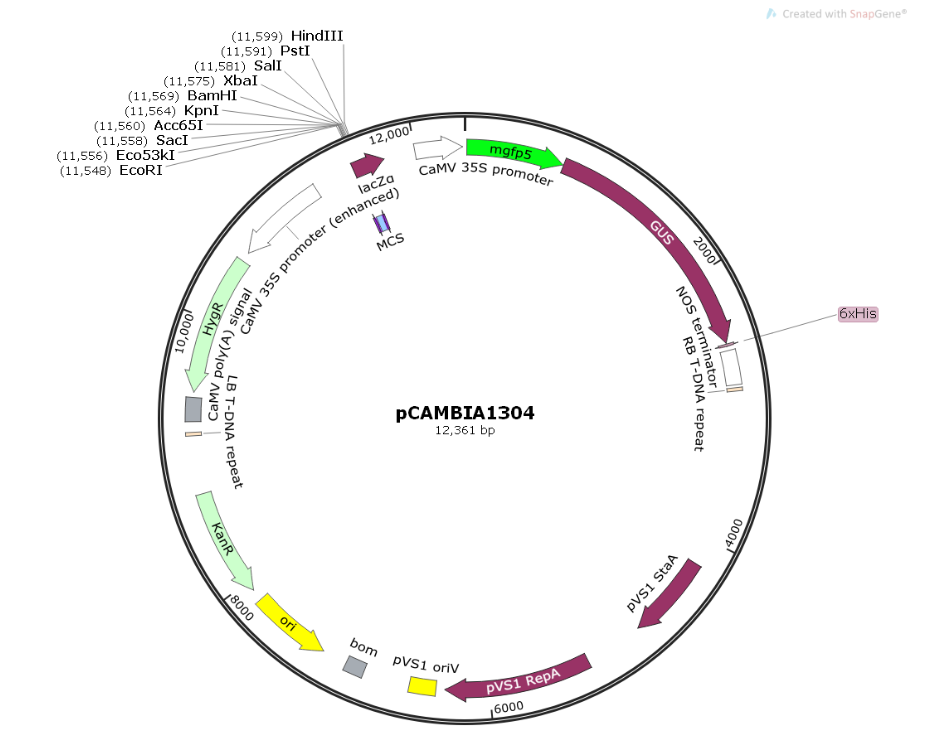
>pCAMBIA1304
CATGGTAGATCTGACTAGTAAAGGAGAAGAACTTTTCACTGGAGTTGTCCCAATTCTTGTTGAATTAGATGGTGATGTTAATGGGCACAAATTTTCTGTCAGTGGAGAGGGTGAAGGTGATGCAACATACGGAAAACTTACCCTTAAATTTATTTGCACTACTGGAAAACTACCTGTTCCGTGGCCAACACTTGTCACTACTTTCTCTTATGGTGTTCAATGCTTTTCAAGATACCCAGATCATATGAAGCGGCACGACTTCTTCAAGAGCGCCATGCCTGAGGGATACGTGCAGGAGAGGACCATCTTCTTCAAGGACGACGGGAACTACAAGACACGTGCTGAAGTCAAGTTTGAGGGAGACACCCTCGTCAACAGGATCGAGCTTAAGGGAATCGATTTCAAGGAGGACGGAAACATCCTCGGCCACAAGTTGGAATACAACTACAACTCCCACAACGTATACATCATGGCCGACAAGCAAAAGAACGGCATCAAAGCCAACTTCAAGACCCGCCACAACATCGAAGACGGCGGCGTGCAACTCGCTGATCATTATCAACAAAATACTCCAATTGGCGATGGCCCTGTCCTTTTACCAGACAACCATTACCTGTCCACACAATCTGCCCTTTCGAAAGATCCCAACGAAAAGAGAGACCACATGGTCCTTCTTGAGTTTGTAACAGCTGCTGGGATTACACATGGCATGGATGAACTATACAAAGCTAGTTTACGTCCTGTAGAAACCCCAACCCGTGAAATCAAAAAACTCGACGGCCTGTGGGCATTCAGTCTGGATCGCGAAAACTGTGGAATTGATCAGCGTTGGTGGGAAAGCGCGTTACAAGAAAGCCGGGCAATTGCTGTGCCAGGCAGTTTTAACGATCAGTTCGCCGATGCAGATATTCGTAATTATGCGGGCAACGTCTGGTATCAGCGCGAAGTCTTTATACCGAAAGGTTGGGCAGGCCAGCGTATCGTGCTGCGTTTCGATGCGGTCACTCATTACGGCAAAGTGTGGGTCAATAATCAGGAAGTGATGGAGCATCAGGGCGGCTATACGCCATTTGAAGCCGATGTCACGCCGTATGTTATTGCCGGGAAAAGTGTACGTATCACCGTTTGTGTGAACAACGAACTGAACTGGCAGACTATCCCGCCGGGAATGGTGATTACCGACGAAAACGGCAAGAAAAAGCAGTCTTACTTCCATGATTTCTTTAACTATGCCGGAATCCATCGCAGCGTAATGCTCTACACCACGCCGAACACCTGGGTGGACGATATCACCGTGGTGACGCATGTCGCGCAAGACTGTAACCACGCGTCTGTTGACTGGCAGGTGGTGGCCAATGGTGATGTCAGCGTTGAACTGCGTGATGCGGATCAACAGGTGGTTGCAACTGGACAAGGCACTAGCGGGACTTTGCAAGTGGTGAATCCGCACCTCTGGCAACCGGGTGAAGGTTATCTCTATGAACTGTGCGTCACAGCCAAAAGCCAGACAGAGTGTGATATCTACCCGCTTCGCGTCGGCATCCGGTCAGTGGCAGTGAAGGGCCAACAGTTCCTGATTAACCACAAACCGTTCTACTTTACTGGCTTTGGTCGTCATGAAGATGCGGACTTACGTGGCAAAGGATTCGATAACGTGCTGATGGTGCACGACCACGCATTAATGGACTGGATTGGGGCCAACTCCTACCGTACCTCGCATTACCCTTACGCTGAAGAGATGCTCGACTGGGCAGATGAACATGGCATCGTGGTGATTGATGAAACTGCTGCTGTCGGCTTTCAGCTGTCTTTAGGCATTGGTTTCGAAGCGGGCAACAAGCCGAAAGAACTGTACAGCGAAGAGGCAGTCAACGGGGAAACTCAGCAAGCGCACTTACAGGCGATTAAAGAGCTGATAGCGCGTGACAAAAACCACCCAAGCGTGGTGATGTGGAGTATTGCCAACGAACCGGATACCCGTCCGCAAGGTGCACGGGAATATTTCGCGCCACTGGCGGAAGCAACGCGTAAACTCGACCCGACGCGTCCGATCACCTGCGTCAATGTAATGTTCTGCGACGCTCACACCGATACCATCAGCGATCTCTTTGATGTGCTGTGCCTGAACCGTTATTACGGATGGTATGTCCAAAGCGGCGATTTGGAAACGGCAGAGAAGGTACTGGAAAAAGAACTTCTGGCCTGGCAGGAGAAACTGCATCAGCCGATTATCATCACCGAATACGGCGTGGATACGTTAGCCGGGCTGCACTCAATGTACACCGACATGTGGAGTGAAGAGTATCAGTGTGCATGGCTGGATATGTATCACCGCGTCTTTGATCGCGTCAGCGCCGTCGTCGGTGAACAGGTATGGAATTTCGCCGATTTTGCGACCTCGCAAGGCATATTGCGCGTTGGCGGTAACAAGAAAGGGATCTTCACTCGCGACCGCAAACCGAAGTCGGCGGCTTTTCTGCTGCAAAAACGCTGGACTGGCATGAACTTCGGTGAAAAACCGCAGCAGGGAGGCAAACAAGCTAGCCACCACCACCACCACCACGTGTGAATTGGTGACCAGCTCGAATTTCCCCGATCGTTCAAACATTTGGCAATAAAGTTTCTTAAGATTGAATCCTGTTGCCGGTCTTGCGATGATTATCATATAATTTCTGTTGAATTACGTTAAGCATGTAATAATTAACATGTAATGCATGACGTTATTTATGAGATGGGTTTTTATGATTAGAGTCCCGCAATTATACATTTAATACGCGATAGAAAACAAAATATAGCGCGCAAACTAGGATAAATTATCGCGCGCGGTGTCATCTATGTTACTAGATCGGGAATTAAACTATCAGTGTTTGACAGGATATATTGGCGGGTAAACCTAAGAGAAAAGAGCGTTTATTAGAATAACGGATATTTAAAAGGGCGTGAAAAGGTTTATCCGTTCGTCCATTTGTATGTGCATGCCAACCACAGGGTTCCCCTCGGGATCAAAGTACTTTGATCCAACCCCTCCGCTGCTATAGTGCAGTCGGCTTCTGACGTTCAGTGCAGCCGTCTTCTGAAAACGACATGTCGCACAAGTCCTAAGTTACGCGACAGGCTGCCGCCCTGCCCTTTTCCTGGCGTTTTCTTGTCGCGTGTTTTAGTCGCATAAAGTAGAATACTTGCGACTAGAACCGGAGACATTACGCCATGAACAAGAGCGCCGCCGCTGGCCTGCTGGGCTATGCCCGCGTCAGCACCGACGACCAGGACTTGACCAACCAACGGGCCGAACTGCACGCGGCCGGCTGCACCAAGCTGTTTTCCGAGAAGATCACCGGCACCAGGCGCGACCGCCCGGAGCTGGCCAGGATGCTTGACCACCTACGCCCTGGCGACGTTGTGACAGTGACCAGGCTAGACCGCCTGGCCCGCAGCACCCGCGACCTACTGGACATTGCCGAGCGCATCCAGGAGGCCGGCGCGGGCCTGCGTAGCCTGGCAGAGCCGTGGGCCGACACCACCACGCCGGCCGGCCGCATGGTGTTGACCGTGTTCGCCGGCATTGCCGAGTTCGAGCGTTCCCTAATCATCGACCGCACCCGGAGCGGGCGCGAGGCCGCCAAGGCCCGAGGCGTGAAGTTTGGCCCCCGCCCTACCCTCACCCCGGCACAGATCGCGCACGCCCGCGAGCTGATCGACCAGGAAGGCCGCACCGTGAAAGAGGCGGCTGCACTGCTTGGCGTGCATCGCTCGACCCTGTACCGCGCACTTGAGCGCAGCGAGGAAGTGACGCCCACCGAGGCCAGGCGGCGCGGTGCCTTCCGTGAGGACGCATTGACCGAGGCCGACGCCCTGGCGGCCGCCGAGAATGAACGCCAAGAGGAACAAGCATGAAACCGCACCAGGACGGCCAGGACGAACCGTTTTTCATTACCGAAGAGATCGAGGCGGAGATGATCGCGGCCGGGTACGTGTTCGAGCCGCCCGCGCACGTCTCAACCGTGCGGCTGCATGAAATCCTGGCCGGTTTGTCTGATGCCAAGCTGGCGGCCTGGCCGGCCAGCTTGGCCGCTGAAGAAACCGAGCGCCGCCGTCTAAAAAGGTGATGTGTATTTGAGTAAAACAGCTTGCGTCATGCGGTCGCTGCGTATATGATGCGATGAGTAAATAAACAAATACGCAAGGGGAACGCATGAAGGTTATCGCTGTACTTAACCAGAAAGGCGGGTCAGGCAAGACGACCATCGCAACCCATCTAGCCCGCGCCCTGCAACTCGCCGGGGCCGATGTTCTGTTAGTCGATTCCGATCCCCAGGGCAGTGCCCGCGATTGGGCGGCCGTGCGGGAAGATCAACCGCTAACCGTTGTCGGCATCGACCGCCCGACGATTGACCGCGACGTGAAGGCCATCGGCCGGCGCGACTTCGTAGTGATCGACGGAGCGCCCCAGGCGGCGGACTTGGCTGTGTCCGCGATCAAGGCAGCCGACTTCGTGCTGATTCCGGTGCAGCCAAGCCCTTACGACATATGGGCCACCGCCGACCTGGTGGAGCTGGTTAAGCAGCGCATTGAGGTCACGGATGGAAGGCTACAAGCGGCCTTTGTCGTGTCGCGGGCGATCAAAGGCACGCGCATCGGCGGTGAGGTTGCCGAGGCGCTGGCCGGGTACGAGCTGCCCATTCTTGAGTCCCGTATCACGCAGCGCGTGAGCTACCCAGGCACTGCCGCCGCCGGCACAACCGTTCTTGAATCAGAACCCGAGGGCGACGCTGCCCGCGAGGTCCAGGCGCTGGCCGCTGAAATTAAATCAAAACTCATTTGAGTTAATGAGGTAAAGAGAAAATGAGCAAAAGCACAAACACGCTAAGTGCCGGCCGTCCGAGCGCACGCAGCAGCAAGGCTGCAACGTTGGCCAGCCTGGCAGACACGCCAGCCATGAAGCGGGTCAACTTTCAGTTGCCGGCGGAGGATCACACCAAGCTGAAGATGTACGCGGTACGCCAAGGCAAGACCATTACCGAGCTGCTATCTGAATACATCGCGCAGCTACCAGAGTAAATGAGCAAATGAATAAATGAGTAGATGAATTTTAGCGGCTAAAGGAGGCGGCATGGAAAATCAAGAACAACCAGGCACCGACGCCGTGGAATGCCCCATGTGTGGAGGAACGGGCGGTTGGCCAGGCGTAAGCGGCTGGGTTGTCTGCCGGCCCTGCAATGGCACTGGAACCCCCAAGCCCGAGGAATCGGCGTGACGGTCGCAAACCATCCGGCCCGGTACAAATCGGCGCGGCGCTGGGTGATGACCTGGTGGAGAAGTTGAAGGCCGCGCAGGCCGCCCAGCGGCAACGCATCGAGGCAGAAGCACGCCCCGGTGAATCGTGGCAAGCGGCCGCTGATCGAATCCGCAAAGAATCCCGGCAACCGCCGGCAGCCGGTGCGCCGTCGATTAGGAAGCCGCCCAAGGGCGACGAGCAACCAGATTTTTTCGTTCCGATGCTCTATGACGTGGGCACCCGCGATAGTCGCAGCATCATGGACGTGGCCGTTTTCCGTCTGTCGAAGCGTGACCGACGAGCTGGCGAGGTGATCCGCTACGAGCTTCCAGACGGGCACGTAGAGGTTTCCGCAGGGCCGGCCGGCATGGCCAGTGTGTGGGATTACGACCTGGTACTGATGGCGGTTTCCCATCTAACCGAATCCATGAACCGATACCGGGAAGGGAAGGGAGACAAGCCCGGCCGCGTGTTCCGTCCACACGTTGCGGACGTACTCAAGTTCTGCCGGCGAGCCGATGGCGGAAAGCAGAAAGACGACCTGGTAGAAACCTGCATTCGGTTAAACACCACGCACGTTGCCATGCAGCGTACGAAGAAGGCCAAGAACGGCCGCCTGGTGACGGTATCCGAGGGTGAAGCCTTGATTAGCCGCTACAAGATCGTAAAGAGCGAAACCGGGCGGCCGGAGTACATCGAGATCGAGCTAGCTGATTGGATGTACCGCGAGATCACAGAAGGCAAGAACCCGGACGTGCTGACGGTTCACCCCGATTACTTTTTGATCGATCCCGGCATCGGCCGTTTTCTCTACCGCCTGGCACGCCGCGCCGCAGGCAAGGCAGAAGCCAGATGGTTGTTCAAGACGATCTACGAACGCAGTGGCAGCGCCGGAGAGTTCAAGAAGTTCTGTTTCACCGTGCGCAAGCTGATCGGGTCAAATGACCTGCCGGAGTACGATTTGAAGGAGGAGGCGGGGCAGGCTGGCCCGATCCTAGTCATGCGCTACCGCAACCTGATCGAGGGCGAAGCATCCGCCGGTTCCTAATGTACGGAGCAGATGCTAGGGCAAATTGCCCTAGCAGGGGAAAAAGGTCGAAAAGGTCTCTTTCCTGTGGATAGCACGTACATTGGGAACCCAAAGCCGTACATTGGGAACCGGAACCCGTACATTGGGAACCCAAAGCCGTACATTGGGAACCGGTCACACATGTAAGTGACTGATATAAAAGAGAAAAAAGGCGATTTTTCCGCCTAAAACTCTTTAAAACTTATTAAAACTCTTAAAACCCGCCTGGCCTGTGCATAACTGTCTGGCCAGCGCACAGCCGAAGAGCTGCAAAAAGCGCCTACCCTTCGGTCGCTGCGCTCCCTACGCCCCGCCGCTTCGCGTCGGCCTATCGCGGCCGCTGGCCGCTCAAAAATGGCTGGCCTACGGCCAGGCAATCTACCAGGGCGCGGACAAGCCGCGCCGTCGCCACTCGACCGCCGGCGCCCACATCAAGGCACCCTGCCTCGCGCGTTTCGGTGATGACGGTGAAAACCTCTGACACATGCAGCTCCCGGAGACGGTCACAGCTTGTCTGTAAGCGGATGCCGGGAGCAGACAAGCCCGTCAGGGCGCGTCAGCGGGTGTTGGCGGGTGTCGGGGCGCAGCCATGACCCAGTCACGTAGCGATAGCGGAGTGTATACTGGCTTAACTATGCGGCATCAGAGCAGATTGTACTGAGAGTGCACCATATGCGGTGTGAAATACCGCACAGATGCGTAAGGAGAAAATACCGCATCAGGCGCTCTTCCGCTTCCTCGCTCACTGACTCGCTGCGCTCGGTCGTTCGGCTGCGGCGAGCGGTATCAGCTCACTCAAAGGCGGTAATACGGTTATCCACAGAATCAGGGGATAACGCAGGAAAGAACATGTGAGCAAAAGGCCAGCAAAAGGCCAGGAACCGTAAAAAGGCCGCGTTGCTGGCGTTTTTCCATAGGCTCCGCCCCCCTGACGAGCATCACAAAAATCGACGCTCAAGTCAGAGGTGGCGAAACCCGACAGGACTATAAAGATACCAGGCGTTTCCCCCTGGAAGCTCCCTCGTGCGCTCTCCTGTTCCGACCCTGCCGCTTACCGGATACCTGTCCGCCTTTCTCCCTTCGGGAAGCGTGGCGCTTTCTCATAGCTCACGCTGTAGGTATCTCAGTTCGGTGTAGGTCGTTCGCTCCAAGCTGGGCTGTGTGCACGAACCCCCCGTTCAGCCCGACCGCTGCGCCTTATCCGGTAACTATCGTCTTGAGTCCAACCCGGTAAGACACGACTTATCGCCACTGGCAGCAGCCACTGGTAACAGGATTAGCAGAGCGAGGTATGTAGGCGGTGCTACAGAGTTCTTGAAGTGGTGGCCTAACTACGGCTACACTAGAAGGACAGTATTTGGTATCTGCGCTCTGCTGAAGCCAGTTACCTTCGGAAAAAGAGTTGGTAGCTCTTGATCCGGCAAACAAACCACCGCTGGTAGCGGTGGTTTTTTTGTTTGCAAGCAGCAGATTACGCGCAGAAAAAAAGGATCTCAAGAAGATCCTTTGATCTTTTCTACGGGGTCTGACGCTCAGTGGAACGAAAACTCACGTTAAGGGATTTTGGTCATGCATTCTAGGTACTAAAACAATTCATCCAGTAAAATATAATATTTTATTTTCTCCCAATCAGGCTTGATCCCCAGTAAGTCAAAAAATAGCTCGACATACTGTTCTTCCCCGATATCCTCCCTGATCGACCGGACGCAGAAGGCAATGTCATACCACTTGTCCGCCCTGCCGCTTCTCCCAAGATCAATAAAGCCACTTACTTTGCCATCTTTCACAAAGATGTTGCTGTCTCCCAGGTCGCCGTGGGAAAAGACAAGTTCCTCTTCGGGCTTTTCCGTCTTTAAAAAATCATACAGCTCGCGCGGATCTTTAAATGGAGTGTCTTCTTCCCAGTTTTCGCAATCCACATCGGCCAGATCGTTATTCAGTAAGTAATCCAATTCGGCTAAGCGGCTGTCTAAGCTATTCGTATAGGGACAATCCGATATGTCGATGGAGTGAAAGAGCCTGATGCACTCCGCATACAGCTCGATAATCTTTTCAGGGCTTTGTTCATCTTCATACTCTTCCGAGCAAAGGACGCCATCGGCCTCACTCATGAGCAGATTGCTCCAGCCATCATGCCGTTCAAAGTGCAGGACCTTTGGAACAGGCAGCTTTCCTTCCAGCCATAGCATCATGTCCTTTTCCCGTTCCACATCATAGGTGGTCCCTTTATACCGGCTGTCCGTCATTTTTAAATATAGGTTTTCATTTTCTCCCACCAGCTTATATACCTTAGCAGGAGACATTCCTTCCGTATCTTTTACGCAGCGGTATTTTTCGATCAGTTTTTTCAATTCCGGTGATATTCTCATTTTAGCCATTTATTATTTCCTTCCTCTTTTCTACAGTATTTAAAGATACCCCAAGAAGCTAATTATAACAAGACGAACTCCAATTCACTGTTCCTTGCATTCTAAAACCTTAAATACCAGAAAACAGCTTTTTCAAAGTTGTTTTCAAAGTTGGCGTATAACATAGTATCGACGGAGCCGATTTTGAAACCGCGGTGATCACAGGCAGCAACGCTCTGTCATCGTTACAATCAACATGCTACCCTCCGCGAGATCATCCGTGTTTCAAACCCGGCAGCTTAGTTGCCGTTCTTCCGAATAGCATCGGTAACATGAGCAAAGTCTGCCGCCTTACAACGGCTCTCCCGCTGACGCCGTCCCGGACTGATGGGCTGCCTGTATCGAGTGGTGATTTTGTGCCGAGCTGCCGGTCGGGGAGCTGTTGGCTGGCTGGTGGCAGGATATATTGTGGTGTAAACAAATTGACGCTTAGACAACTTAATAACACATTGCGGACGTTTTTAATGTACTGAATTAACGCCGAATTAATTCGGGGGATCTGGATTTTAGTACTGGATTTTGGTTTTAGGAATTAGAAATTTTATTGATAGAAGTATTTTACAAATACAAATACATACTAAGGGTTTCTTATATGCTCAACACATGAGCGAAACCCTATAGGAACCCTAATTCCCTTATCTGGGAACTACTCACACATTATTATGGAGAAACTCGAGCTTGTCGATCGACAGATCCGGTCGGCATCTACTCTATTTCTTTGCCCTCGGACGAGTGCTGGGGCGTCGGTTTCCACTATCGGCGAGTACTTCTACACAGCCATCGGTCCAGACGGCCGCGCTTCTGCGGGCGATTTGTGTACGCCCGACAGTCCCGGCTCCGGATCGGACGATTGCGTCGCATCGACCCTGCGCCCAAGCTGCATCATCGAAATTGCCGTCAACCAAGCTCTGATAGAGTTGGTCAAGACCAATGCGGAGCATATACGCCCGGAGTCGTGGCGATCCTGCAAGCTCCGGATGCCTCCGCTCGAAGTAGCGCGTCTGCTGCTCCATACAAGCCAACCACGGCCTCCAGAAGAAGATGTTGGCGACCTCGTATTGGGAATCCCCGAACATCGCCTCGCTCCAGTCAATGACCGCTGTTATGCGGCCATTGTCCGTCAGGACATTGTTGGAGCCGAAATCCGCGTGCACGAGGTGCCGGACTTCGGGGCAGTCCTCGGCCCAAAGCATCAGCTCATCGAGAGCCTGCGCGACGGACGCACTGACGGTGTCGTCCATCACAGTTTGCCAGTGATACACATGGGGATCAGCAATCGCGCATATGAAATCACGCCATGTAGTGTATTGACCGATTCCTTGCGGTCCGAATGGGCCGAACCCGCTCGTCTGGCTAAGATCGGCCGCAGCGATCGCATCCATAGCCTCCGCGACCGGTTGTAGAACAGCGGGCAGTTCGGTTTCAGGCAGGTCTTGCAACGTGACACCCTGTGCACGGCGGGAGATGCAATAGGTCAGGCTCTCGCTAAACTCCCCAATGTCAAGCACTTCCGGAATCGGGAGCGCGGCCGATGCAAAGTGCCGATAAACATAACGATCTTTGTAGAAACCATCGGCGCAGCTATTTACCCGCAGGACATATCCACGCCCTCCTACATCGAAGCTGAAAGCACGAGATTCTTCGCCCTCCGAGAGCTGCATCAGGTCGGAGACGCTGTCGAACTTTTCGATCAGAAACTTCTCGACAGACGTCGCGGTGAGTTCAGGCTTTTTCATATCTCATTGCCCCCCGGGATCTGCGAAAGCTCGAGAGAGATAGATTTGTAGAGAGAGACTGGTGATTTCAGCGTGTCCTCTCCAAATGAAATGAACTTCCTTATATAGAGGAAGGTCTTGCGAAGGATAGTGGGATTGTGCGTCATCCCTTACGTCAGTGGAGATATCACATCAATCCACTTGCTTTGAAGACGTGGTTGGAACGTCTTCTTTTTCCACGATGCTCCTCGTGGGTGGGGGTCCATCTTTGGGACCACTGTCGGCAGAGGCATCTTGAACGATAGCCTTTCCTTTATCGCAATGATGGCATTTGTAGGTGCCACCTTCCTTTTCTACTGTCCTTTTGATGAAGTGACAGATAGCTGGGCAATGGAATCCGAGGAGGTTTCCCGATATTACCCTTTGTTGAAAAGTCTCAATAGCCCTTTGGTCTTCTGAGACTGTATCTTTGATATTCTTGGAGTAGACGAGAGTGTCGTGCTCCACCATGTTATCACATCAATCCACTTGCTTTGAAGACGTGGTTGGAACGTCTTCTTTTTCCACGATGCTCCTCGTGGGTGGGGGTCCATCTTTGGGACCACTGTCGGCAGAGGCATCTTGAACGATAGCCTTTCCTTTATCGCAATGATGGCATTTGTAGGTGCCACCTTCCTTTTCTACTGTCCTTTTGATGAAGTGACAGATAGCTGGGCAATGGAATCCGAGGAGGTTTCCCGATATTACCCTTTGTTGAAAAGTCTCAATAGCCCTTTGGTCTTCTGAGACTGTATCTTTGATATTCTTGGAGTAGACGAGAGTGTCGTGCTCCACCATGTTGGCAAGCTGCTCTAGCCAATACGCAAACCGCCTCTCCCCGCGCGTTGGCCGATTCATTAATGCAGCTGGCACGACAGGTTTCCCGACTGGAAAGCGGGCAGTGAGCGCAACGCAATTAATGTGAGTTAGCTCACTCATTAGGCACCCCAGGCTTTACACTTTATGCTTCCGGCTCGTATGTTGTGTGGAATTGTGAGCGGATAACAATTTCACACAGGAAACAGCTATGACCATGATTACGAATTCGAGCTCGGTACCCGGGGATCCTCTAGAGTCGACCTGCAGGCATGCAAGCTTGGCACTGGCCGTCGTTTTACAACGTCGTGACTGGGAAAACCCTGGCGTTACCCAACTTAATCGCCTTGCAGCACATCCCCCTTTCGCCAGCTGGCGTAATAGCGAAGAGGCCCGCACCGATCGCCCTTCCCAACAGTTGCGCAGCCTGAATGGCGAATGCTAGAGCAGCTTGAGCTTGGATCAGATTGTCGTTTCCCGCCTTCAGTTTAGCTTCATGGAGTCAAAGATTCAAATAGAGGACCTAACAGAACTCGCCGTAAAGACTGGCGAACAGTTCATACAGAGTCTCTTACGACTCAATGACAAGAAGAAAATCTTCGTCAACATGGTGGAGCACGACACACTTGTCTACTCCAAAAATATCAAAGATACAGTCTCAGAAGACCAAAGGGCAATTGAGACTTTTCAACAAAGGGTAATATCCGGAAACCTCCTCGGATTCCATTGCCCAGCTATCTGTCACTTTATTGTGAAGATAGTGGAAAAGGAAGGTGGCTCCTACAAATGCCATCATTGCGATAAAGGAAAGGCCATCGTTGAAGATGCCTCTGCCGACAGTGGTCCCAAAGATGGACCCCCACCCACGAGGAGCATCGTGGAAAAAGAAGACGTTCCAACCACGTCTTCAAAGCAAGTGGATTGATGTGATATCTCCACTGACGTAAGGGATGACGCACAATCCCACTATCCTTCGCAAGACCCTTCCTCTATATAAGGAAGTTCATTTCATTTGGAGAGAACACGGGGGACTCTTGAC
Reference
Wang, S., Huang, Z., Liu, Y., Shao, S., Li, L., & Ma, M. (2024). Application of the Nicotiana Allergic Necrosis Assay for the Validation of Protein-Protein Interactions between Fungal Effectors and Plant Receptor Kinases. Bio-protocol Preprint. https://doi.org/10.21769/p2729.
Wang, S., Huang, Z., Siji, T., Feng, S., Liu, X., Shu, Y., Liang, Y., & Chen, Z. (2024). A buffer formulation and application for efficient protoplast extraction and transformation of rice. Bio-protocol Preprint. https://doi.org/10.21769/prep2723.
Horsch, R. B., Fry, J. E., Hoffmann, N. L., Eichholtz, D., Rogers, S. G., & Fraley, R. T. (1985). A simple and general method for transferring genes into plants. Science, 227(4691), 1229-1231.
Murashige, T., & Skoog, F. (1962). A revised medium for rapid growth and bio assays with tobacco tissue cultures. Physiologia Plantarum, 15(3), 473-497.
Chalfie, M., Tu, Y., Euskirchen, G., Ward, W. W., & Prasher, D. C. (1994). Green fluorescent protein as a marker for gene expression. Science, 263(5148), 802-805.
Sparkes, I. A., Runions, J., Kearns, A., & Hawes, C. (2006). Rapid, transient expression of fluorescent fusion proteins in tobacco plants and generation of stably transformed plants. Nature Protocols, 1(3), 2019-2025.
De Block, M., Herrera-Estrella, L., Van Montagu, M., Schell, J., & Zambryski, P. (1984). Expression of foreign genes in regenerated plants and their progeny. EMBO Journal, 3(7), 1681-1687.
Gamborg, O. L., Miller, R. A., & Ojima, K. (1968). Nutrient requirements of suspension cultures of soybean root cells. Experimental Cell Research, 50(1), 151-158.
Gelvin, S. B. (2000). Agarose gel for DNA and small RNA analysis. In Current Protocols in Molecular Biology (pp. A.3D.1-A.3D.7). John Wiley & Sons.
Sambrook, J., & Russell, D. W. (2001). Molecular Cloning: A Laboratory Manual (3rd ed.). Cold Spring Harbor Laboratory Press.
- Wang, S, LI, l, Shao, Q, Li, L, Wang, s and Shao, S(2024). Tissue-specific Expression of Target Genes in Rice (GUS Staining, RNA In Situ Hybridization). Bio-protocol Preprint. 10.21769/p2758.
Do you have any questions about this protocol?
Post your question to gather feedback from the community. We will also invite the authors of this article to respond.
 Post a Question


