


Streamlined and Selective CRISPR/Cas9 Editing of Mammalian Cells Using Intelligent Guide RNAs

发布: 2026年12月05日第16卷第23期 DOI: 10.21769/BioProtoc.5881 浏览次数: 52
评审: Jessica DavisShivani KumarAmar Chandra Mahatha
 PDF
 Q&A






Abstract
The CRISPR/Cas9 system has revolutionized molecular biology over the past decade, yet its persistent activity can lead to unintended consequences. To address this, nanodevice-mediated programmable control enhances specificity and minimizes off-target effects. By integrating RNA-sensing platforms with logic-based computing, CRISPR/Cas9 has evolved into a dynamic tool for intracellular signal processing and gene regulation in response to endogenous stimuli. This protocol describes a streamlined strategy for precise targeting of a luciferase reporter in mammalian cells using intelligent guide RNAs (IngRNAs)—a cis-repressed gRNA synthetic circuit based on RNA nanotechnology. This design enables the selective activation of CRISPR/Cas9 by detecting specific stimulatory RNAs. Upon recognition of the cognate trigger RNA, sequential toehold-mediated interactions expose key regulatory sites, leading to controlled activation of the guide RNA and trigger-dependent modulation of reporter expression. RNA-based toehold switches are designed to conditionally regulate guide RNA availability, thereby providing a mechanism for trigger-dependent control of Cas9-associated reporter activity. Designed for HEK293T cells, this protocol focuses on detecting miR-16 as the trigger RNA and subsequently targeting the luciferase gene as a reporter. The modular design provides a framework that may be adapted to other mammalian cell types and trigger/target combinations, although such applications require independent experimental validation.
Key features
• Selective activation of Cas9 using RNA toehold switches.
• Optimization guidelines for reducing crosstalk and improving orthogonality between different trigger RNAs.
• Reproducible workflow that facilitates implementation of conditional CRISPR systems in synthetic biology and RNA-responsive gene regulation.
• Includes luciferase-based assays for evaluating trigger-dependent reporter modulation.
Keywords: CRISPR/Cas9 Intelligent guide RNA
Mammalian cells
HEK293T
Luciferase assay
Toehold switch
Graphical overview
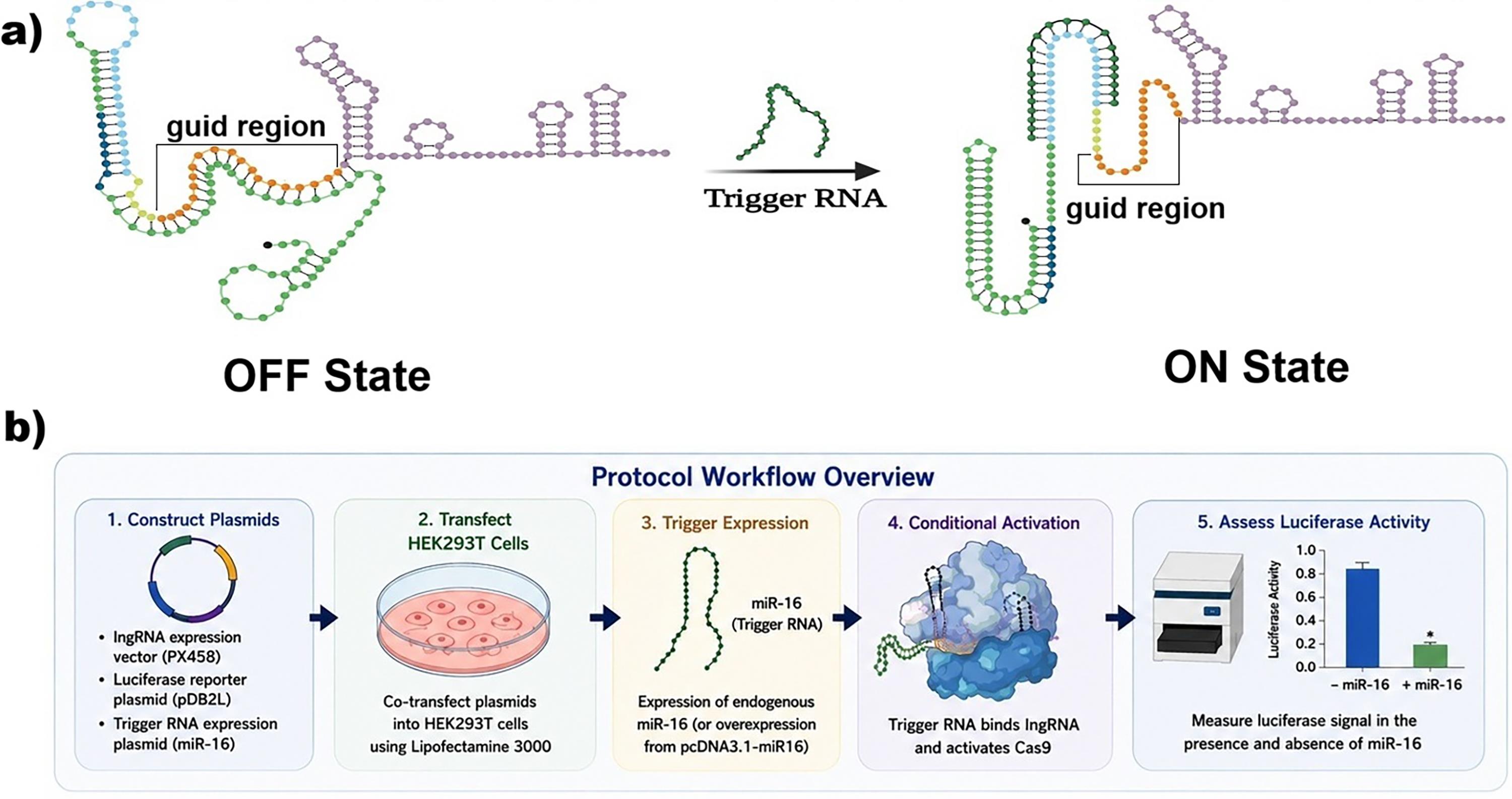
Structural switching mechanism of IngRNA and overview of the experimental workflow. (a) IngRNA remains structurally repressed in the absence of the trigger RNA, with the guide region sequestered (OFF state). Trigger RNA binding induces strand displacement, exposes the guide region, and enables trigger-dependent CRISPR–Cas9 activity, assessed using a luciferase reporter readout (ON state). (b) Schematic overview and workflow of the experimental procedure.
Background
The ability to program nucleic acid interactions has enabled the development of synthetic genetic circuits capable of sensing intracellular signals and regulating gene expression with high specificity [1]. Among these strategies, toehold-mediated strand displacement has emerged as a versatile mechanism for directing predictable RNA conformational changes in response to defined trigger molecules [2]. CRISPR/Cas9 has emerged as a powerful and programmable platform for targeted gene manipulation in mammalian cells, with experimental studies demonstrating its utility for disrupting specific human genes [3,4]. Coupling these programmable RNA devices with CRISPR/Cas systems provides an opportunity to achieve conditional genome editing, in which Cas9 activity is regulated by endogenous RNA signals rather than remaining constitutively active [5,6].
Several RNA-responsive CRISPR platforms have been reported to modulate guide RNA activity through engineered secondary structures. For example, conditional guide RNAs based on intermediate RNA hairpins have been developed to connect endogenous RNA expression with programmable CRISPR/Cas9 activity [7]. Similarly, microRNA-responsive CRISPR/Cas9 switches have enabled cell type–specific regulation of genome editing activity [6], while other RNA-based systems have demonstrated programmable CRISPR repression, activation, and computation in response to defined molecular triggers [5,8]. Although these approaches demonstrate the feasibility of conditional CRISPR regulation, their architectures can impose constraints on the relationship between trigger recognition and guide-target recognition, which may limit the flexibility of system design and adaptation to different target sequences. The design of RNA-responsive guide RNAs requires consideration not only of trigger–guide sequence complementarity but also of the structural accessibility of the RNA domains involved in trigger recognition and strand displacement. Previous analyses of RNA-responsive gRNA systems have highlighted the importance of RNA architecture, secondary structure, and trigger accessibility in determining the efficiency and specificity of guide activation [9]. In particular, the length and structural context of the trigger RNA may influence its ability to access the exposed toehold, initiate strand displacement, and drive the subsequent conformational transition required for guide activation. This consideration is supported by previous in vitro studies of RNA-responsive gRNAs. For example, an 80-nt mCherry RNA fragment produced approximately 77% Cas9 cleavage, whereas the corresponding full-length 711-nt mCherry RNA produced only approximately 5% cleavage. This substantial difference was attributed to the greater structural complexity of longer RNA molecules, which may reduce accessibility of the trigger sequence and hinder RNA strand displacement. These findings highlight that trigger length and structural accessibility should be considered during the design and interpretation of RNA-responsive gRNA systems [9]. Therefore, computational evaluation of alternative RNA structures and competing interactions is an important component of designing RNA-responsive CRISPR systems. These considerations are particularly relevant to modular architectures such as IngRNA, in which trigger recognition and crRNA release depend on sequential RNA structural transitions.
The intelligent guide RNA (IngRNA) platform was developed to overcome these limitations by introducing a modular RNA architecture that separates trigger recognition from target-gene recognition [10]. In this system, a dual toehold-mediated strand displacement mechanism maintains the guide RNA in an inactive configuration until a cognate trigger RNA initiates a series of structural rearrangements that release the CRISPR RNA (crRNA) and enable Cas9-mediated target recognition [10]. The design incorporates independently programmable trigger-sensing and target-recognition modules, allowing the platform to be adapted to different target sequences while preserving the overall regulatory architecture [10]. This modular design provides a framework for applying RNA-responsive CRISPR systems to synthetic biology and programmable gene regulation, with potential applications in therapeutic strategies [10].
The IngRNA platform was previously established as a programmable RNA-responsive CRISPR strategy and experimentally validated through in vitro, bacterial, and mammalian-cell assays [10]. In mammalian cells, the system was evaluated using miR-16 as a cognate trigger RNA and miR-21 as a non-cognate trigger, demonstrating trigger-dependent regulation of a luciferase reporter [10]. Building upon this work, the present protocol provides a detailed, step-by-step experimental workflow for constructing, implementing, and functionally validating the IngRNA system in mammalian cells, thereby facilitating its reproducible application by other researchers.
This protocol describes the evaluation of the IngRNA platform in HEK293T cells using a luciferase reporter assay to evaluate trigger-dependent CRISPR activation. miR-16 is an endogenous microRNA with established biological activity, including regulation of the anti-apoptotic gene BCL2 [11]. In this protocol, miR-16 expressed from the pCN-miR16 construct serves as the cognate trigger RNA, and luciferase activity is quantified in the presence and absence of miR-16 to assess conditional activation of the system. Because only the programmable guide sequence requires redesign for new applications, the protocol can be readily adapted to different target genes and trigger RNAs, providing a flexible framework for evaluating RNA-responsive CRISPR regulation in mammalian reporter systems.
Materials and reagents
Biological materials
1. Human embryonic kidney (HEK) 293T cells (Life Technologies, catalog number: R700-07)
2. Z-5-alpha competent E. coli (Zaver Zist Azma, catalog number: 41-848)
3. Oligos (Table 1)
4. Fragment sequences are given in Table 2
Table 1. Oligos
| Oligos | Sequence | Product size (bp) | Application | PCR template |
| FIngX | ATTATAGAAGACTACACCGGCTGCT | 160 | To amplify the CrRNA fragment of IngRNA2 containing the BbsI restriction site to integrate into the pX458 plasmid | pUK57-Synthetic Ing |
| RIngX | ACTTGCTATTTCGAAGACTAAAACCT | |||
| WgX | CACCGCTTATGCAGTTGCTCTCCAG | 29 | To generate 5'-flanked sequences (CACC and AAAC) for integration of regular gRNA between BbsI restriction sites in the pX458 plasmid | - |
| KgX | AAACCTGGAGAGCAACTGCATAAGC | |||
| WscX | CACCGGGAGGGCCGCCGCTTTACTAT | 30 | To generate 5'-flanked sequences (CACC and AAAC) for integration of scramble gRNA between BbsI restriction sites in the Px458 plasmid | - |
| KscX | AAACATAGTAAAGCGGCGGCCCTCCC | |||
| FlD | ATTATGCTAGCAGGAGGATGCAAAAAATATTATGC | 1669 | To substitute the luciferase gene with the GFP reporter gene within the pDB2 vector | - |
| RlD | TCGTCTCGAGTTACAATTTGGATTTTTTTCCCATC | |||
| Fm16N | AGCTCGGATCCGCCATATTGTGCTGCCTCAA | 624 | To amplify the precursor sequence containing miR-16 and insert it into the pCDNA3 plasmid as Trigger RNA | Human genomic DNA |
| Rm16N | CTGCAGAATTCGATGGCTTTTCCCCTTCAGA | |||
| Fm21N | AGCTCGGATCCACCCAGTTTTCTTGCCGTTC | 518 | To amplify the precursor sequence containing miR-21 and insert it into the pCDNA3 plasmid as Scramble RNA | Human genomic DNA |
| Rm21N | CTGCAGAATTCTCCCTCCATACTGCTGCATT |
Table 2. Sequences of the fragments
| Fragment/Gene | Sequence (RNA/DNA) | Type of expression/promoter | Plasmid |
|---|---|---|---|
IngRNA | GGCUGCUAAAUAUCUUAUGCAGUUGCUAUACCUGGAGAGCAACUGCAUAAGAUAUUUAGCAGCACGUAAAAUCGCCAAUAUUUACGUGCUGCUAUAUAUCUUAUGCAGUUGCUCUCCAGGUUUUAGAGCUAGAAAUAGCAAGUUAAAAUAAGGCUAGUCCGUUAUCAACUUGAAAAAGUGGCACCGAGUCGGUGCUUUU | Mammalian/U6 | pX (Ing) |
| Firefly luciferase | ATGGAAGACGCCAAAAACATAAAGAAAGGCCCGGCGCCATTCTATCCGCTGGAAGATGGAACCGCTGGAGAGCAACTGCATAAGGCTATGAAGAGATACGCCCTGGTTCCTGGAACAATTGCTTTTACAGATGCACATATCGAGGTGGACATCACTTACGCTGAGTACTTCGAAATGTCCGTTCGGTTGGCAGAAGCTATGAAACGATATGGGCTGAATACAAATCACAGAATCGTCGTATGCAGTGAAAACTCTCTTCAATTCTTTATGCCGGTGTTGGGCGCGTTATTTATCGGAGTTGCAGTTGCGCCCGCGAACGACATTTATAATGAACGTGAATTGCTCAACAGTATGGGCATTTCGCAGCCTACCGTGGTGTTCGTTTCCAAAAAGGGGTTGCAAAAAATTTTGAACGTGCAAAAAAAGCTCCCAATCATCCAAAAAATTATTATCATGGATTCTAAAACGGATTACCAGGGATTTCAGTCGATGTACACGTTCGTCACATCTCATCTACCTCCCGGTTTTAATGAATACGATTTTGTGCCAGAGTCCTTCGATAGGGACAAGACAATTGCACTGATCATGAACTCCTCTGGATCTACTGGTCTGCCTAAAGGTGTCGCTCTGCCTCATAGAACTGCCTGCGTGAGATTCTCGCATGCCAGAGATCCTATTTTTGGCAATCAAATCATTCCGGATACTGCGATTTTAAGTGTTGTTCCATTCCATCACGGTTTTGGAATGTTTACTACACTCGGATATTTGATATGTGGATTTCGAGTCGTCTTAATGTATAGATTTGAAGAAGAGCTGTTTCTGAGGAGCCTTCAGGATTACAAGATTCAAAGTGCGCTGCTGGTGCCAACCCTATTCTCCTTCTTCGCCAAAAGCACTCTGATTGACAAATACGATTTATCTAATTTACACGAAATTGCTTCTGGTGGCGCTCCCCTCTCTAAGGAAGTCGGGGAAGCGGTTGCCAAGAGGTTCCATCTGCCAGGTATCAGGCAAGGATATGGGCTCACTGAGACTACATCAGCTATTCTGATTACACCCGAGGGGGATGATAAACCGGGCGCGGTCGGTAAAGTTGTTCCATTTTTTGAAGCGAAGGTTGTGGATCTGGATACCGGGAAAACGCTGGGCGTTAATCAAAGAGGCGAACTGTGTGTGAGAGGTCCTATGATTATGTCCGGTTATGTAAACAATCCGGAAGCGACCAACGCCTTGATTGACAAGGATGGATGGCTACATTCTGGAGACATAGCTTACTGGGACGAAGACGAACACTTCTTCATCGTTGACCGCCTGAAGTCTCTGATTAAGTACAAAGGCTATCAGGTGGCTCCCGCTGAATTGGAATCCATCTTGCTCCAACACCCCAACATCTTCGACGCAGGTGTCGCAGGTCTTCCCGACGATGACGCCGGTGAACTTCCCGCCGCCGTTGTTGTTTTGGAGCACGGAAAGACGATGACGGAAAAAGAGATCGTGGATTACGTCGCCAGTCAAGTAACAACCGCGAAAAAGTTGCGCGGAGGAGTTGTGTTTGTGGACGAAGTACCGAAAGGTCTTACCGGAAAACTCGACGCAAGAAAAATCAGAGAGATCCTCATAAAGGCCAAGAAGGGCGGAAAGATCGCCGTGTAA | Mammalian/CMV | pDBL2 |
Note: Strands such as the template pool should be ordered at a synthesis scale of ≥200 nmol to ensure a sufficient quantity of full-length material.
Reagents
1. Taq DNA Polymerase Master Mix RED (Ampliqon, catalog number: A180301)
2. UltraPure TBE buffer, 10× (Zaver Zist Azma, catalog number: 48-542)
3. Agarose (Lonza, catalog number: 50004)
4. SYBR Safe DNA stain (Zaver Zist Azma, catalog number: 21-298)
5. 1-kb Plus DNA ladder (Life Technologies, catalog number: 10787-018)
6. Orange loading buffer (Zaver Zist Azma, catalog number: 10482-028)
7. FastDigest BbsI (BpiI) (Fermentas/Thermo Scientific, catalog number: FD1014)
8. NheI (10 U/μL) (Thermo Scientific, catalog number: ER0972)
9. XhoI (10 U/μL) (Thermo Scientific, catalog number: ER0691)
10. BamHI (10 U/μL) (Thermo Scientific, catalog number: ER0051)
11. EcoRI (10 U/μL) (Thermo Scientific, catalog number: ER0271)
12. T4 DNA ligase (Zaver Zist Azma, catalog number: 11-513)
13. PhusionTM High-Fidelity DNA Polymerases (2 U/μL) (Thermo Scientific, catalog number: F530S)
14. Adenosine 5′-triphosphate, 10 mM (New England BioLabs, catalog number: P0756S)
15. SOC medium (New England BioLabs, catalog number: B9020S)
16. LB medium (Iberesco, catalog number: i23085)
17. LB agar medium (Iberesco, catalog number: i23082)
18. Ampicillin, 100 mg/mL, sterile filtered (Sigma, catalog number: A5354)
19. Kanamycin sulfate, 50 mg/mL, sterile filtered (Thermo Scientific, catalog number: 25389-94-0)
20. Ethylenediaminetetraacetic acid (EDTA) (Sigma, catalog number: E5134)
21. Sodium chloride (Sigma, catalog number: 7647-14-5)
22. Potassium chloride (Sigma, catalog number: 7447-40-7)
23. Tris-hydrochloride (Sigma, catalog number: 1185-53-1)
24. Magnesium chloride (Sigma, catalog number: 7791-18-6)
25. D-L-Dithiothreitol, threo-1,4-Dimercapto-2,3-butanediol (DTT) (Sigma, catalog number: 3483-12-3)
26. HEPES solution (Sigma, catalog number: 7365-45-9)
27. DMEM, high glucose (Life Technologies, catalog number: 10313-039)
28. Dulbecco’s PBS (DPBS) (Life Technologies, catalog number: 14190-250)
29. FBS, qualified and heat inactivated (Life Technologies, catalog number: 10438-034)
30. Penicillin-streptomycin, 100× (Life Technologies, catalog number: 15140-163)
31. Lipofectamine 3000 transfection reagent (Life Technologies, catalog number: 11668027)
32. Luciferase-pcDNA3 plasmid (Addgene, catalog number: 18964)
33. pDB2 (Addgene, catalog number: 18954)
34. SpCas9-2A-GFP plasmid (Addgene, catalog number: 48138)
35. PMSF (Thermo Scientific, catalog number: 36978)
36. HCl (Merck Millipore, catalog number: 7647-01-0)
37. ddH2O (Merck Millipore, catalog number: 7732-18-5)
38. PEG 4000 (Sigma, catalog number: 25322-68-3)
39. Sucrose (Sigma, catalog number: S0389)
40. D-Luciferin (Sigma, catalog number: 2591-17-5)
41. L-glutamine (Thermo Scientific, catalog number: 25030081)
Solutions
1. Annealing buffer (see Recipes)
2. Dilution buffer (see Recipes)
3. Cell lysis buffer (see Recipes)
4. Luciferin complex (see Recipes)
Recipes
1. Annealing buffer
| Reagent | Final concentration (mM) | Quantity |
|---|---|---|
| Tris-HCl | 20 | 31 mg |
| MgCl2 | 40 | 38 mg |
| NaCl | 100 | 58 mg |
| KCl | 50 | 37 mg |
| EDTA | 5 | 14 mg |
| DTT | 1 | 1 mg |
| PEG (4000) | 40% (w/v) | 4,000 mg |
| HCl | n/a | to pH 7.2 |
| Total | - | 10 mL |
2. Dilution buffer
| Reagent | Final concentration (mM) | Quantity |
|---|---|---|
| Tris-HCl | 20 | 157 mg |
| MgCl2 | 15 | 71 mg |
| KCl | 75 | 280 mg |
| PEG (4000) | 20% (w/v) | 10,000 mg |
| HCl | n/a | to pH 7.2 |
| Total | - | 50 mL |
3. Cell lysis buffer
| Reagent | Final concentration (mM) | Quantity |
|---|---|---|
| HEPES (1 M) | 20 | 2 mL |
| MgCl2 | 1.5 | 1428 mg |
| KCl | 10 | 74 mg |
| EDTA | 1 | 37 mg |
| DTT | 1 | 15 mg |
| PMSF | 1 | 19 mg |
| Sucrose | 100 | 3,423 mg |
| HCl | n/a | to pH 7.2 |
| Total | - | 100 mL |
4. Luciferin complex
| Reagent | Final concentration (mM) | Quantity |
|---|---|---|
| Tris-HCl | 50 | 60 mg |
| MgCl2 | 10 | 0.2 mg |
| ATP | 0.1 | 3.1 mg |
| D-Luciferin | 1 | 3 mg |
| DTT | 1 | 1.5 mg |
| HCl | n/a | to pH 7.2 |
| Total | - | 10 mL |
Note: For all solutions listed above, dissolve the components in approximately 70%–80% of the final volume of ddH2O, adjust the pH to the specified value, and then bring the solution to the final volume with ddH2O.
Laboratory supplies
1. QIAquick PCR Purification kit (Qiagen, catalog number: 27106)
2. GeneJET Plasmid Miniprep kit (Thermo Scientific, catalog number: K0502)
3. QIAquick Gel Extraction kit (Qiagen, catalog number: 28704)
4. TIANamp Blood DNA kit (Tiangen, catalog number: 4992207)
5. 10–10,00 μL pipette tips (Servicebio, catalog number: P-10-1000)
6. 0.2 mL microcentrifuge tubes (Biosharp, catalog number: BS-02-P)
7. Standard microcentrifuge tubes, 1.5 mL (Eppendorf, catalog number: 0030 125.150)
8. Falcon tubes, polypropylene, 15 mL (BD Falcon, catalog number: 352097)
9. Falcon tubes, polypropylene, 50 mL (BD Falcon, catalog number: 352070)
10. Round-bottom tubes with cell strainer cap, 5 mL (BD Falcon, catalog number: 352235)
11. Petri dishes, 60 mm × 15 mm (BD Biosciences, catalog number: 351007)
12. Tissue culture plate, 24 wells (BD Falcon, catalog number: 353047)
13. Tissue culture plate, 96 wells, flat bottom (BD Falcon, catalog number: 353075)
14. Tissue culture dish, 100 mm (BD Falcon, catalog number: 353003)
15. Cell culture multi-well plates (6-well plate) (Greiner Bio-One, catalog number: 657160)
Equipment
1. NordicSafe® Class II biological safety cabinet (ESCO, model: NC2-L)
2. EVOSTM XL Core inverted microscope (Thermo Fisher Scientific, model: AMEX1000)
3. CellXpert CO2 incubator (Eppendorf, model: 6734)
4. EppendorfTM Pipette Pick-a-Pack Sets (Eppendorf, catalog number: 05-403-151)
5. Laboratory centrifuge (Biosan, model: LMC-3000)
6. Freezer (-20 °C)
7. Liquid nitrogen (N2) tank
8. Refrigerator (2–8 °C)
9. Water bath (Julabo, model: TW8)
10. Gel Doc imaging system (Bio-Rad, catalog number: 12009077)
11. Shaking incubator (Eppendorf, catalog number: M1335-0004)
12. Bio-Rad T100 Thermal Cycler (Bio-Rad, catalog number: 25615)
13. Mini centrifuge (Thermo Fisher, catalog number: 75004061)
14. NanoDrop spectrophotometer (Thermo Fisher, model: ND-8000)
15. pH meter (Ohaus, catalog number: ST2100-F)
16. Power supply (Bio-Rad, catalog number: 1645056)
17. Luminometer (Berthold Technology, catalog number: 70325-10)
Software and datasets
1. GraphPad Prism (version 9, GraphPad Software)
2. NUPACK ((http://www.nupack.org)
3. CHOPCHOP (https://chopchop.cbu.uib.no/)
4. Primer3 (https://primer3.ut.ee/)
Procedure
登录 / 注册后阅读全文
文章信息
稿件历史记录
提交日期: Aug 16, 2026
接收日期: Oct 19, 2026
在线发布日期: Nov 23, 2026
出版日期: Dec 5, 2026
版权信息
© 2026 The Author(s); This is an open access article under the CC BY-NC license (https://creativecommons.org/licenses/by-nc/4.0/).
如何引用
Hashemabadi, M., Sadeghizadeh, M., Rezazadeh, H., Hajizade, A., Nikkhah, A., Esmaeilzadeh-Salestani, K., Sasan, H. A. and Hosseinkhani, S. (2026). Streamlined and Selective CRISPR/Cas9 Editing of Mammalian Cells Using Intelligent Guide RNAs. Bio-protocol 16(23): e5881. DOI: 10.21769/BioProtoc.5881.

 Download Citation in RIS Format
您对这篇实验方案有问题吗?
在此处发布您的问题,我们将邀请本文作者来回答。同时,我们会将您的问题发布到Bio-protocol Exchange,以便寻求社区成员的帮助。
 发布问题


