


PCR-Guided Isolation of Leptospira Strains From Refrigerated Serum Samples for Serogroup and Genomic Characterization

发布: 2026年10月20日第16卷第20期 DOI: 10.21769/BioProtoc.5842 浏览次数: 45
评审: Vunjia TiongSunanda MallikAnonymous reviewer(s)
 PDF
PDF  Q&A
Q&A
参见作者原研究论文
The authors used this protocol in:

Mar 2025




Abstract
Leptospirosis is a widespread zoonotic disease caused by pathogenic bacteria of the genus Leptospira. The isolation and comprehensive characterization of circulating strains within a region are essential for understanding the local epidemiology and improving public health surveillance. Historically, whole blood has been the specimen of choice for isolation; however, its efficiency can be limited by the presence of inhibitory substances in the sample, and Leptospira viability may depend on rapid processing and inoculation. Here, we present an in-house culture protocol for the isolation of Leptospira from serum samples previously maintained under refrigeration (i.e., 4–8 °C) for up to 10 days. The protocol employs a real-time PCR-guided strategy by first screening specimens for the lipL32 gene. Positive samples are then inoculated into specialized EMJH media supplemented with AFAS and EMJH+AFAS supplemented with STAFF antibiotic cocktail, followed by incubation at 30 °C for up to six months. Growth is monitored weekly through visual inspection and, once turbid, the presence of Leptospira is determined via dark-field microscopy prior to downstream serogroup and genomic characterization. A significant advantage of this method is the successful recovery of viable Leptospira from non-fresh serum specimens stored under refrigeration, even in samples with low bacterial loads. Additionally, the protocol facilitates broader surveillance by repurposing serum samples already collected for routine serology, increasing the probability of identifying diverse strains without further clinical collection
Key features
• Builds on Chinchilla et al.’s method [1] but targeting lipL32, the preferred diagnostic gene, providing higher sensitivity and specificity than secY for Leptospira detection [2].
• It allows the isolation of Leptospira from human serum samples stored under refrigerated conditions for up to 10 days.
• It enables the isolation of a wide variety of Leptospira serogroups, which is relevant in highly endemic regions.
• Serum is the most commonly referred sample for the diagnosis of leptospirosis; therefore, this method facilitates Leptospira isolation in laboratories worldwide.
Keywords: Leptospira Culture
Isolation
Serum
Costa Rica
Serogroup
MAT
EMJH
STAFF
Culture
Isolation
Serum
Costa Rica
Serogroup
MAT
EMJH
STAFF
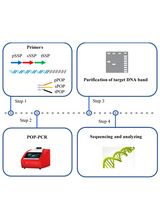
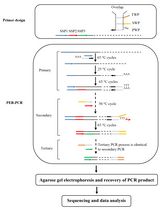
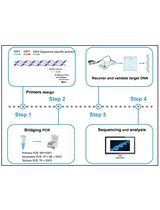
Graphical overview
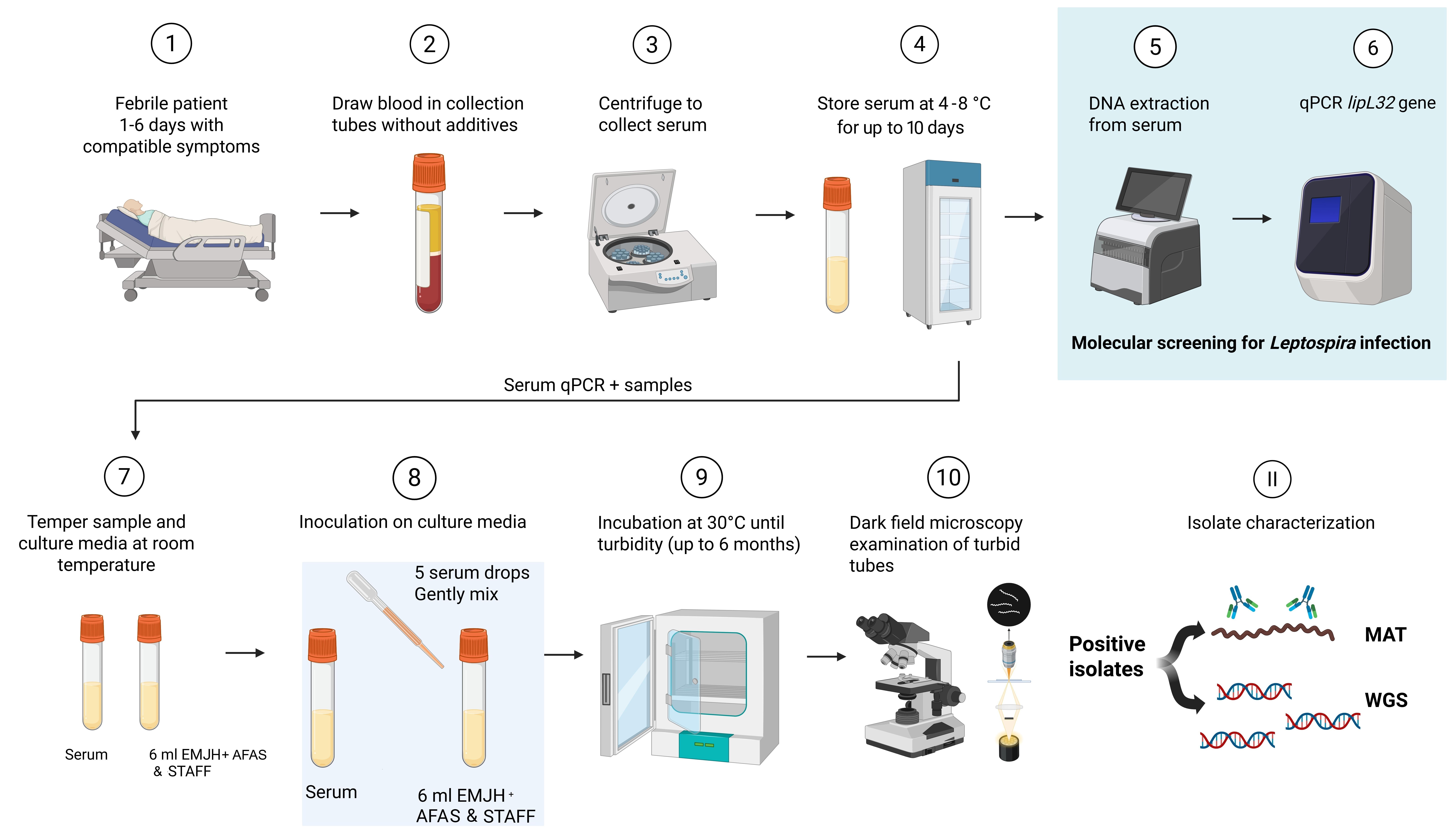
Stepwise protocol for the isolation of Leptospira from human serum samples. Modified from Chinchilla et al. [1]. Media are EMJH (Ellinghausen–McCullough–Johnson–Harris) + AFAS (albumin fatty acid supplement) and STAFF (EMJH+AFAS+ sulfamethoxazole–trimethoprim–amphotericin B–fosfomycin–5-fluorouracil).
Background
Leptospirosis is a widespread zoonotic disease caused by pathogenic bacteria of the genus Leptospira [3,4]. The disease is particularly prevalent in tropical and subtropical regions where abundant rainfall and frequent flooding favor its transmission [5]. The main reservoirs of Leptospira are wild and domestic mammals, with rodents being the most common hosts [6]. In humans, infection occurs through direct contact with the urine or body fluids of infected animals, or indirectly through the exposure of environments, such as soil or water, contaminated with the urine of infected animals [7,8]. In human hosts, the disease presents with a broad spectrum of clinical manifestations, ranging from mild symptoms to severe multisystem disease, known as Weil's syndrome [9].
The isolation and comprehensive characterization of circulating strains are fundamental for understanding the local epidemiology and transmission cycles in a region, identifying animal reservoirs, and improving public health surveillance. Furthermore, these efforts contribute to the optimization of serological panels used for the diagnosis of leptospirosis in humans and animals [10].
The culture of Leptospira spp. is a laborious technique that has historically presented many challenges for laboratories [1]. Whole blood has been the specimen of choice for the isolation of Leptospira during the acute phase of infection, though urine and cerebrospinal fluid are also utilized [11]. Standard isolation protocols typically require freshly obtained clinical samples to ensure bacterial viability, as the success of the culture is often considered dependent on the immediate inoculation of the specimen into specialized media [e.g., Ellinghausen–McCullough–Johnson–Harris (EMJH)] [10]. The primary advantage of the in-house protocol presented in this study is the successful isolation of Leptospira from serum samples, a matrix traditionally reserved for serology rather than culture. Serum offers a significant benefit over whole blood because it contains lower concentrations of inhibitory substances [12], such as hemoglobin [14], IgG immunoglobulins, and lactoferrin, which can reduce the sensitivity of both PCR and isolation [13,15]. Anticoagulants found in whole blood collection tubes, including heparin and EDTA, also have an effect as PCR-inhibitor substances [12]. This protocol demonstrates that Leptospira remains viable in non-fresh samples stored at 4–8 °C for up to 10 days, facilitating isolation in reference laboratories that receive samples after long transit times.
Molecular diagnosis of leptospirosis via real-time PCR is frequently used for rapid detection during the acute phase of the disease; however, leptospiremia is variable and typically declines with increasing time after symptom onset [10]. The use of PCR to detect leptospiral DNA prior to culture, together with the use of selective and specialized culture media such as STAFF [16], can optimize isolation procedures. These approaches are particularly important because bacterial loads during infection are often very low, and Leptospira is a slow-growing organism, making cultures highly susceptible to contamination [13].
This protocol can be used to advance the development of improved serological panels for the microagglutination test (MAT) by incorporating locally circulating isolates. It also provides a framework for enhancing global surveillance by repurposing serum samples already collected for routine serological diagnosis, thereby increasing the opportunity to identify novel serovars and species without additional clinical specimen collection.
Materials and reagents
Biological materials
1. Leptospira interrogans serovar Copenhageni strain M20 (Amsterdam UMC, KIT code: KIT0132)
Reagents
1. STARMag 96 ProPrep extraction kit (Seegene, catalog number: EX00009P)
2. TaqMan Fast Advanced Master Mix (Applied Biosystems, catalog number: 4444963)
3. Forward primer LipL32-f (5′CGCTGAAATGGGAGTTCGTATGATTTCC3′) and reverse primer LipL32-r (5′GGCATTGATTTTTCTTCYGGGGTWGCC3′) at final concentrations of 0.4 μM
4. Probe LipL32-p (5′FAM AGGCGAAATCGGKGARCCAGGCGAYGG3′BHQ1) at a final concentration of 0.2 μM
5. Nuclease-free water for molecular biology
6. Medium base EMJH for Leptospira (BD Difco, catalog number: 274910)
7. Albumin fatty acid supplement for Leptospira growth (AFAS) (Amsterdam UMC, Netherlands); store at -20 °C
8. Sulfamethoxazole (Sigma-Aldrich, catalog number: S7507)
9. Trimethoprim (Sigma-Aldrich, catalog number: 92131)
10. Amphotericin B of Streptomyces (Sigma-Aldrich, catalog number: A2411)
11. Phosphomycin disodium salt (Sigma-Aldrich, catalog number: P5396)
12. 5-Fluorouracil (Sigma-Aldrich, catalog number: F6627)
13. Sterile distilled water
14. Dimethyl sulfoxide (DMSO) (Sigma-Aldrich, catalog number: D2650)
15. Concentrated acetone (JT Baker, catalog number: 9006-3)
16. NaOH (Fluka, catalog number: 71692)
17. HCl concentrated (Fisher Scientific, catalog number: A144C-212)
18. pH indicator paper (Whatman, catalog number: WHA2600100A)
19. QIAmp DNA Mini kit (Qiagen, catalog number: 51304)
20. Absolute ethanol, 200 proof, molecular biology grade (Thermo Fischer, catalog number: T038181000)
21. Tris-HCl, 1 M solution, pH 8.0, molecular biology grade, ultrapure (Thermo Fischer, catalog number: J22638.AE)
22. Phosphate buffered saline (PBS) (Sigma-Aldrich, catalog number: P3813)
23. Polyclonal rabbit antisera (Amsterdam UMC) (Table 1)
Table 1. Panel of polyclonal rabbit anti sera for serogroup typification of Leptospira isolates
| Serogroup | Serovar | Strain |
|---|---|---|
| Australis | Australis | Ballico |
| Australis | Bratislava | Jez Bratislava |
| Autumnalis | Bangkinang | Bangkinang I |
| Autumnalis | Butembo | Butembo |
| Autumnalis | Carlos | 3 C |
| Autumnalis | Rachmati | Rachmat |
| Ballum | Ballum | Mus 127 |
| Ballum | Kenya | Njenga |
| Ballum | Castellonis | Castellon 3 |
| Bataviae | Bataviae | Swart |
| Canicola | Canicola | Hond Utrecht IV |
| Canicola | Schueffneri | Vleermuis 90 C |
| Celledoni | Celledoni | Celledoni |
| Cynopteri | Cynopteri | 3522 C |
| Djasiman | Djasiman | Djasiman |
| Grippotyphosa | Grippotyphosa | Moskva V |
| Grippotyphosa | Huanuco | M 4 |
| Hebdomadis | Hebdomadis | Hebdomadis |
| Hebdomadis | Worsfoldi | Worsfold |
| Icterohaemorrhagiae | Copenhageni | M 20 |
| Icterohaemorrhagiae | Icteroaemorrhagiae | RGA |
| Javanica | Poi | Poi |
| Javanica | Arenal | MAVJ4-01 |
| Louisiana | Louisiana | LSU 1945 |
| Manhao | Manhao | L 60 |
| Mini | Mini | Sari |
| Panama | Panama | CZ 214 K |
| Pomona | Pomona | Pomona |
| Pyrogenes | Pyrogenes | Salinem |
| Pyrogenes | Costa Rica | INCIENSA 04 |
| Sarmin | Rio | Rr 5 |
| Sarmin | Weaveri | CZ 390 |
| Sejroe | Hardjo | Hardjoprajitno |
| Sejroe | Saxkoebing | Mus 24 |
| Shermani | Shermani | 1342 K |
| Tarassovi | Bakeri | LT 79 |
| Tarassovi | Chagres | 1913 K |
| Tarassovi | Corredores | JICH |
| Tarassovi | Mogden | Compton |
| Tarassovi | Rama | 316 |
| Tarassovi | Tarassovi | Perepelitsin |
| Semaranga | Patoc | Patoc 1 |
| Fainei | Hurstbridge | BUT 6 |
| Leptonema | Illini | 3055 |
| Ranarum | Ranarum | ICF |
| Genomospecies 1 | Sichuan | 79601 |
24. Monoclonal antibodies for Leptospira serotyping (Amsterdam UMC) (Table 2)
Table 2. Monoclonal antibodies for Leptospira serotyping (Amsterdam UMC)
| Serogroup | Monoclonal antibodies |
|---|---|
| Australis | F81C1 |
| Autumnalis | F69C11, F69C15 |
| Ballum | F74C1 |
| Bataviae | F129C19 |
| Canicola | F152C18 |
| Cynopteri | F69C11, F69C15 |
| Grippotyphosa | F71C9 |
| Hebdomadis | F16H28, F16H140 |
| Icterohaemorrhagiae | F70C14, F89C12, F70C24 |
| Javanica | F98C12 |
| Pomona | F48C6 |
| Pyrogenes | F134C6 |
| Sejroe | F50C3, F16H327, F16H140, F16H28, F13A3-1, F22C1-6 |
| Sarmin | F98C12 |
| Tarassovi | F151C8 |
25. Nextera XT DNA Library Preparation kit (Illumina, catalog number: 15032354)
Solutions
1. EMJH medium base supplemented with AFAS (EMJH+AFAS) (see Recipes)
2. NaOH 10 M (see Recipes)
3. Trimethoprim 20 mg/mL (see Recipes)
4. Phosphomycin 80 mg/mL (see Recipes)
5. Sulfamethoxazole 20 mg/mL (see Recipes)
6. 5-Fluorouracil 20 mg/mL (see Recipes)
7. Amphotericin B 2.5 mg/mL (see Recipes)
8. STAFF cocktail 10× (see Recipes)
9. STAFF media (see Recipes)
10. Tris-HCl elution buffer (see Recipes)
Recipes
1. EMJH+AFAS
| Reagent | Final concentration | Quantity or volume |
|---|---|---|
| Medium base EMJH | 2.3 g/L | 2.3 g |
| Sterile distilled water | n/a | 900 mL |
| AFAS | 10% | 100 mL |
Note: Medium base EMJH can be prepared and stored at 2–8 °C up to six months prior to supplementation with AFAS.
First, prepare the medium base EMJH by adding 2.3 g of EMJH to a 2 L Erlenmeyer flask. Add 900 mL of sterile distilled water and dissolve using a magnetic stirrer. Check that the final pH is 7.5; if necessary, add drops of concentrated HCl or NaOH 10 M to adjust the pH. Transfer to a 2 L Corning storage bottle and autoclave. Store at 2–8 °C until supplementation with AFAS. For supplementation, thaw the frozen AFAS using a water bath at room temperature. Aseptically, add the supplement for a final volume of 1 L of EMJH+AFAS.
Perform a sterility check of the EMJH+AFAS medium by incubating the prepared medium for one week at 37 °C, one week at 30 °C, and two weeks at room temperature to confirm the absence of contamination. After one month of incubation, dispense 6 mL aliquots into Corning culture tubes using a self-refilling laboratory syringe. Store the aliquots at 2–8 °C for up to a year.
Perform a growth control inoculating 100 μL of fully grown Leptospira interrogans serovar Copenhageni strain M20 (grown at 30 °C for a week in EMJH+AFAS) in a Corning culture tube and incubate at 30 °C for a week. The presence of turbidity in the culture tube confirms the usefulness of the medium for the isolation of Leptospira.
2. NaOH 10 M
| Reagent | Final concentration | Quantity or volume |
|---|---|---|
| NaOH | 10 M | 40 g |
| Sterile distilled water | n/a | 100 mL |
3. Trimethoprim 20 mg/mL
| Reagent | Final concentration | Quantity or volume |
|---|---|---|
| Trimethoprim | 20 mg/mL | 1 g |
| DMSO | n/a | 50 mL |
Dissolve and filter using a 0.45 μm filter in a laminar flow cabinet. Store at -20 °C for up to a year protected from light.
Note: Verify the potency of each antibiotic in the Certificate of Analysis of each lot prior to use, to ensure accurate calculation of the amount of antibiotic required to prepare each stock solution.
4. Phosphomycin 80 mg/mL
| Reagent | Final concentration | Quantity or volume |
|---|---|---|
| Phosphomycin disodium salt | 80 mg/mL | 1.06 g |
| Sterile distilled water | n/a | 10 mL |
Dissolve and filter using a 0.45 μm filter in a laminar flow cabinet. Store at -20 °C for up to a year protected from light.
5. Sulfamethoxazole 20 mg/mL
| Reagent | Final concentration | Quantity or volume |
|---|---|---|
| Sulfamethoxazole | 20 mg/mL | 1 g |
| Concentrated acetone | n/a | 50 mL |
Dissolve and filter using a 0.45 μm filter in a laminar flow cabinet. Store at -20 °C for up to a year protected from light.
Note: Store in a sealed container to avoid acetone evaporation.
6. 5-Fluorouracil 20 mg/mL
| Reagent | Final concentration | Quantity or volume |
|---|---|---|
| 5-Fluorouracil | 20 mg/mL | 1 g |
| DMSO | n/a | 50 mL |
Add 1 g of 5-fluorouracil to a 50 mL volumetric flask. Add 40 mL of DMSO. Add a magnetic rod and heat to 56 °C in a stirrer until dissolution. Bring to a final volume of 50 mL using DMSO. Filter using a 0.45 μm filter in a laminar flow cabinet. Store at -20 °C for up to a year protected from light.
7. Amphotericin B 2.5 mg/mL
| Reagent | Final concentration | Quantity or volume |
|---|---|---|
| Amphotericin B | 2.5 mg/mL | 27 mg |
| Sterile distilled water | n/a | 10 mL |
| NaOH 10 M | 20 mM | 1 drop |
Weigh 27 mg of Amphotericin B in an analytical balance and transfer to a 10 mL volumetric flask. Add 5 mL of distilled water and homogenize. Add one drop of NaOH 10 M and mix until the Amphotericin B is completely dissolved, and a dark-yellow, translucent solution is obtained. Bring to a final volume of 10 mL and measure the pH using a pH indicator paper; confirm that the pH exceeds 11. Filter using a 0.45 μm filter in a laminar flow cabinet. Store at -20 °C for up to a year protected from light.
Note: pH must be >11 to dissolve Amphotericin B in water.
8. STAFF cocktail 10×
| Reagent | Final concentration | Quantity or volume |
|---|---|---|
| Trimethoprim 20 mg/mL | 200 μg/mL | 1 mL |
| Phosphomycin 80 mg/mL | 4,000 μg/mL | 5 mL |
| Sulfamethoxazole 20 mg/mL | 400 μg/mL | 2 mL |
| 5-Fluorouracil 20 mg/mL | 1,000 μg/mL | 5 mL |
| Amphotericin B 2.5 mg/mL | 50 μg/mL | 2 mL |
| Sterile distilled water | NA | 80 mL |
Add 50 mL of distilled water to a 100 mL volumetric flask. Add the indicated volumes of each antibiotic solution stock. Add 30 mL of distilled water and bring to a final volume of 100 mL. Sterilize by filtration using a 0.22 μm filter in a laminar flow cabinet. Store at -20 °C for up to a year protected from light.
9. STAFF media
| Reagent | Final concentration | Quantity or volume |
|---|---|---|
| STAFF cocktail 10× | 1× | 100 mL |
| EMJH+AFAS | NA | 900 mL |
Perform the sterility check and the growth control of the prepared medium as previously described for the EMJH+AFAS medium. After one month of incubation of the medium at the indicated temperatures (37 °C, 30 °C, and room temperature), dispense 6 mL aliquots into Corning culture tubes using a self-refilling laboratory syringe. Perform the growth control of Leptospira Copenhageni M20 by inoculating 100 μL of the grown culture in a tube with 6 mL of STAFF media and observing the presence of turbidity after a week of incubation.
10. Tris-HCl elution buffer
| Reagent | Final concentration | Quantity or volume |
|---|---|---|
| Tris-HCl pH 8.0 1 M | 10 mM | 50 μL |
| Nuclease-free water | NA | 4,950 μL |
Use this buffer for the DNA elution step during Leptospira DNA extraction for next-generation sequencing using a column-based extraction kit.
Laboratory supplies
1. MicroAmp fast optical 96-well reaction plate (Applied Biosystems, catalog number: 4346906)
2. MicroAmp optical adhesive film (Applied Biosystems, catalog number: 4311971)
3. MicroAmpTM adhesive film applicator (Thermo Fisher Scientific, catalog number: 4333183)
4. Corning 16 × 125 mm culture tubes, not TC-treated (Corning, catalog number: 430157)
5. 0.5–10 μL, 1–100 μL, and 100–1,000 μL pipettes (Eppendorf, catalog number: EP3123000900)
6. 0.5–10 μL, 1–100 μL, and 100–1,000 μL pipette filtered tips (Eppendorf, catalog numbers: 0030078810, 0030078543, 0030078594)
7. 10–10 μL 12-channel pipette (Eppendorf, catalog number: 3125000044)
8. 2-mL safe-lock micro tube for master mix preparation and DNA extract storage (Eppendorf, catalog number: 0030123344)
9. 2-mL screw-cap micro tube for serum samples storage (Thermo Scientific, catalog number: 3463)
10. 2-L Pyrex Erlenmeyer flasks (Corning, catalog number: 4980-2L)
11. Volumetric flask 10 mL (Fisherbrand, catalog number: FB40010)
12. Volumetric flask 50 mL (Fisherbrand, catalog number: 10-205B)
13. Volumetric flask 100 mL (Fisherbrand, catalog number: 10-205C)
14. Serological pipette 10 mL (Thermo Scientific, catalog number: 170374N)
15. Single-use filter unit 0.22 μm (Sartorius, catalog number: 16534)
16. Disposable sterile syringe filter 0.45 μm (Corning, catalog number: CLS431225)
17. PYREX® round media storage bottles 2 L, with screw cap (Corning, catalog number: 1395-2L)
18. Sterile transfer pipettes (Heathrow Scientific, catalog number: HS206373C)
19. 96-well clear polystyrene microplate round bottom (Corning, catalog number: CLS3367)
20. Disposable pipette basins (Fisherbrand, catalog number: 13-681-509)
21. Microscope slides (Thomas Scientific, catalog number: 6686K20)
Equipment
1. NordicSafe® Class II biological safety cabinet (ESCO, catalog number: NC2-L)
2. Automated nucleic acids extraction system SGprep 32 (Seegene, catalog number: SG71100)
3. 7500 Fast Real-Time PCR system (Applied Biosystems, catalog number: 4351106)
4. Vortex (Fisherbrand, catalog number: 02-215-414)
5. Microcentrifuge (Eppendorf, catalog number: 5425)
6. Laboratory refrigerator (Thermo Scientific, catalog number: TSX5005SA)
7. Incubator (Thermo Scientific, catalog number: 51028066)
8. Analytical balance (Want, model: FA2204G)
9. Precision balance (A&D Weighing, model: FZ-300iWP)
10. pH meter (Thermo Scientific, model: Orion Star A211)
11. Stirrer (Corning, catalog number: PC-410D)
12. Laboratory self-refilling syringe (Socorex, model: Dosys Classic 173, catalog number: 173.0510)
13. Microscope with universal condensator set for dark-field microscopy (Olympus, model: BX53)
14. Laboratory freezer (Thermo Scientific, TSX series, catalog number: TSX2320EA)
15. Orbital shaker (Bioevpeak, model: SHK-0210)
16. Dry bath (Thermo Fischer, catalog number: 88870008)
Software and datasets
1. NextSeq 500 sequencing system (Illumina)
2. Mutualized Platform for Microbiology (P2M) (Institut Pasteur)
3. CLC Genomics Workbench (Qiagen, version 9)
Procedure
登录/注册后免费查看全文
文章信息
稿件历史记录
提交日期: Jul 13, 2026
接收日期: Sep 6, 2026
在线发布日期: Sep 22, 2026
出版日期: Oct 20, 2026
版权信息
© 2026 The Author(s); This is an open access article under the CC BY-NC license (https://creativecommons.org/licenses/by-nc/4.0/).
如何引用
Chinchilla, D., Sánchez, I., Montero, D., Cháves, D., Quirós, B. and Gutiérrez, R. (2026). PCR-Guided Isolation of Leptospira Strains From Refrigerated Serum Samples for Serogroup and Genomic Characterization. Bio-protocol 16(20): e5842. DOI: 10.21769/BioProtoc.5842.

 Download Citation in RIS Format
分类
微生物学 > 病原体检测 > PCR
分子生物学 > DNA > PCR
您对这篇实验方案有问题吗?
在此处发布您的问题,我们将邀请本文作者来回答。同时,我们会将您的问题发布到Bio-protocol Exchange,以便寻求社区成员的帮助。
 发布问题
发布问题


