


Efficiency-Corrected Relative Quantification of qPCR Data Using LinRegPCR and a Spreadsheet-Based Workflow
利用 LinRegPCR 和电子表格工作流程对 qPCR 数据进行效率校正的相对定量

(§Technical contact: louis.muller@vet-alfort.fr) 发布: 2026年07月05日第16卷第13期 DOI: 10.21769/BioProtoc.5729 浏览次数: 406
评审: Elena A. OstrakhovitchAnonymous reviewer(s)
 PDF
PDF  Q&A
Q&A
Advertisement





Abstract
Quantitative real-time PCR (qPCR) is widely used for the quantitative assessment of relative transcript abundance in biological and medical research. Rigorous interpretation of qPCR data requires appropriate correction and normalization workflows that account for both technical variability and experimental heterogeneity. Regarding the correction step, the most used qPCR analysis relies on the 2-ΔΔCq method, which assumes identical and optimal amplification efficiencies across assays. Alternative strategies estimate amplification efficiencies using standard curves generated from serial dilutions, but these approaches require additional experimental work and may introduce serious dilution-related bias. Here, we describe a spreadsheet-based computational protocol for the correction of relative quantification of qPCR data that integrates amplification efficiencies derived directly from raw amplification curves using LinRegPCR. Cq values and per-reaction efficiency estimates are combined to calculate efficiency-corrected target quantities. Correction is then followed by normalization using the geometric mean of two reference genes. The workflow enables calculation of relative abundance fold-changes without the need for standard curves and produces output tables suitable for downstream statistical analysis. This protocol provides a transparent, dilution-free method for efficiency-corrected qPCR data analysis that can be implemented using commonly available software, facilitating reproducible and Minimum Information for Publication of Quantitative Real-Time PCR Experiments (MIQE)-compliant reporting of qPCR results.
Key features
• Enables per-reaction efficiency correction using amplification curve-derived efficiencies instead of assuming uniform PCR performance across assays.
• Offers relative quantification without standard curves, reducing experimental workload and avoiding dilution-associated bias.
• Integrates multiple reference genes using geometric mean normalization to improve robustness of abundance estimates.
• Provides a transparent, spreadsheet-based workflow compatible with routine laboratory software and downstream statistical analysis.
Keywords: Reproducible research workflows (可重复研究流程) PCR data quality control (PCR 数据质量控制)
Reference gene validation (内参基因验证)
RT-qPCR normalization strategies (RT-qPCR 归一化策略)
Biostatistical analysis of transcript abundance (转录本丰度的生物统计分析)
PCR data quality control (PCR 数据质量控制)
Reference gene validation (内参基因验证)
RT-qPCR normalization strategies (RT-qPCR 归一化策略)
Biostatistical analysis of transcript abundance (转录本丰度的生物统计分析)
Graphical overview

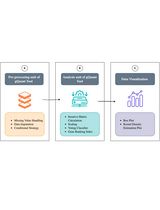
Overview of the efficiency-corrected quantitative real-time PCR (qPCR) data analysis workflow
Background
Quantitative PCR (qPCR) is one of the most widely used techniques for assessing relative transcript abundance due to its sensitivity, broad dynamic range, and accessibility [1]. It is a central method for validation of high-throughput transcriptomic data, such as RNA-seq, by providing an independent confirmation of differentially abundant RNA species identified with omics global analyses. In most routine applications, qPCR data are summarized using cycle quantification (Cq) values, which are then converted into relative abundance estimates through mathematical models [2]. In accordance with the Minimum Information for Publication of Quantitative PCR Experiments (MIQE) guidelines, the term Cq is used in this protocol instead of the historical cycle threshold (Ct) value [3].
The 2-ΔΔCq method is the most widely used approach for relative quantification and is based on the assumption that amplification efficiencies are identical and close to optimal across all assays [4]. Although this assumption is sometimes approximately valid, amplification efficiency can vary dramatically between primer sets, samples, and even individual reactions [5]. Such variability may introduce systematic bias when efficiency differences are not taken into account [6]. To address these limitations, efficiency-corrected quantification models have been proposed to incorporate amplification efficiency into relative abundance calculations [7]. To do so, amplification efficiency is often estimated using standard curves generated from serial dilutions [8]. However, this strategy requires additional experimental steps and is sensitive to both dilution errors and variable levels of PCR inhibitors between samples [9].
An alternative method consists of estimating amplification efficiency directly from the exponential phase of individual amplification curves. Different approaches have been described, allowing estimation of per-reaction efficiency without relying on dilution series and providing a more direct representation of reaction performance [10]. Among these, LinRegPCR is a widely used and validated tool that derives efficiencies from the log-linear phase of each amplification curve [11]. In this protocol, efficiencies derived from amplification curve analyses with the LinRegPCR tool are integrated into a spreadsheet-based workflow to compute efficiency-corrected target quantities, normalize abundance using multiple reference genes, and calculate relative fold changes. This computational approach facilitates transparent and reproducible qPCR data analysis while remaining compatible with commonly available laboratory software, being completely in phase with current best practices for qPCR experiments, as summarized in the new version of MIQE guidelines [12].
Software and datasets
1. Data, qPCR amplification data (RDML format), 1.2 or newer, open standard
2. LinRegPCR (web-based application), accessed April 2026, https://v1-8-1.rdml-tools.com/linregpcr.html
3. Microsoft Excel, any version supporting basic mathematical functions, proprietary, paid
Procedure
登录/注册后免费查看全文
文章信息
稿件历史记录
提交日期: Feb 26, 2026
接收日期: May 18, 2026
在线发布日期: Jun 3, 2026
出版日期: Jul 5, 2026
版权信息
© 2026 The Author(s); This is an open access article under the CC BY-NC license (https://creativecommons.org/licenses/by-nc/4.0/).
如何引用
Müller, L. A. and Tiret, L. (2026). Efficiency-Corrected Relative Quantification of qPCR Data Using LinRegPCR and a Spreadsheet-Based Workflow. Bio-protocol 16(13): e5729. DOI: 10.21769/BioProtoc.5729.

 Download Citation in RIS Format
分类
生物信息学与计算生物学
分子生物学 > RNA > qRT-PCR
您对这篇实验方案有问题吗?
在此处发布您的问题,我们将邀请本文作者来回答。同时,我们会将您的问题发布到Bio-protocol Exchange,以便寻求社区成员的帮助。
 发布问题
发布问题


