


PEPTERGENT: A Peptide-Based Reagent for Detergent-Free Extraction of Membrane Proteins and Purification of Membrane Proteomes
PEPTERGENT:一种用于无去污剂提取膜蛋白及纯化膜蛋白组的多肽试剂

发布: 2026年05月20日第16卷第10期 DOI: 10.21769/BioProtoc.5700 浏览次数: 846
评审: Chiara AmbrogioSrajan KapoorAnonymous reviewer(s)
 PDF
PDF  Q&A
Q&A
参见作者原研究论文
The authors used this protocol in:
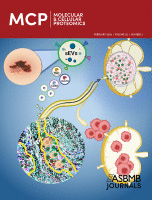
Feb 2026
Advertisement





Abstract
Peptergent is a novel class of amphipathic peptides that enables detergent-free extraction of membrane proteins (MPs) from lipid bilayers. This reagent self-assembles around hydrophobic transmembrane regions, forming stable, water-soluble complexes that can be isolated directly from biological membranes. Peptergent therefore bypasses the limitations imposed by traditional detergents, which often destabilize protein assemblies. Since detergents are completely avoided, MPs are directly amenable to structural and mass spectrometry (MS) analysis, thereby addressing their persistent underrepresentation in proteomic datasets and improving their accessibility in drug-screening strategies. We present here a streamlined protocol for MPs extraction with the Peptergent PDET-1, followed by exchange into His-tagged Peptidiscs for Ni-NTA-based affinity purification. The method encompasses membrane isolation, peptide preparation, protein extraction, clarification, and MPs exchange from Peptergents to Peptidiscs. This workflow yields an enriched membrane proteome compatible with downstream LC-MS/MS analysis for improved identification of multi-pass MPs.
Key features
• Direct extraction and solubilization of membrane proteins.
• 100% detergent-free workflow.
• Exchange of Peptergent to Peptidiscs for affinity purification of membrane proteins.
• Applicable to cultured cells and tissue-derived membrane fractions.
Keywords: Detergent (去污剂) Peptidisc (肽盘)
Nanodisc (纳米盘)
SMA (SMA)
DeFrND (DeFrND)
18A peptide (18A肽)
Membrane mimetic (膜模拟体系)
Protein structure (蛋白质结构)
Proteomics (蛋白质组学)
Peptidisc (肽盘)
Nanodisc (纳米盘)
SMA (SMA)
DeFrND (DeFrND)
18A peptide (18A肽)
Membrane mimetic (膜模拟体系)
Protein structure (蛋白质结构)
Proteomics (蛋白质组学)
Graphical overview
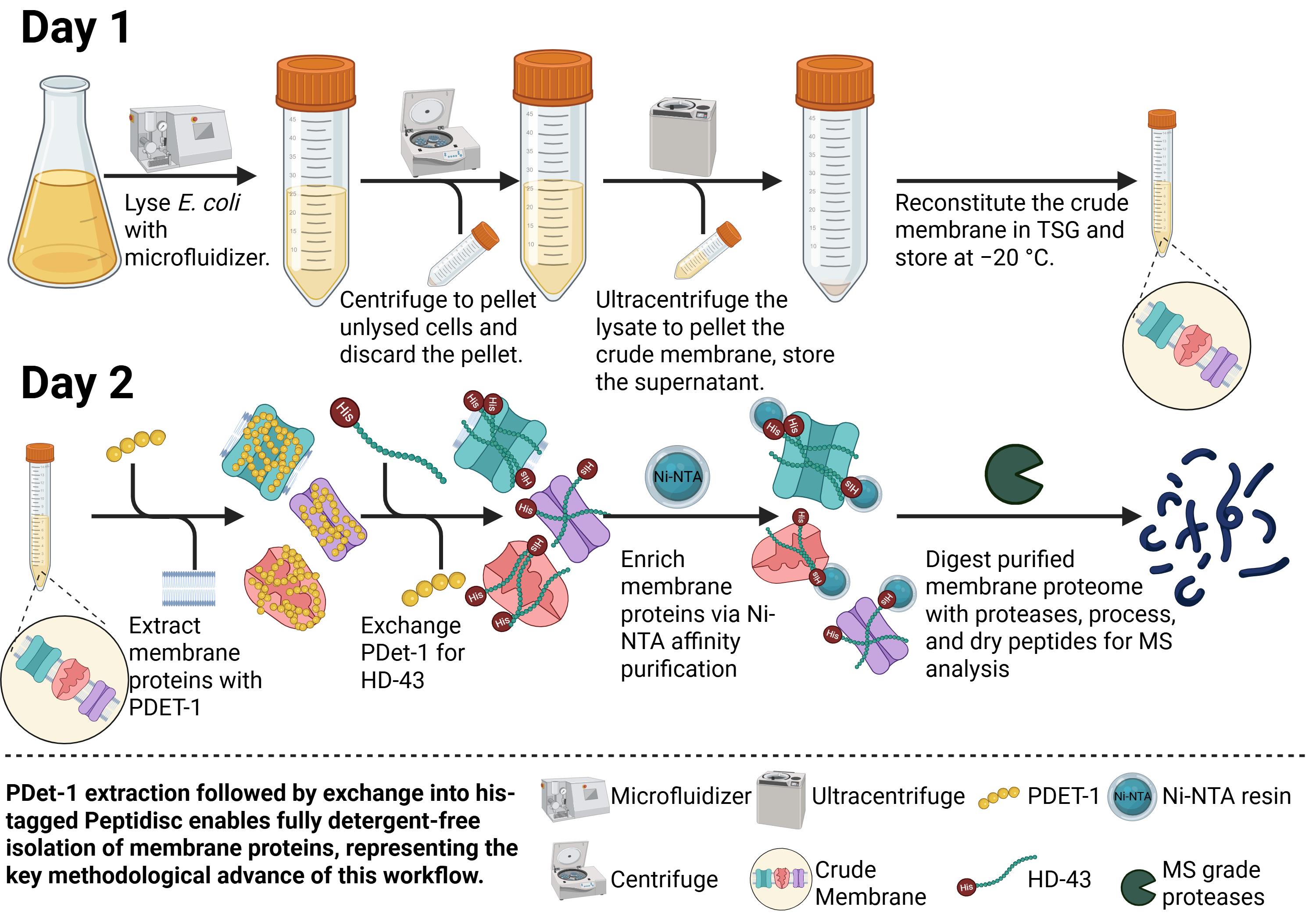
Peptergent-based workflow for isolating membrane proteins (MPs) directly from membranes. Proteins are extracted with Peptergent (PDET-1) and transferred into His-tagged Peptidisc (HD-43). The water-soluble MPs are purified by Ni-NTA affinity purification before preparation for bottom-up mass spectrometry. The protocol yields dried peptide samples ready for LC–MS analysis.
Background
Membrane proteins (MPs) constitute nearly ~30% of the proteome and represent the majority of current therapeutic targets [1]. Yet, their identification and biochemical and structural characterization remain fundamentally constrained by the need for extraction from lipid bilayers while preserving structure, oligomeric integrity, and ligand responsiveness [2–4]. Conventional workflows rely on detergent membrane solubilization followed by protein purification in mixed micelles, a process that frequently destabilizes MPs, disrupts native lipid interactions, and biases downstream structural and functional analyses [3,5,6]. These surfactants are also mostly incompatible with downstream mass spectrometry (MS), thereby altering the precision of quantitative membrane proteome analysis [7].
Detergent-free systems, including nanodiscs, Peptidiscs, and styrene–maleic acid (SMA), partially address these limitations [8]. However, these membrane mimetic approaches still require an initial detergent extraction, while the polymer-based SMA introduces abundant ionic charges that necessitate organic-phase extraction [8,9]. Consequently, a gap remains between native membrane isolation and MS-compatible analysis, such as enabling direct solubilization of the membrane proteome without prior detergent exposure or polymer-induced modification.
Previous and more recent studies have demonstrated that short 18A-based amphiphilic peptides can solubilize membrane proteins from lipid bilayers in a manner analogous to conventional detergents [10,11]. Because these peptides combine detergent-like extraction properties with a peptide-based scaffold, they have been termed peptide detergents, or “Peptergents” [12]. Early studies showed that Peptergents efficiently solubilize membrane proteins while improving the stability and longevity of membrane enzymes compared with traditional surfactants [10,12–15]. Structural studies and molecular modeling later suggested that these peptides self-assemble into ordered supramolecular architectures, potentially adopting a β-sheet-like organization that solubilizes lipids and encircles hydrophobic protein surfaces to essentially mimic the classical detergent micelles action [16,17].
Building on these earlier discoveries, we describe the use of the Peptergent PDET-1 for detergent-free extraction of MPs from biological membranes, enabling downstream MS analysis. Membranes are incubated with PDET-1, forming peptide-stabilized MP assemblies. Because PDET-1 lacks an affinity handle, solubilized MPs are subsequently exchanged into His-tagged Peptidiscs, enabling Ni-NTA affinity purification and depleting soluble contaminants that co-extract during membrane solubilization [18–22]. This workflow shows membrane isolation, peptide preparation, PDET-1 extraction, exchange into His-tagged Peptidiscs, Ni-NTA-based enrichment, and bottom-up MS sample preparation. This detergent-free process can be applied to crude membrane fractions from cultured cells and tissue fractions.
Materials and reagents
Biological materials
1. Glycerol stock of Bl21 (DE3) competent cells E. coli (originally purchased from Millipore Sigma, catalog number: 69450-M); check Addgene (https://www.addgene.org/protocols/create-glycerol-stock/) for preparation instructions and store at -80 °C
Note: No antibiotic selection is used in this protocol, as cells are grown without a plasmid for crude membrane isolation.
Reagents
1. PDET-1 (Peptergent); peptide fragment derived from the Peptidisc peptide (Peptidisc Biotech); store at -20 °C
2. HD-43 (His-Tagged Peptidisc); His-branch on the Peptidisc peptide; Peptidisc Biotech; store at -20 °C
3. Ni-NTA agarose (Qiagen, catalog number: 30210); store at 4 °C
4. cOmplete protease inhibitor cocktail (Sigma-Aldrich, catalog number: 11697498001); store at 4 °C
5. MS-grade proteases (Thermo Fisher Scientific, catalog number: 90057); store at -20 °C
6. C18-HD disk 47 mm; Empore (C18 solid phase extraction disk) (UNSPSC, catalog number: 41120000); store at room temperature
7. Polygoprep 300-20 C18 (C18 resin) (Macherey-Nagel, catalog number: 711025.100); store at room temperature
8. Tris (BioShop, catalog number: TRS003.5); store at room temperature
9. Sodium chloride (NaCl) (Fisher Scientific, catalog number: BP358-212); store at room temperature
10. Ethylenediaminetetraacetic acid (EDTA) (BioShop, catalog number: EDT002.500); store at room temperature
11. Phenylmethylsulfonyl fluoride (PMSF) (Sigma-Aldrich, catalog number: P-7626); store at room temperature
12. Dithiothreitol (DTT) (BioShop, catalog number: DTT002.10); store at -20 °C
13. Iodoacetamide (IAA) (BioShop, catalog number: IOD500.5); store at 4 °C
14. Urea (BioShop, catalog number: URE002.5); store at room temperature
15. Methanol (Sigma-Aldrich, catalog number: 179337-4L); store at room temperature
16. Acetonitrile (certified ACS) (Fisher Scientific, catalog number: A211); store at room temperature
17. Imidazole (BioShop, catalog number: IMD510.500); store at room temperature
18. Formic acid (Sigma-Aldrich, catalog number: 695076-100ML); store at room temperature
19. Tryptone (Bioshop, catalog number: TRP402.5); store at room temperature
20. Yeast extract (Bioshop, catalog number: YEX555.500); store at room temperature
21. Aluminum foil (Canada Tire, catalog number: 053-0371-0); store at room temperature
22. Glycerol (Fisher Scientific, catalog number: BP229-4); store at room temperature
23. Ammonium bicarbonate (Fisher Scientific, catalog number: A643500); store at room temperature
24. Sodium hydroxide (NaOH) (Fisher Scientific, catalog number: S318-3); store at room temperature
25. Hydrochloric acid (HCl) solution (Fisher Scientific, catalog number: A144-212); store at room temperature
26. Bleach; Lavo Pro 6 (ULINE Canada, catalog number: S-24408); store at room temperature
27. 100% reagent alcohol (Fisher Scientific, catalog number A962F-1Gal); store at room temperature
Note: This reagent is regulated and requires purchase and tracking through the university.
28. Medical-grade compressed air in K-sized cylinders [please contact Linde directly to inquire how to purchase this item (1-800-225-8247)]
29. Water suitable for HPLC (Sigma-Aldrich, catalog number: 270733-1L); store at room temperature
30. Protein assay dye reagent concentrate (Bio-Rad, catalog number: 5000006); store at 4 °C
31. Precision Plus protein unstained protein standards (Bio-Rad, catalog number: 1610363); store at -20 °C
Solutions
1. 6 M NaOH solution (see Recipes)
2. 6 M HCl solution (see Recipes)
3. 20% ethanol solution (see Recipes)
4. 1 M Tris pH 7.8 solution (see Recipes)
5. 1 M NaCl solution (see Recipes)
6. 50% glycerol solution (see Recipes)
7. TS buffer (see Recipes)
8. 2× TS buffer (see Recipes)
9. TSG buffer (see Recipes)
10. LB media (see Recipes)
11. 50 mM ammonium bicarbonate solution (see Recipes)
12. 2 M imidazole solution (see Recipes)
13. Ni-NTA elution buffer (see Recipes)
14. 1 M PMSF solution (see Recipes)
15. 0.5 M EDTA pH 8.0 solution (see Recipes)
16. 100× protease inhibitor tablet solution (see Recipes)
17. 0.5 mg/mL mass spec protease solution (see Recipes)
18. 1 M DTT solution (see Recipes)
19. 500 mM IAA solution (see Recipes)
20. 10 mg/mL PDET-1 solution (see Recipes)
21. 5 mg/mL HD-43 solution (see Recipes)
22. Solubilization buffer (see Recipes)
23. C18 resin slurry (see Recipes)
24. 10% formic acid solution (see Recipes)
25. 0.1% formic acid solution (see Recipes)
26. 40% acetonitrile, 0.1% formic acid solution (see Recipes)
27. 1× Bradford assay solution (see Recipes)
Recipes
A useful formula for determining the amount of reagent to weigh when preparing a solution:
Grams to weigh = desired molarity (mol/L) * molecular weight (g/mol) * desired volume (L)
Use an online molarity calculator to determine adjusted values if using different quantities while preparing reagents (https://www.calculator.net/molarity-calculator.html).
1. 6 M NaOH solution (250 mL)
| Reagent | Final concentration | Quantity or volume |
|---|---|---|
| NaOH (39.997 g/mol) | 6 M | 60 g |
| Distilled water | NA | To 250 mL |
Store at room temperature.
2. 6 M HCl solution (250 mL)
| Reagent | Final concentration | Quantity or volume |
|---|---|---|
| Commercially purchased 12.1 M HCl | 6 M | 124 mL |
| Distilled water | NA | 126 mL |
Store at room temperature.
3. 20% ethanol solution (250 mL)
| Reagent | Final concentration | Quantity or volume |
|---|---|---|
| Commercially purchased 100% ethanol solution | 20% | 50 mL |
| Distilled water | NA | 200 mL |
Store at room temperature.
4. 1 M Tris pH 7.8 solution (500 mL)
| Reagent | Final concentration | Quantity or volume |
|---|---|---|
| Tris (121.14 g/mol) | 1 M | 60.57 g |
| 6 M HCl solution | to pH 7.8 | |
| Distilled water | NA | To 500 mL |
Store at room temperature.
5. 1 M NaCl solution (1 L)
| Reagent | Final concentration | Quantity or volume |
|---|---|---|
| NaCl (58.44 g/mol) | 1 M | 58.44 g |
| Distilled water | NA | To 1 L |
Store at room temperature.
6. 50% glycerol solution (200 mL)
| Reagent | Final concentration | Quantity or volume |
|---|---|---|
| Commercially purchased 100% glycerol solution | 50% | 100 mL |
| Distilled water | NA | 100 mL |
Avoid using a serological pipette or graduated cylinder as the glycerol will stick to the walls. It is more accurate to slowly pour the solution into the media bottle. Store at room temperature.
7. TS buffer (1 L)
| Reagent | Final concentration | Quantity or volume |
|---|---|---|
| 1 M Tris pH 7.8 solution | 50 mM | 50 mL |
| 1 M NaCl solution | 100 mM | 100 mL |
| Distilled water | NA | 850 mL |
Store at room temperature or 4 °C.
8. 2× TS buffer (1 L)
| Reagent | Final concentration | Quantity or volume |
|---|---|---|
| 1 M Tris pH 7.8 solution | 100 mM | 100 mL |
| 1 M NaCl solution | 200 mM | 200 mL |
| Distilled water | NA | 700 mL |
Store at room temperature or 4 °C.
9. TSG buffer (1 L)
| Reagent | Final concentration | Quantity or volume |
|---|---|---|
| 1 M Tris pH 7.8 solution | 50 mM | 50 mL |
| 1 M NaCl solution | 100 mM | 100 mL |
| 50% glycerol solution | 10% | 200 mL |
| Distilled water | NA | 650 mL |
Store at room temperature or 4 °C.
10. LB media (1 L)
| Reagent | Final concentration | Quantity or volume |
|---|---|---|
| Tryptone (no specified molecular weight) | NA | 10 g |
| Yeast extract (no specified molecular weight) | NA | 5 g |
| NaCl (58.44 g/mol) | 171 mM | 10 g |
| Distilled water | NA | To 1 L |
Autoclave at 120 °C for 30 min with a small volume of water in the autoclave tray. Ensure the lid is loosely fit and the autoclave tape is wrapped around the top of the bottle before autoclaving. After autoclaving, store at room temperature. If anything is seen growing inside, add bleach at a volume of 10% of the combined LB media and bleach volume and mix. Let it sit for 30 min at room temperature. Then pour down the drain and chase the drain with tap water for 15 min.
11. 50 mM ammonium bicarbonate solution (50 mL)
| Reagent | Final concentration | Quantity or volume |
|---|---|---|
| Ammonium bicarbonate (79.06 g/mol) | 50 mM | 197.65 mg |
| Distilled water | NA | Up to 50 mL |
Store at 4 °C.
12. 2 M imidazole solution (50 mL)
| Reagent | Final concentration | Quantity or volume |
|---|---|---|
| Imidazole (68.08 g/mol) | 2 M | 6.8 g |
| Distilled water | NA | Up to 50 mL |
Store at 4 °C.
13. Ni-NTA elution buffer (10 mL)
| Reagent | Final concentration | Quantity or volume |
|---|---|---|
| 2× TS | 50 mM Tris pH 7.8, 100 mM NaCl | 5 mL |
| 2 M imidazole solution | 600 mM imidazole | 3 mL |
| Distilled water | NA | 2 mL |
Store at 4 °C.
14. 1 M PMSF solution (10 mL)
| Reagent | Final concentration | Quantity or volume |
|---|---|---|
| PMSF (174.19 g/mol) | 1 M | 1.74 g |
| Isopropanol | NA | Up to 10 mL |
Store at -20 °C. A precipitate may form during storage; use only the clear supernatant and avoid the insoluble fraction. Prepare fresh stock once the soluble portion is depleted.
15. 0.5 M EDTA pH 8.0 solution (50 mL)
| Reagent | Final concentration | Quantity or volume |
|---|---|---|
| EDTA (372.24 g/mol) | 0.5 M | 9.3 g |
| 6 M NaOH solution | to pH 8.0 | |
| Distilled water | NA | Up to 50 mL |
Dissolve 1.3 g of EDTA in 30 mL of distilled water. Adjust the pH to 8.0 using 6 M NaOH. Add an additional 1 g of EDTA, mix until dissolved, and re-adjust the pH to 8.0. Continue adding 1 g of EDTA at a time, adjusting the pH back to 8.0 after each addition, until a total of 9.3 g of EDTA has been added. Bring the final volume to 50 mL with distilled water. Store at 4 °C.
16. 100× protease inhibitor tablet solution (100 μL)
| Reagent | Final concentration | Quantity or volume |
|---|---|---|
| cOmplete protease inhibitor cocktail | 100× | 1 tablet |
| Distilled water | NA | 500 μL |
Store at -20 °C unless using the day of.
17. 0.5 mg/mL mass spec protease solution (40 μL)
| Reagent | Final concentration | Quantity or volume |
|---|---|---|
| Commercially purchased MS-grade proteases | 0.5 μg/μL | 20 μg |
| 1 M Tris pH 7.8 solution | NA | 40 μL |
Store at -20 °C. If the protease mix is used within 1 h, it may be kept on ice instead of freezing.
18. 1 M DTT solution (100 μL)
| Reagent | Final concentration | Quantity or volume |
|---|---|---|
| DTT (154.25 g/mol) | 1 M | 15.42 mg |
| HPLC-grade water | NA | 100 μL |
Prepare the solution fresh on the day of use and keep on ice until needed.
19. 500 mM IAA solution (100 μL)
| Reagent | Final concentration | Quantity or volume |
|---|---|---|
| IAA (184.96 g/mol) | 500 mM | 9.2 mg |
| HPLC-grade water | NA | 100 μL |
Prepare the solution fresh immediately before use, keep on ice, and protect it from light by keeping the tube covered or wrapped in foil when not in use.
20. 10 mg/mL PDET-1 solution (2 mL)
| Reagent | Final concentration | Quantity or volume |
|---|---|---|
| Commercially purchased PDET-1 | 10 mg/mL | 20 mg |
| 1 M Tris pH 7.8 solution | pH 7.5 | X mL |
| Distilled water | NA | To 2 mL |
Store at 4 °C. Check pH with pH indicator strips 5.0–10.0.
21. 5 mg/mL HD-43 solution (4 mL)
| Reagent | Final concentration | Quantity or volume |
|---|---|---|
| Commercially purchased HD-43 | 5 mg/mL | 20 mg |
| 1 M Tris pH 7.8 solution | pH 7.5 | X mL |
| Distilled water | NA | To 4 mL |
Store at 4 °C. Check pH with pH indicator strips 5.0–10.0.
22. Solubilization buffer (4 mL)
| Reagent | Final concentration | Quantity or volume |
|---|---|---|
| 10 mg/mL PDET-1 solution | 5 mg/mL | 2 mL |
| 1 M Tris pH 7.8 solution | 50 mM | 200 μL |
| 1 M NaCl solution | 100 mM | 400 μL |
| 0.5 M EDTA pH 8.0 solution | 1 mM | 8 μL |
| 100× protease inhibitors solution | 1× | 40 μL |
| Distilled water | NA | To 4 mL |
Make fresh and keep on ice for use on the same day.
23. C18 resin slurry (600 μL)
| Reagent | Final concentration | Quantity or volume |
|---|---|---|
| Commercially purchased C18 resin | NA | 200 μL of resin |
| Methanol | NA | 400 μL |
Make just before use.
24. 10% formic acid solution (10 mL)
| Reagent | Final concentration | Quantity or volume |
|---|---|---|
| Commercially purchased 100% formic acid solution | 10% | 1 mL |
| HPLC-grade water | NA | 9 mL |
Store at 4 °C.
25. 0.1% formic acid solution (10 mL)
| Reagent | Final concentration | Quantity or volume |
|---|---|---|
| 10% formic acid solution | 0.1% | 100 μL |
| HPLC-grade water | NA | 9.9 mL |
Store at 4 °C.
26. 40% acetonitrile, 0.1% formic acid solution (10 mL)
| Reagent | Final concentration | Quantity or volume |
|---|---|---|
| Commercially purchased 100% acetonitrile solution | 40% | 4 mL |
| 10% formic acid solution | 0.1% | 100 μL |
| HPLC-grade water | NA | 5.9 mL |
Store at 4 °C.
27. 1× Bradford assay solution (50 mL)
| Reagent | Final concentration | Quantity or volume |
|---|---|---|
| Commercially purchased protein assay dye reagent concentrate | 1× | 10 mL |
| Distilled water | 40 mL | 40 mL |
Store at 4 °C.
Laboratory supplies
1. 10 mL polystyrene serological pipets (Fisher Scientific, catalog number: 1367518)
2. 1.5 mL microcentrifuge tubes (Fisher Scientific, catalog number: 05408129)
3. Nitrile gloves (FroggaBio, catalog number: FG100M-10)
4. pH indicator strips 2.5–4.5 (Millipore-Sigma, catalog number: 1095410001)
5. pH indicator strips 5.0–10.0 (Millipore-Sigma, catalog number: 1095330001)
6. Ice (provided by the university)
7. Falcon 50 mL conical centrifuge tube (Fisher Scientific, catalog number: 1443222)
8. Falcon 15 mL conical centrifuge tube (Fisher Scientific, catalog number: 1495953B)
9. Needle (Becton Dickinson, catalog number: 305196)
10. Gel-loading tips (Fisher Scientific, catalog number: 02707181)
Equipment
1. Burner (Fisher Scientific, catalog number: 01257557)
2. Laboratory lighter (Fisher Scientific, catalog number: NC169758815)
3. Pipette controller (Fisher Scientific, catalog number: 10-320-173)
4. 7 and 15 mL glass Douncer (Fisher Scientific, catalog numbers: K885300007 and K8853000015)
5. Eppendorf tabletop centrifuge 5415D (Sigma-Aldrich, catalog number: Z604062)
6. Tabletop Ultracentrifuge 130,000 RPM (Beckman Coulter, model: Optima Max)
7. TLA-55 fixed-angle rotor (Beckman Coulter, catalog number: 366725)
8. TLA-55 1.5 mL polypropylene tube with snap-on cap (Beckman Coulter, catalog number: 343169)
9. C24 incubator shaker (New Brunswick Scientific, model: C24)
10. C25 incubator shaker (New Brunswick Scientific, model: C25)
11. M110L microfluidizer processor (Microfluidics Corporation, model: M110L)
12. Labquake Rotisserie (ThermoFisher Scientific)
13. Corning 125 mL and 1 L Erlenmeyer flasks (Fisher Scientific, catalog number: 100414A and D)
14. Bulk p1000, p200, and p10 pipette tips (Sarstedt, catalog numbers: 70.1187.102, 70.3030.020, 70.3010.205)
15. Scoopula (Fisher Scientific, catalog number: 01257567)
16. Magnetic stir bars (Fisher Scientific, catalog number: 1451357SIX)
17. 100 mL, 250 mL, 500 mL, and 1 L media storage bottles (Fisher Scientific, catalog numbers: FB800100, FB800250, FB800500, FB8001000)
18. Avanti J-E Centrifuge (Beckman Coulter, model: Avanti J-E)
19. JA-25.50 fixed-angle rotor-aluminum (Beckman Coulter, catalog number: 363055)
20. JA 25.50 50 mL polypropylene bottle with cap assembly (Beckman Coulter, catalog number: 361694)
21. JLA10.500 fixed-angle aluminum rotor (Beckman Coulter, catalog number: 369681)
22. JLA10.500 500 mL polycarbonate bottles (Beckman Coulter, catalog number: 369681)
23. Genesys 10 UV-Vis spectrophotometer (Fisher Scientific, catalog number: 14385400)
24. Nutator (Clay Adams)
25. Analog vortex mixer (Fisher Scientific, catalog number: 02215414)
26. Optima LE-80k ultracentrifuge (Beckman Coulter, model: Optima LE-80k)
27. TI-45 fixed-angle titanium rotor (Beckman Coulter, catalog number: 339160)
28. TI-45 round-top ultra-clear tube (Beckman Coulter, catalog number: 345778)
29. Analytical scale (Denver Instruments Company, model: TL-64)
30. Toploading scale (Denver Instruments Company, model: APX-2001)
31. Hot plate stirrer (Corning, model: PC-351)
32. pH meter AB15 (Fisherbrand accumet, model: AB15)
33. Standard-duty vacuum pump (Fisher Scientific, model: 2545B-01)
34. Thermo Savant Speed-Vac Concentrator SC110 (Marshall Scientific, model: SC110)
35. Savant Speed-Vac Refrigerated Vapor Trap (Fisher Scientific, catalog number: 13875349)
36. Semi-micro cuvette (Millipore-Sigma, catalog number: BR759015-100EA)
37. 4 °C fridge and -20 °C freezer (Insignia, catalog number: NS-UZ17XWH7)
38. Ultra-low freezer (-80 °C) (Thermo Fisher Scientific, catalog number: TSX70086CA)
Procedure
登录/注册后免费查看全文
文章信息
稿件历史记录
提交日期: Mar 12, 2026
接收日期: Apr 22, 2026
在线发布日期: May 9, 2026
出版日期: May 20, 2026
版权信息
© 2026 The Author(s); This is an open access article under the CC BY license (https://creativecommons.org/licenses/by/4.0/).
如何引用
Antony, F., Bhattacharya, A. and Duong van Hoa, F. (2026). PEPTERGENT: A Peptide-Based Reagent for Detergent-Free Extraction of Membrane Proteins and Purification of Membrane Proteomes. Bio-protocol 16(10): e5700. DOI: 10.21769/BioProtoc.5700.

 Download Citation in RIS Format
分类
生物化学 > 蛋白质 > 分离和纯化
生物科学 > 生物技术 > 质谱
生物化学 > 其它化合物 > 肽
您对这篇实验方案有问题吗?
在此处发布您的问题,我们将邀请本文作者来回答。同时,我们会将您的问题发布到Bio-protocol Exchange,以便寻求社区成员的帮助。
 发布问题
发布问题


