


Plasmid Curing of Pseudoalteromonas haloplanktis TAC125 Using Homologous Recombination and PTasRNA Gene Silencing
通过同源重组和PTasRNA基因沉默实现Pseudoalteromonas haloplanktis TAC125质粒清除

(§Technical contact: angelica.severino@unina.it) 发布: 2026年05月20日第16卷第10期 DOI: 10.21769/BioProtoc.5687 浏览次数: 824
评审: Alba BlesaAmar Chandra MahathaAnonymous reviewer(s)
 PDF
PDF  Q&A
Q&A
参见作者原研究论文
The authors used this protocol in:
Feb 2025
Advertisement







Abstract
Pseudoalteromonas haloplanktis TAC125 is a psychrophilic marine bacterium widely used to study cold adaptation and increasingly exploited as a non-conventional platform for biotechnological applications. The strain harbors the endogenous megaplasmid pMEGA (64.7 kb), whose presence may limit its exploitation as a cell factory, making its elimination advantageous to strain engineering. Traditional plasmid-curing approaches based on chemical and physical agents are often inefficient and unsuitable for stable endogenous replicons, such as pMEGA. Here, we describe a targeted protocol for pMEGA curing in P. haloplanktis TAC125 that combines homologous recombination with paired-termini antisense RNA (PTasRNA) gene silencing. First, a selectable marker cassette is inserted into pMEGA by homologous recombination using a suicide vector, enabling selective discrimination between plasmid-positive and plasmid-cured bacteria. Next, PTasRNA gene silencing technology is applied to target a gene essential for the replication of pMEGA, thereby transiently interfering with its replication and promoting its loss. This approach provides a specific method to cure a highly stable endogenous megaplasmid in a psychrophilic non-conventional bacterium, enabling improved functional studies and strain optimization, establishing a broadly applicable framework for targeted curing across diverse bacterial systems.
Key features
• Enables targeted curing of stable endogenous plasmids lacking selectable markers.
• Combines replication silencing and homologous recombination for targeted plasmid elimination without permanent chromosomal modification.
• Adaptable framework for non-model bacteria with limited genetic toolkits, such as marine psychrophiles.
Keywords: Pseudoalteromonas haloplanktis TAC125 (Pseudoalteromonas haloplanktis TAC125) Plasmid curing (质粒清除)
Homologous recombination (同源重组)
PTasRNA technology (PTasRNA技术)
Marine psychrophilic bacteria (海洋嗜冷细菌)
Megaplasmid (大型质粒)
Strain engineering (菌株工程)
Plasmid curing (质粒清除)
Homologous recombination (同源重组)
PTasRNA technology (PTasRNA技术)
Marine psychrophilic bacteria (海洋嗜冷细菌)
Megaplasmid (大型质粒)
Strain engineering (菌株工程)
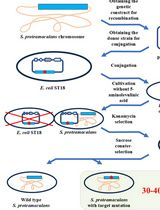
Graphical overview

Graphical overview of pMEGA plasmid curing in Pseudoalteromonas haloplanktis TAC125
Background
Plasmid curing is a fundamental strategy in microbial genetics used to dissect plasmid contributions to cellular functions and improve bacterial hosts for basic and applied research [1,2]. Plasmids are widespread across bacteria and often encode traits that provide selective advantages in natural ecosystems, but their stable maintenance can complicate functional genomics analyses and limit the rational engineering of microbial strains [3]. Over the past decades, plasmid curing has relied on nonspecific approaches such as chemical agents (e.g., intercalating dyes, detergents, etc.) or physical treatments (exposure to UV or elevated temperatures) [2,4,5]. Nevertheless, these methods are frequently inefficient, poorly reproducible, and highly species-dependent, particularly for low copy number or highly stable plasmids. These limitations are particularly evident in non-conventional organisms, such as marine psychrophiles, where restricted genetic toolkits hinder classical genetic manipulation.
Pseudoalteromonas haloplanktis TAC125 (PhTAC125) is considered a model for studying cold adaptation strategies and is a promising host for biotechnological applications [6–11]. It has a multipartite genome composed of two chromosomes and two endogenous plasmids: the cryptic plasmid pMtBL and the pMEGA megaplasmid [12,13]. pMEGA, which is 64,758 bp in size and contains 52 open reading frames (ORFs), is a non-conjugative and low-copy-number plasmid. It encodes genes required for autoreplication, stability, and plasmid partitioning functions [14]. Recent studies have shown that the elimination of pMEGA does not impair bacterial growth under standard laboratory conditions but leads to measurable phenotypic changes, including increased resistance to oxidative stress and reduced biofilm formation [15]. These observations suggest that, while not essential for viability, pMEGA contributes to stress response and surface-associated behaviors, likely conferring adaptive advantages in natural environments. However, the absence of a native selectable marker and its high stability under laboratory conditions make pMEGA refractory to conventional curing strategies; thus, a highly specific and controlled approach is necessary to eliminate it [14]. The protocol described here addresses this challenge by combining i) homologous recombination to introduce a selectable marker necessary to distinguish wild-type from cured bacteria [16] and ii) targeting the essential replication initiator gene (repB) on pMEGA with paired-termini antisense RNA (PTasRNA) to interfere with pMEGA plasmid replication [10,15]. This strategy enables efficient and reproducible curing of pMEGA without permanently altering the host chromosome. This modular and targeted framework overcomes key limitations of traditional curing methods and can be adapted to other stable plasmids and genetically recalcitrant bacterial species.
Materials and reagents
Biological materials
1. Escherichia coli TOP10 [mcrA, Δ(mrr-hsdRMS-mcrBC), ϕ80lacZ (del) M15, ΔlacX74, deoR, recA1, araD139, Δ(ara-leu)—7697, galU, galK, rpsL (SmR), endA1, nupG] [17] (available in the laboratory)
2. Escherichia coli S17-1(λpir) [thi, pro, hsd (r− m+) recA:: RP4- 2TcR::Mu KmR::Tn7 TpR SmR λpir] [18] (available in the laboratory)
3. Pseudoalteromonas haloplanktis TAC125 (PhTAC125) KrPL strain [8] (available in the laboratory)
4. PhTAC125 KrPL insPolV (generated in this work)
5. PhTAC125 KrPL2 (generated in this work)
Reagents
1. Bacto-agar (BD DifcoTM Bacteriological Agar, catalog number: 214530)
2. Tryptone (Biolife, catalog number: 4122902)
3. Yeast extract (Biolife, catalog number: 4122202)
4. Sodium chloride (Biochem Chemopharma, catalog number: 319121000)
5. L-glutamic acid monosodium salt monohydrate (Molekula, catalog number: 40359230)
6. D-gluconic acid sodium salt (Molekula, catalog number: 50444955)
7. Ammonium nitrate (NH4NO3) (Sigma-Aldrich, catalog number: A3795)
8. Potassium phosphate anhydrous (KH2PO4) (Thermo Scientific, catalog number: A12142)
9. Magnesium sulphate heptahydrate (MgSO4·7H2O) (Honeywell, Riedel-de Haën, catalog number: 13142)
10. Iron (II) sulphate heptahydrate (FeSO4·7H2O) (VWR AnalaR NORMAPUR, catalog number: 24244.298)
11. Calcium chloride powder (CaCl2) (PanReac AppliChem, catalog number: A3652)
12. Trizma base (PanReac AppliChem, catalog number: A1379)
13. EDTA (VWR Chemicals, catalog number: 20301.290)
14. Glacial acetic acid (Carlo Erba, catalog number: 401392)
15. NaOH pellets (BioFroXX, catalog number: 1180)
16. Phusion High-Fidelity DNA polymerase (New England Biolabs, catalog number: M0530)
17. Taq DNA polymerase (New England Biolabs, catalog number: M0273)
18. Primers (Table 1) (Eurofins Genomics, Ebersberg, Germany)
Table 1. Primers employed for vector construction and pMEGA curing analysis.
Underlined sequences indicate restriction sites as specified in the primer name.
| Primers | Sequence 5'–3' |
|---|---|
| umuC_NotI fw | TGCGGCCGCTAATCAGCCCAGTCATTAATG |
| umuC_AscI rv | AGGCGCGCCATGGATGTATTTGTGCCATAT |
| NdeI_eGFP fw | ctgCATATGGGTGGAGGGAATTCAAGC |
| KpnI_eGFP rv | ctGGTACCTTATTTGTAGAGCTCATCCATGCC |
| 5'umuC fw | GCTTGCAGCGAATATCACGAGTCGTTTTGC |
| OriC rv | CAGCGTGAGCTATGAGAAAGCGCC |
| XhoI-asRNArepB fw | ATTTCTCGAGAATTAGAGAGTATATTTTAATGTC |
| PstI-asRNArepB rv | ATTCTGCAGTTTCTCATCGATACTCATTTC |
| prom7 fw | CCTTTATTCAGCGTGTTGGCGAGC |
| prom7 rv | GTTATCAGGGTCGGGCGTATCGG |
| CDS49 fw | AACTGACTGTGGTGCTCTTC |
| CDS49 rv | ACTGGTCCCTATTTGTTTATGCT |
19. Deoxynucleotide (dNTP) solution mix (New England BioLabs, catalog number: N0447)
20. T4 DNA ligase (New England BioLabs, catalog number: M0202)
21. Genomic DNA of PhTAC125 (available upon request at this laboratory)
22. NotI-HF (New England BioLabs, catalog number: R3189)
23. AscI (New England BioLabs, catalog number: R0558)
24. PstI (New England BioLabs, catalog number: R0140)
25. XhoI (New England BioLabs, catalog number: R0146)
26. GelRed® nucleic acid gel stain (Millipore, catalog number: SCT123)
27. Gel loading dye, purple (6×) (New England BioLabs, catalog number: B7024)
28. Agarose basic for molecular biology (BioFroXX, catalog number: 1100)
29. QIAquick® Gel Extraction kit (QIAGEN®, catalog number: 28706)
30. Monarch® Spin Plasmid Miniprep kit (New England BioLabs, Monarch®, catalog number: T1110)
31. E.Z.N.ATM Bacterial DNA kit (OMEGA bio-tek, catalog number: D3350-02)
32. Isopropyl β-d-1-thiogalactopyranoside (IPTG) (BioSynth, catalog number: EI05931)
33. Lambda DNA/EcoRI + HindIII ladder (Promega, catalog number: G173A)
34. 1 kb Plus DNA ladder (New England BioLabs, catalog number: N3200S)
35. 1 kb DNA ladder (New England BioLabs, catalog number: N3232)
36. Plasmids (Table 2)
Table 2. Plasmids used in this work
| Plasmids | Relevant characteristics | Size | Source |
|---|---|---|---|
| pAT-eGFP | Suicide plasmid, AmpR | 4,934 bp | [19] |
| pAT-VS-HRumuC | Suicide plasmid, CamR | 4,862 bp | This study |
| pB40-79-PTasRNAlon | pMtBL-derived, containing lon asRNA, AmpR | 5,036 bp | This study |
| pB40-79C-PTasRNAlon | pMtBL-derived, containing lon asRNA, CamR | 4,838 bp | [10] |
| pB40-79-PTasRNArepB | pMtBL-derived, containing repB asRNA, AmpR | 5,036 bp | This study |
37. High-purity MilliQ water
38. Glycerol >99% (Fisher Chemical, catalog number G065017)
39. Kanamycin (PanReac AppliChem, catalog number: A4789)
40. Chloramphenicol (Acros organics, catalog number: 227920250)
41. Ampicillin (PanReac AppliChem, catalog number: A6352)
42. Ethanol 100% (Carlo Erba Reagents, catalog number: 414605)
Solutions
1. Media
a. TYP liquid medium (see Recipes)
b. LB liquid medium (see Recipes)
c. GG liquid medium (see Recipes)
2. Schatz salts stock solutions
a. 100 g/L KH2PO4 solution (100×) (see Recipes)
b. 60 g/L MgSO4 solution (300×) (see Recipes)
c. 2.5 g/L FeSO4 solution (500×) (see Recipes)
d. 15 mg/L CaCl2 solution (3,000×) (see Recipes)
3. Antibiotics
a. Chloramphenicol 50 mg/mL (see Recipes)
b. Kanamycin 50 mg/mL (see Recipes)
c. Ampicillin 100 mg/mL (see Recipes)
4. IPTG 1 M sterile solution (see Recipes)
5. 80% glycerol solution (see Recipes)
6. 0.1 M CaCl2 (see Recipes)
7. NaOH 0.5 M (see Recipes)
8. NaOH 5 M (see Recipes)
9. TAE 50× (see Recipes)
10. TAE 1× (see Recipes)
11. EDTA 0.5 M (see Recipes)
12. Agarose gel electrophoresis (see Recipes)
13. E. coli chemically competent cells (see Recipes)
14. E. coli transformation via heat shock treatment (see Recipes)
15. Intergeneric conjugation of PhTAC125 strain (see Recipes)
Recipes
1. Media
a. TYP liquid medium
i. Weigh 16 g of tryptone.
ii. Weigh 16 g of yeast extract.
iii. Weigh 10 g of NaCl.
iv. Put the mixture in a plastic cylinder.
v. Add MilliQ water to a final volume of 1 L.
vi. Stir until dissolved.
vii. Autoclave at 121 °C for 20 min at 1 bar and cool down before use.
b. LB liquid medium
i. Weigh 8 g of tryptone.
ii. Weigh 5 g of yeast extract.
iii. Weigh 10 g of NaCl.
iv. Put the mixture in a plastic cylinder.
v. Add MilliQ water to a final volume of 1 L.
vi. Stir until dissolved.
viii. Autoclave at 121 °C for 20 min at 1 bar and cool down before use.
c. GG liquid medium
i. Weigh 10 g of L-glutamic acid monosodium salt monohydrate.
ii. Weigh 10 g of D-gluconic acid sodium salt.
iii. Weigh 10 g of NaCl.
iv. Weigh 1 g of NH4NO3.
v. Put the mix in a glass cylinder and add 500 mL of MilliQ water.
vi. Stir until dissolved.
vii. Using NaOH 5 M, adjust the pH to 7.8.
viii. Add MilliQ water to a final volume of 1 L.
ix. Autoclave at 121 °C for 20 min.
x. Cool down and, in sterile conditions, add the following Schatz salts: KH2PO4 100× solution to a concentration of 1 g/L, MgSO4 300× solution to a concentration of 200 mg/L, FeSO4 500× solution to a concentration of 5 mg/L, and CaCl2 3,000× solution to a concentration of 5 mg/L.
Note: When required, add 15 g/L of Bacto-agar to the TYP or LB liquid media to cast 1.5% w/v TYP agar or LB agar plates. Store at room temperature (RT).
2. Schatz salts stock solutions
a. 100 g/L KH2PO4 (100×)
i. Weigh 100 g of KH2PO4.
ii. Add 500 mL of MilliQ water.
iii. Stir until dissolved.
iv. Add NaOH 5 M until the pH is 7.
v. Add MilliQ water to a final volume of 1 L.
b. 60 g/L MgSO4 (300×)
i. Weigh 60 g of MgSO4 heptahydrate powder.
ii. Add MilliQ water to a final volume of 1 L.
iii. Stir until dissolved.
c. 2.5 g/L FeSO4 (500×)
i. Weigh 2.5 g of FeSO4 heptahydrate powder.
ii. Add 500 mL of MilliQ water.
iii. Stir until dissolved.
iv. Add NaOH 0.5 M until the pH is 4.5.
v. Add MilliQ water to a final volume of 1 L.
d. 15 mg/L CaCl2 (3,000×)
i. Weigh 15 g of CaCl2 dihydrate powder.
ii. Add 500 mL of MilliQ water.
iii. Stir until dissolved.
iv. Add NaOH 0.5 M until the pH is 7.
v. Add MilliQ water to a final volume of 1 L.
Note: All Schatz salts must be filter sterilized using a 0.22 μm sterile filter. Store at RT.
3. Antibiotics
a. Chloramphenicol 50 mg/mL
i. Weigh 500 mg of chloramphenicol powder under a safety hood.
ii. Add ethanol 100% to a final volume of 10 mL.
iii. Mix thoroughly until completely dissolved.
iv. Prepare 1 mL aliquots and store at -20 °C.
b. Kanamycin 50 mg/mL
i. Weigh 500 mg of kanamycin powder under a safety hood.
ii. Add MilliQ water to a final volume of 10 mL.
iii. Mix the solution evenly until completely dissolved.
iv. Sterilize the solution with a 0.22 μm syringe filter.
v. Prepare 1 mL aliquots and store at -20 °C.
c. Ampicillin 100 mg/mL
i. Weigh 1 g of ampicillin under a safety hood.
ii. Add MilliQ water to a final volume of 10 mL.
iii. Mix the solution evenly until completely dissolved.
iv. Sterilize the solution with a 0.22 μm syringe filter.
v. Prepare 1 mL aliquots and store at -20 °C.
4. IPTG 1 M solution (10 mL)
a. Weigh 2.38 g of IPTG powder in a glass cylinder.
b. Add 5 mL of MilliQ water and dissolve.
c. When it is completely dissolved, add MilliQ water to the final volume of 10 mL.
d. Sterilize the solution with a 0.22 μm syringe filter.
e. Prepare 1 mL aliquots and store at -20 °C.
5. 80% glycerol solution
a. Pour 80 mL of 100% glycerol into a glass cylinder.
b. Add 20 mL of MilliQ water to reach 100 mL final volume.
c. Mix thoroughly until completely homogeneous.
d. Autoclave at 121° C for 20 min at 1 bar to sterilize the solution.
6. 0.1 M CaCl2
a. Weigh 5.55 g of CaCl2 powder.
b. Add MilliQ water to a final volume of 500 mL.
c. Mix until completely dissolved.
d. Autoclave to sterilize the solution.
e. Store at 4 °C.
7. NaOH 0.5 M
a. Dissolve 2 g of NaOH pellets in 80 mL of MilliQ water in a glass cylinder.
b. Add water to the final volume of 100 mL.
8. NaOH 5 M
a. Dissolve 20 g of NaOH pellets in 80 mL of MilliQ water in a glass cylinder.
Note: Add the pellets slowly, one at a time, as the dissolution is strongly exothermic and the solution will heat rapidly.
Tip: The solution can be prepared under refrigerated conditions or in an ice bath to limit temperature increase.
b. When cooled, add water to the final volume of 100 mL.
9. TAE 50×
a. Weigh 242 g of Trizma base and dissolve in 500 mL of MilliQ water.
b. Add 57.1 mL of glacial acetic acid.
c. Add 100 mL of EDTA 0.5 M.
d. Mix the solution until completely dissolved.
e. Add MilliQ water to a final volume of 1 L.
Note: The pH of the solution is 8.5. Do not add acids or bases.
10. TAE 1×
a. Measure 20 mL of TAE 50× using a graduated cylinder.
b. Add 980 mL of MilliQ water and mix thoroughly.
11. EDTA 0.5 M
a. Add 73.06 g of EDTA to a beaker, fill with 300 mL of MilliQ water, and mix.
b. Using a pH meter, measure the pH of the solution with continuous mixing. The pH should be around 3 at this point but needs to be at 8.
c. Add NaOH pellets until the pH is near 7.8 (the solution will be clear around pH 7.5).
f. Carefully arrive at pH 8.
e. Once the solution has a pH of 8, add MilliQ water to a final volume of 500 mL.
f. Filter using a 0.22 μm filter.
12. Agarose gel electrophoresis
a. Pouring agarose gel
i. Weigh the appropriate amount of agarose (1.2% w/v: 1.2 g; 1% w/v: 1 g; 0.8% w/v: 0.8 g).
ii. Mix agarose powder with 100 mL of 1× TAE in a microwavable flask (see Recipe 10).
iii. Microwave for 1–3 min until the agarose is completely dissolved (but do not overboil the solution; microwave in pulses, swirling the flask occasionally as the solution heats up).
iv. Let the agarose solution cool down to approximately 50 °C for about 5 min.
v. Add 5 μL of GelRed® nucleic acid gel stain to a final concentration of 1:20,000.
vi. Pour the agarose into a gel tray with the well comb in place.
Note: If bubbles appear, remove them with the help of a pipette tip.
vii. Let it cool down and polymerize for 30 min at RT until it has completely solidified.
b. Prepare samples and run the electrophoresis
i. Place the gel in the electrophoresis chamber and fill the tank with TAE 1× until the gel is covered.
ii. Add loading buffer to each of your DNA samples and mix well.
iii. Carefully load a molecular weight ladder (1 kb or Lambda DNA/EcoRI + HindIII) into the first lane of the gel.
iv. Carefully load your samples into the additional wells of the gel.
v. Run the gel at 100 V until the dye line is approximately 80% of the way down the gel.
vi. Stop the run and visualize your DNA fragments using a UV-light Transilluminator.
13. E. coli chemically competent cells
a. Streak E. coli (TOP10 or S17-1 λpir strain) on LB agar using a sterile loop.
b. Incubate at 37 °C overnight.
c. Inoculate a single colony of E. coli (TOP10 or S17-1 λpir strain) in 3 mL of LB media.
d. Incubate at 37 °C overnight with shaking (220 rpm).
e. Inoculate the saturated culture to 0.1 OD/mL in 200 mL of LB liquid medium in a sterile 1 L Erlenmeyer flask.
f. Incubate at 37 °C with shaking (220 rpm) until the cells reach an OD600 = 0.4–0.6.
g. Transfer 200 mL culture into four 50 mL sterile Falcon tubes and incubate on ice for 20 min.
Note: From this step on, always keep cells cold.
h. Centrifuge at 2,500× g for 5 min at 4 °C (pre-cooled centrifuge) and discard the supernatant.
i. Carefully resuspend each pellet in 25 mL of ice-cold 0.1 M CaCl2 and incubate on ice for 20 min.
j. Centrifuge at 2,500× g for 10 min at 4 °C (pre-cooled centrifuge) and discard the supernatant.
k. Carefully suspend the pellets in a total volume of 10.4 mL of ice-cold 0.1 M CaCl2.
l. Add 2.4 mL of sterile 80% glycerol and gently mix the solutions (final concentration of glycerol: 15% v/v).
m. Pipette 200 μL aliquots in sterile 1.5 mL tubes (work on ice) and store at -80 °C.
Note: You can shock-freeze the cells in liquid nitrogen or in dry ice before storage.
14. E. coli transformation via heat shock treatment
a. Mix 80 μL of E. coli chemically competent cells with 20 μL of ligation mixture (or 100 ng of plasmid DNA) in a sterile tube.
b. Keep the reaction mix on ice for 30 min.
c. Incubate the cells at 42 °C for 1 min.
d. Keep the cells on ice for 1 min.
e. Add 900 μL of LB media to the reaction mix and incubate the cells at 37 °C with vigorous shaking (220 rpm) for 1 h.
f. Plate 100 μL of the transformation mixture on LB agar plates containing the appropriate antibiotic (100 μg/mL ampicillin or 34 μg/mL chloramphenicol). Centrifuge the remaining 900 μL at 3,000× g for 3 min at 4 °C. Discard the supernatant and resuspend the cell pellet in 100 μL of LB medium. Plate on selective agar plates.
g. Incubate at 37 °C overnight.
15. Intergeneric conjugation of PhTAC125 strain
Note: This protocol is an adaptation of the intergeneric conjugation of PhTAC125 described by Duilio et al. [20]. E. coli S17-1(λpir) strain is used as a donor strain, while PhTAC125 KrPL and its derivatives are the recipient cells. Therefore, before DNA mobilization to the psychrophilic host, the donor is transformed with the desired plasmid using standard techniques (see Recipe 14 for E. coli transformation via heat shock treatment).
a. Streak a loop of the glycerol stock of PhTAC125 KrPL strain (KrPLinsPolV or KrPL2 strains) on a TYP agar plate (35 mL).
b. Incubate at 15 °C for three days.
c. Inoculate a single colony of PhTAC125 in 3 mL of TYP media.
d. Incubate PhTAC125 culture at 15 °C overnight with vigorous shaking (200 rpm).
e. On the same day, transform 100 μL of E. coli S17-1(λpir) harboring the plasmid of interest as described in Recipe 14.
f. Incubate recombinant E. coli S17-1(λpir) plates at 37 °C overnight with shaking (220 rpm).
g. Perform a dilution 1:1,000 of PhTAC125 overnight culture in 3 mL of TYP media.
h. Incubate at 15 °C overnight with vigorous shaking (200 rpm).
i. In parallel, inoculate recombinant E. coli S17-1(λpir) in 3 mL of LB media supplemented with the appropriate antibiotics overnight at 37 °C with shaking (220 rpm).
j. Mix 100 μL of PhTAC125 culture and 100 μL of recombinant E. coli S17-1(λpir) in a sterile 1.5 mL tube.
k. Spot a 100 μL drop of the mixture on a TYP agar plate (35 mL).
l. Let it dry for 5 min.
m. Incubate for 15–24 h at 15 °C with the Petri dish cap facing upward.
n. Scrape co-culture spots with the help of a sterile loop and resuspend the co-culture in 100 μL of sterile TYP media. Be careful to gently resuspend the co-culture evenly and entirely.
o. Perform serial dilutions of the initial suspension (1:10, 1:100, and 1:1,000) in 100 μL of TYP.
p. Spread each diluted suspension on TYP agar plates (35 mL) supplemented with the appropriate selective agent (100 μg/mL ampicillin, 12.5 μg/mL chloramphenicol, or 3.75 μg/mL chloramphenicol) and 50 μg/mL kanamycin.
q. Incubate at 15 °C for 4 days with shaking (200 rpm).
r. Perform a replica plating of at least 10 colonies from the selection plates on a master TYP agar plate containing the selective agent (100 μg/mL ampicillin, 12.5 μg/mL chloramphenicol, or 6.25 μg/mL chloramphenicol) and 50 μg/mL kanamycin at 15 °C for 24 h.
s. Inoculate the clones in 3 mL of TYP media supplemented with the appropriate selective agent (100 μg/mL ampicillin or 25 μg/mL chloramphenicol).
t. Incubate at 4 °C for 3 days with shaking (200 rpm).
u. Collect 750 μL of saturated culture and mix it with 250 μL of 80% glycerol to make a glycerol stock (20% final concentration of glycerol).
v. Store at -80 °C.
w. Use 500 μL of the remaining saturated culture for plasmid DNA extraction using the Monarch® Plasmid Miniprep kit.
x. Confirm the successful mobilization of the plasmid of interest by loading the extracted plasmid DNA on a 0.8% agarose gel and running electrophoresis.
Note: The choice and concentration of the antibiotic during selection depend on the experimental design. Ampicillin (100 μg/mL) or chloramphenicol (12.5 μg/mL) is used for the selection of transconjugant, following canonical plasmid transfer. A lower concentration of chloramphenicol (3.75 μg/mL or 6.25 μg/mL) is used in homologous recombination experiments to facilitate the recovery of recombinants (see section A2). Kanamycin (50 μg/mL) represents an episomal resistance for PhTAC125 KrPL and its derivative strains, thus it is included in all cases of intergeneric conjugation.
Laboratory supplies
1. 10 μL pipette tips (Sarstedt, catalog number: 703010)
2. 200 μL pipette tips (Sarstedt, catalog number: 703030)
3. 1,000 μL pipette tips (Sarstedt, catalog number: 703050)
4. 1.5 mL microcentrifuge tubes (Eppendorf, catalog number: 72706)
5. 0.2 mL thin-wall PCR tubes round cap (Eppendorf, catalog number: 72737002)
6. Petri dish 90 mm × 20 mm (SPL Life Sciences, catalog number: 330007)
7. Sterile loop (Biosigma, Clearline, catalog number: BSV120)
8. L-spreader (Biosigma, Clearline, catalog number: BSM0235)
Equipment
1. Pipetman P1000 (Gilson, catalog number: FA10001M), Pipetman P200 metal ejector (Gilson, catalog number: FA10002M), Pipetman P20L metal ejector (Gilson, catalog number: FA10003M), Pipetman P10 metal ejector (Gilson, catalog number: FA10005M), Pipetman P2L metal ejector (Gilson, catalog number: FA10006M)
2. Thermocycler for PCR (e.g., SimpliAmp Thermal Cycler, Applied Biosystem by Thermo Fisher Scientific, catalog number: A24812)
3. Transilluminator (e.g., ChemiDoc MP Imaging system, Bio-Rad, serial number: 731BR02807, model: Universal Hood III, catalog number: 12003154)
4. Agarose chamber, gel caster, combs, and power supply (Bio-Rad, Mini-sub-Cell GT system & Power pack, catalog number: 1645050)
5. MilliQ water purification system (e.g., Merck Millipore Q-Paks System, catalog number: ZMQS6000Y)
6. DNA sequencing service (e.g., Eurofins Genomics, Ebersberg, Germany)
7. -80 °C freezer for storage of strains (any commercially available freezer is suitable)
8. -20 °C freezer (any commercially available freezer is suitable)
9. Autoclave (any commercially available freezer is suitable)
10. Centrifuge, low temperature, up to 13,000 rpm (e.g., Eppendorf centrifuge 5910 Ri)
11. Water bath, temperature scale at least 30–60 °C (e.g., VWR International, catalog number: 462-0556)
12. Vertical laminar flow hood (e.g., Nuve, model: LN120)
13. Incubator [e.g., Nuve, model: EN120(H)]
14. Orbital shaker (Biosan, model: PSU-20i)
Software and datasets
1. RNAFold web server (ViennaRNA Web Services)
2. Genomes search - National Center for Biotechnology Information (NCBI) (https://www.ncbi.nlm.nih.gov/)
3. Basic Local Alignment Search Tool (BLAST®) (https://blast.ncbi.nlm.nih.gov/Blast.cgi, Blastn)
Procedure
登录/注册后免费查看全文
文章信息
稿件历史记录
提交日期: Feb 12, 2026
接收日期: Apr 3, 2026
在线发布日期: Apr 17, 2026
出版日期: May 20, 2026
版权信息
© 2026 The Author(s); This is an open access article under the CC BY-NC license (https://creativecommons.org/licenses/by-nc/4.0/).
如何引用
Severino, A., Lauro, C., Calvanese, M., Parrilli, E. and Tutino, M. L. (2026). Plasmid Curing of Pseudoalteromonas haloplanktis TAC125 Using Homologous Recombination and PTasRNA Gene Silencing. Bio-protocol 16(10): e5687. DOI: 10.21769/BioProtoc.5687.

 Download Citation in RIS Format
分类
微生物学 > 微生物遗传学 > 质粒
分子生物学 > RNA > RNA 干扰
微生物学 > 微生物遗传学 > 重组
您对这篇实验方案有问题吗?
在此处发布您的问题,我们将邀请本文作者来回答。同时,我们会将您的问题发布到Bio-protocol Exchange,以便寻求社区成员的帮助。
 发布问题
发布问题


