


Flow Cytometry of Lung and Bronchoalveolar Lavage Fluid Cells from Mice Challenged with Fluorescent Aspergillus Reporter (FLARE) Conidia
采用流式细胞仪检测被带有荧光报告基因的曲霉(FLARE)分生孢子感染过的小鼠肺部和支气管肺泡灌洗液细胞


发布: 2016年09月20日第6卷第18期 DOI: 10.21769/BioProtoc.1927 浏览次数: 17871
评审: Shanie Saghafian-HedengrenAnonymous reviewer(s)
 PDF
PDF  Q&A
Q&A
参见作者原研究论文
The authors used this protocol in:
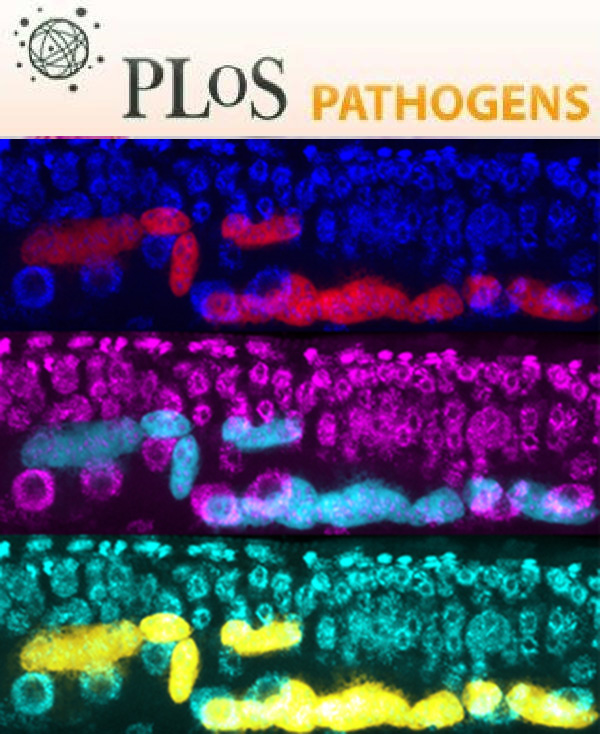
Feb 2015





Abstract
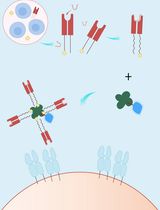
Aspergillus fumigatus is a ubiquitous fungal pathogen that forms airborne conidia. The process of restricting conidial germination into hyphae by lung leukocytes is critical in determining infectious outcomes. Tracking the outcome of conidia-host cell encounters in vivo is technically challenging and an obstacle to understanding the molecular and cellular basis of antifungal immunity in the lung. Here, we describe a method that utilizes a genetically engineered Aspergillus strain [called FLARE (Jhingran et al., 2012; Espinosa et al., 2014; Heung et al., 2015)] to monitor conidial phagocytosis and killing by leukocytes within the lung environment at single encounter resolution.
Keywords: Fungus (真菌) Microscopy (显微镜)
Immunity (免疫)
Lung (肺)
Reporter (记者)
Microscopy (显微镜)
Immunity (免疫)
Lung (肺)
Reporter (记者)
Materials and Reagents
- Cell strainers - 40 μm and 100 μm
- Syringes
- Injector (Modified precision dispensing tips) (Nordson, catalog number: 7018166 )
- 15 ml tubes
- 96-well plate, U-bottom
- Mice: C57BL/6 (Jackson Laboratories, catalog number: 000664 )
- Fungal strains (Af293 and Af293-DsRed) (Jhingran et al., 2012)
- FATAL-plus solution (Vortech Pharmaceuticals Ltd, National Drug Code: 0298-9373-68 )
- BD BBLTM Sabouraud dextrose agar (Emmons), slants (pH 6.9) (100/sp) (BD, catalog number: 221827 )
- PBS (Thermo Fisher Scientific, GibcoTM, catalog number: 14190-144 )
- Tween 20
- Tris base
- NaHCO3
- Na2CO3
- Biotin-XX, SSE (6-((6-((biotinoyl)amino)hexanoyl)amino) hexanoic acid, sulfosuccinimidyl ester, sodium salt) (Thermo Fisher Scientific, Molecular ProbesTM, catalog number: B6352 )
- DMSO
- Streptavidin, Alexa Fluor® 633 conjugate (Thermo Fisher Scientific, Molecular ProbesTM, catalog number: S-21375 )
- IsothesiaTM, Isoflurane (Henry Schein Animal Health, SKU number: 029405 )
- RBC lysis buffer (Biolegend, catalog number: 420301 )
- DNase I (Roche Diagnostics, catalog number: 10104159001 )
- Collagenase type IV (Worthington Biochemical, catalog number: LS004189 )
- EDTA
- Mouse BD Fc BlockTM (BD, BD PharmingenTM, catalog number: 553142 )
- Antibodies (listed in Procedure section)
- PBS Tween (0.025%) (see Recipes)
- Tris-chloride (1 M, pH 8) (see Recipes)
- Sodium bicarbonate buffer (0.1 M, pH 9.5) (see Recipes)
- Lung digestion buffer (for each lung) (see Recipes)
- FACS buffer (see Recipes)
Equipment
- Hemocytometer
- Microscope
- Centrifuge
- Plexiglass stand
- Dissection scissors and forceps
- Bronchoalveolar lavage fluid (BALF) catheters (Exel International, catalog number: 26738 )
- 4-way large bore (lipid resistant) stopcock with rotating male luer lock adapter (Baxter, catalog number: 2C6204 )
- gentleMACS tissue dissociator, MACSMix tube rotator and C tubes (Miltenyi Biotech)
- Automated cell counter or hemocytometer
- Flow cytometer capable of analyzing at least 7 fluorescent parameters (such as BD LSRII). The 532 or 561 nm (but not 488 nm) laser excites DsRed fluorescence and the 633 nm laser excites Alexa Fluor 633 fluorescence.
Procedure
登录/注册后免费查看全文
文章信息
版权信息
© 2016 The Authors; exclusive licensee Bio-protocol LLC.
如何引用
Readers should cite both the Bio-protocol article and the original research article where this protocol was used:
- Jhingran, A., Kasahara, S. and Hohl, T. M. (2016). Flow Cytometry of Lung and Bronchoalveolar Lavage Fluid Cells from Mice Challenged with Fluorescent Aspergillus Reporter (FLARE) Conidia . Bio-protocol 6(18): e1927. DOI: 10.21769/BioProtoc.1927.
- Heung, L. J., Jhingran, A. and Hohl, T. M. (2015). Deploying FLAREs to visualize functional outcomes of host-pathogen encounters. PLoS Pathog 11(7): e1004912.

 Download Citation in RIS Format
分类
免疫学 > 免疫细胞染色 > 流式细胞术
微生物学 > 体内实验模型 > 真菌
免疫学 > 宿主防御 > 鼠
您对这篇实验方案有问题吗?
在此处发布您的问题,我们将邀请本文作者来回答。同时,我们会将您的问题发布到Bio-protocol Exchange,以便寻求社区成员的帮助。
 发布问题
发布问题


