Filter-aided expansion proteomics for FFPE tissues and single-nucleus analysis
Speaker: Zhen Dong Moderator: Shuaiyao Wang
Online live: Feb 26, 2026 10:00 AM ET | 7:00 AM PT Posted: Mar 11, 2026 Views: 3247
 Q&A
Q&A
 WEBINAR SERIES

Abstract
Spatial proteomics offers critical insights into tissue heterogeneity but remains technically challenging, particularly for archived clinical samples and analyses at single-cell or subcellular resolution. In this webinar, we introduce filter-aided expansion proteomics (FAXP), a hydrogel-based tissue expansion strategy enabling high-resolution, mass spectrometry–based spatial proteomics of formalin-fixed paraffin-embedded (FFPE) tissues.
FAXP integrates filter-aided in-gel digestion within customized C18 tip devices, improving workflow stability, throughput, and reproducibility. Compared to the original ProteomEx method, FAXP delivers a 14.5-fold improvement in volumetric resolution, over 8-fold higher peptide yield, a 255% increase in protein identification, and a 50% reduction in sample preparation time.
Compatible with archived FFPE tissues, FAXP can be combined with laser capture microdissection to enable image-guided proteomic analysis at single-cell and subcellular resolution. This webinar will outline the FAXP workflow and highlight its applications in high-resolution spatial proteomics, including studies of human colorectal cancer.
Highlights
- Introduction to filter-aided expansion proteomics (FAXP).
- High-resolution spatial proteomics using FAXP combined with laser capture microdissection (LCM).
- Application to archived FFPE tissues.
- Opportunities and limitations.
Speaker
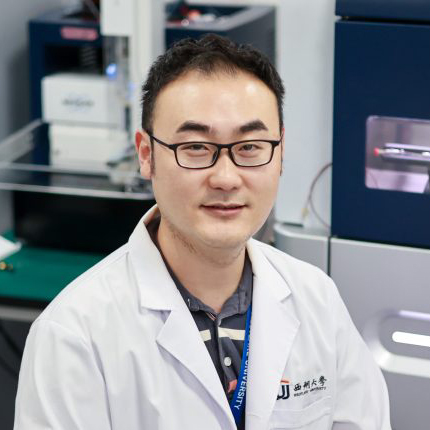
Zhen Dong, Ph.D.
Research Assistant Professor, Westlake University
Dr. Zhen Dong is a Research Assistant Professor in the lab of Prof. Tiannan Guo, at the Westlake Laboratory of Life Sciences and Biomedicine. ...
View more 

Moderator
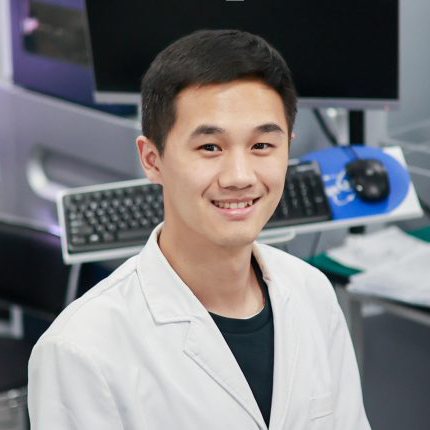
Shuaiyao Wang, M.Sc.
PhD candidate, Westlake University
Shuaiyao Wang holds a bachelor’s degree in Biotechnology from Nantong University and a master’s degree in Biochemistry and Molecular Biology from F...
View more
Keywords
Spatial proteomics, FAXP, FFPE tissues, Single-cell proteomics, Mass spectrometry
References
Dong Z, Xiang W, Jiang W, Guo T. Expansion omics: from expansion microscopy to spatial omics. Mol Syst Biol. 2026;22:165–178.
Dong Z, Wu C, Chen J, Jiang W, Piatkevich KD, Zhu Y, Guo T. Filter-Aided Expansion Proteomics for the Spatial Analysis of Single Cells and Organelles in FFPE Tissue Samples. Nat Protoc. 2025 Oct 9. (advance online publication).
Dong Z, Jiang W, Guo T. Tissue expansion enables proteomics at improved spatial resolution. Trends Biochem Sci. 2025;50(10):945–946.
Dong Z, Jiang W, Wu C, Chen T, Chen J, Ding X, Zheng S, Piatkevich KD, Zhu Y, Guo T. Spatial proteomics of single cells and organelles on tissue slides using filter-aided expansion proteomics. Nat Commun. 2024;15:9378.
Li L, Sun C, Sun Y, Dong Z, Wu R, Sun X, Zhang H, Jiang W, Zhou Y, Cen X, Cai S, Xia H, Zhu Y, Guo T, Piatkevich KD. Spatially resolved proteomics via tissue expansion. Nat Commun. 2022;13:7242.
Do you have a question about this webinar?
Post your question, and we'll invite the webinar speaker to respond. You're welcome to join the discussion by answering or commenting on questions ( Note: Not all questions, especially those not directly relevant to the webinar topic, may be answered by the speaker. ).

+
 Post a Question
0 Q&A
 Nov 17, 2026
 Sep 29, 2026
 Jul 21, 2026